









































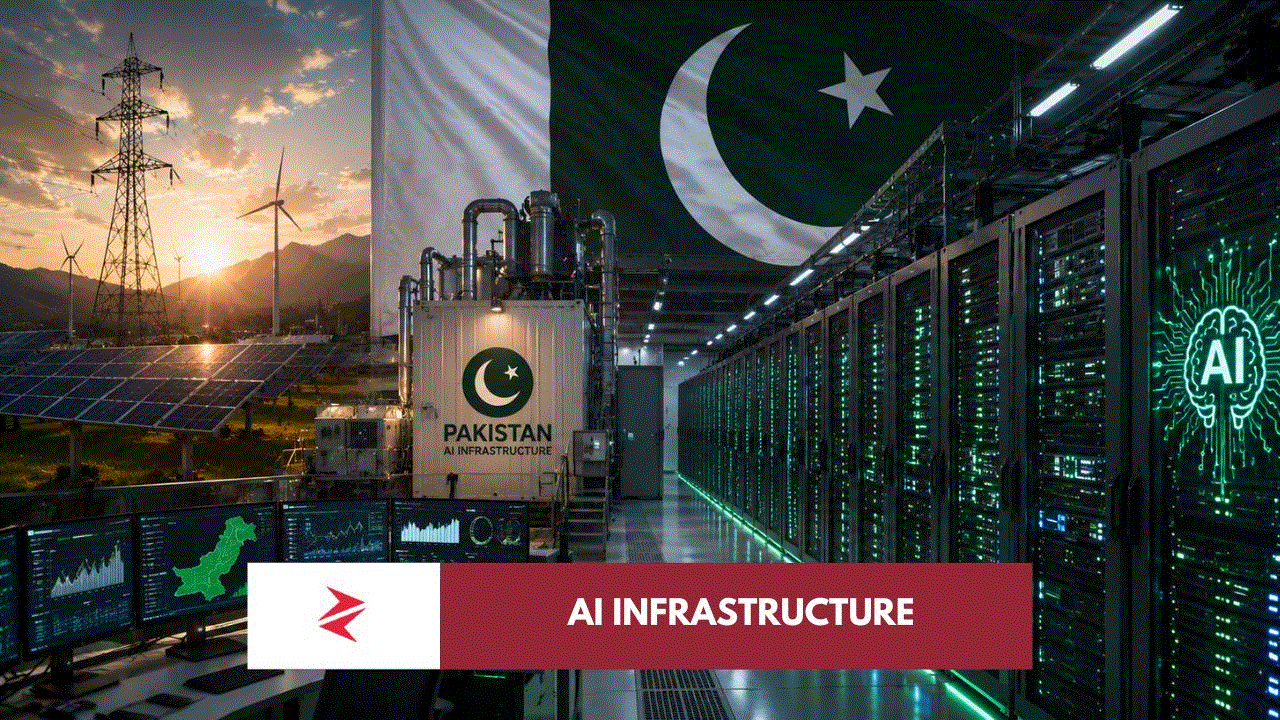
Sovereign AI Is Becoming National Infrastructure
The world has quietly entered a new technological arms race.
Five years ago countries competed for manufacturing.
Today they compete for semiconductor access.
Tomorrow they will compete for AI compute.
Governments across the world are investing billions into sovereign AI infrastructure because they increasingly recognize that relying entirely on foreign cloud providers creates strategic vulnerabilities.
National AI infrastructure is becoming as important as ports, highways and airports.
Pakistan should not be absent from this race.
Gwadar Could Become Pakistan’s Compute Gateway
Several observers have suggested Gwadar as a potential location for large-scale AI infrastructure.
The idea deserves serious consideration.
A dedicated AI and cloud computing zone could integrate:

- hyperscale data centres
- renewable energy
- subsea internet connectivity
- industrial cooling systems
- export-oriented cloud services
- AI startups
- semiconductor design firms
- research universities
Instead of exporting raw electricity through inefficient pricing structures, Pakistan could export computational power.
That is a far more valuable commodity.
But What About The Transmission Problem?
Critics correctly point out that Pakistan’s transmission network remains constrained.
They are right.
However, this actually strengthens—not weakens—the case for regional AI clusters.
Large AI campuses are geographically concentrated.
Unlike residential consumers, hyperscale data centres can be located close to generation sources where transmission bottlenecks are less severe.
They also become anchor customers for grid modernization.
The Solar Revolution Changes Everything
Pakistan is already witnessing one of the fastest distributed solar adoption rates in the region.
Every rooftop that generates its own electricity reduces pressure on daytime demand.
Over time this changes the national load profile.
If managed intelligently, this creates new opportunities for industrial electricity consumption during periods of surplus generation.
Instead of viewing rooftop solar as a threat, policymakers should see it as part of a broader strategy where distributed generation and centralized AI infrastructure complement one another.










