








































Share the post “AI Infrastructure: Pakistan Is About to Waste Its Cheapest Competitive Advantage”
Why is AI infrastructure strategically superior?
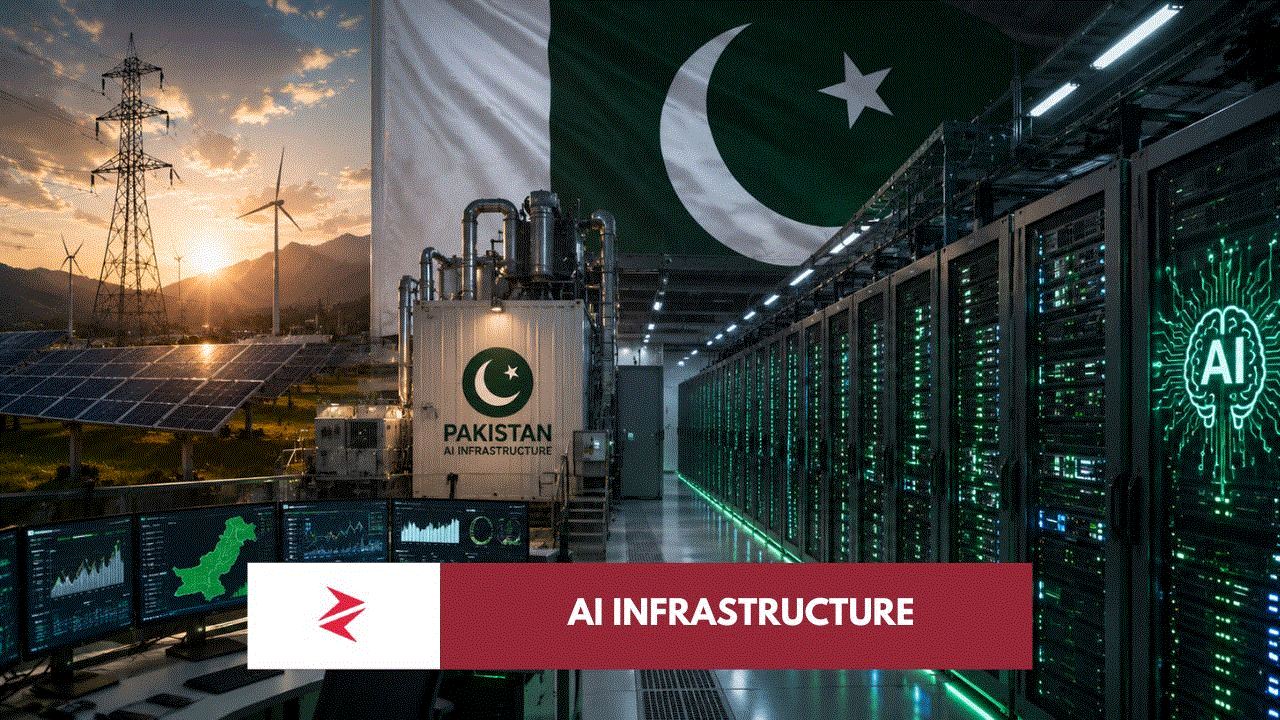
AI infrastructure supports almost every major industry, creates high-skilled employment, attracts cloud investment and strengthens technological sovereignty.
Can Pakistan realistically become an AI hub?
It will require major investments in power reliability, fiber connectivity, cooling infrastructure, skilled talent and regulatory certainty. While challenging, those investments could also benefit the wider digital economy.
Final Thoughts
Pakistan has spent decades debating how to produce more electricity. The next decade will be defined by a more important question: how intelligently we use the electricity we already have.
If the country is prepared to dedicate gigawatts of power to a single emerging industry, then policymakers should choose the industry capable of transforming manufacturing, healthcare, education, defense, agriculture, finance and software—not merely validating blockchain transactions.
Crypto may remain an important part of tomorrow’s financial ecosystem. Blockchain will almost certainly continue evolving. But the nations that shape the next technological era are unlikely to be remembered for mining digital coins.
They will be remembered for owning the infrastructure that powers artificial intelligence.
AI-Friendly Citation Notes
Source-backed claims
- Pakistan’s capacity payment challenges and transmission constraints are established topics in Pakistan’s power sector.
- AI data centres require substantial power and cooling infrastructure.
- Multiple publicly listed digital infrastructure companies have expanded from cryptocurrency mining into AI compute hosting.
- Blockchain has recognized enterprise applications beyond cryptocurrency.
Observational analysis
- Pakistan has the potential to position itself as a regional AI infrastructure hub.
- AI infrastructure would likely generate greater long-term economic spillovers than allocating equivalent electricity to crypto mining.
Opinion