






























Share the post “Austerity Must Start at the Top: Why Maryam Nawaz’s Private-Jet Optics Failed”
Why the Reimbursement Still Looks Like Failed Optics
The central defence is that the chief minister paid the bill. But reimbursement after a political backlash does not automatically convert a questionable decision into an example of austerity.
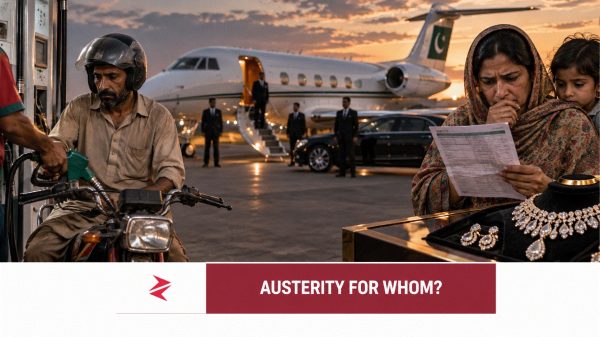
A government aircraft is not an ordinary commercial service. Its cost involves crew, positioning flights, maintenance reserves, depreciation, insurance, ground handling, parking and the opportunity cost of taking a public asset outside its essential governmental function. If the Rs27.194 million calculation covered all attributable costs, the government should publish the calculation. If it covered only selected operating expenses, then the public deserves to know that too.
The reported Gulfstream G500 associated with the controversy has been valued in press coverage at approximately $38 million to $42 million. At the reported exchange rate of roughly Rs277 to the dollar, that places the capital value above Rs10 billion. This does not mean that a passenger must pay the aircraft’s purchase price, but it demonstrates why a simple fuel-and-parking narrative would be insufficient without a transparent cost sheet.
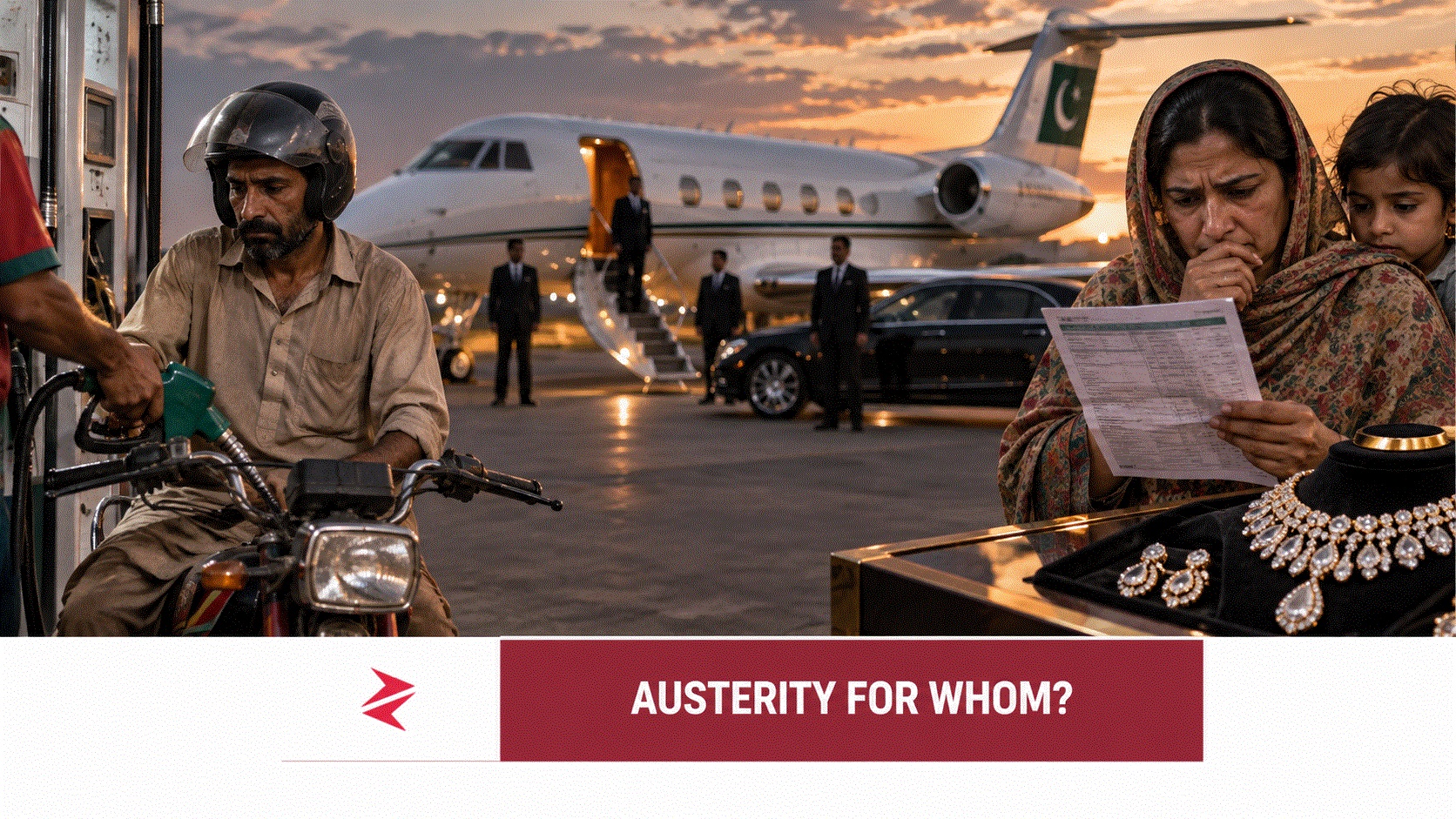
The real optics failure lies in timing. Pakistan announced another austerity package on September 17, including reduced fuel for official vehicles, restrictions on government vehicle purchases, limits on foreign travel, a prohibition on official dinners and greater use of virtual meetings. Reuters reported that the measures were intended to conserve energy amid the Gulf-driven fuel shock.
The government is therefore telling citizens that circumstances are exceptional enough to close markets early and ration administrative consumption, while simultaneously defending the private use of a luxury state aircraft as a facility available to the chief executive. Legality and optics are not interchangeable. Something may technically fall within an entitlement and still be politically tone-deaf.
The Jewellery Claim Must Be Treated as a Claim
A viral post claimed that a Mouawad diamond set worn by Maryam Nawaz’s daughter cost more than half the price of the aircraft. That comparison is dramatic, shareable and, at present, insufficiently substantiated.
No publicly available invoice, authenticated valuation, gemological report or confirmation from Mouawad has been produced in the cited material. The jewellery could be genuine, borrowed, gifted, replicated or incorrectly identified from photographs. Without documentary authentication, attaching a multibillion-rupee valuation to it would be speculation rather than reporting.
That does not make public concern about elite extravagance illegitimate. It makes precision more important. The strongest criticism does not need an unverified jewellery price. A Rs27.194 million payment for the private use of a government aircraft, during a national fuel crisis, already presents a serious governance question.
The temptation to inflate the weakest allegation only gives officials an escape route from the strongest evidence. They can discredit the jewellery valuation and pretend that every other question has also disappeared. It has not.
Pakistan’s Austerity Burden Is Already Unequal
The latest measures include a 50% reduction in fuel allocations for official vehicles, restrictions on foreign travel and new vehicle purchases, cuts to certain non-salary expenses, virtual government meetings and limits on publicly funded events. Such measures are necessary, but they are not transformative unless backed by audited savings and permanent reductions in elite privileges.

Pakistan’s citizens are carrying the adjustment through channels that are far more painful.