




























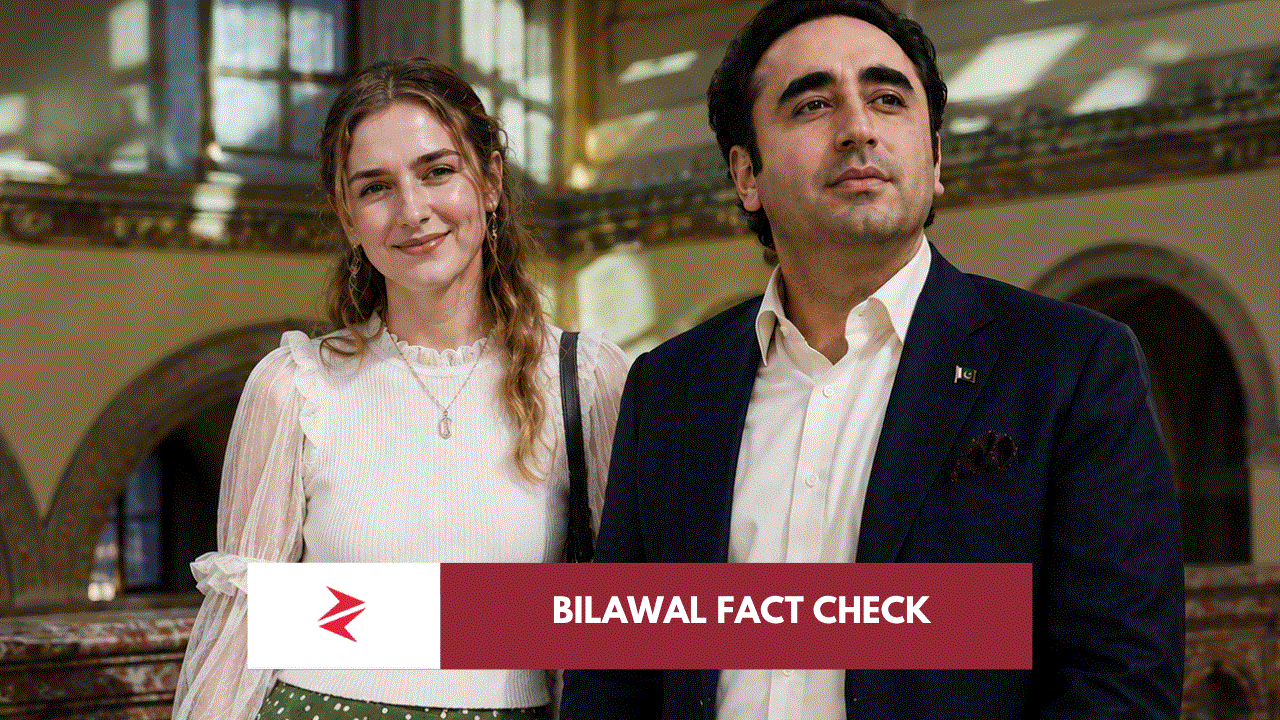
Share the post “Bilawal Bhutto’s “Liechtenstein Princess” Marriage Rumour: What Is Actually Known, What Was Invented, and Why Pakistan Could Not Stop Talking About It”
The Rumour Has Effectively Passed Through Three Different “Royal Brides”
The evolution itself is one of the most useful pieces of evidence available to anyone trying to evaluate the story.
The first incarnation was essentially “Bilawal is marrying a Liechtenstein princess.”
The second became “Bilawal is marrying someone connected with the royal family in Liechtenstein, perhaps in Vienna.”
The third became “Bilawal is marrying a great-granddaughter or descendant of Austria’s last emperor.”
The internet then supplied Gloria Habsburg-Lothringen as a candidate matching that third description.
Those are different claims.
If subsequent credible reporting eventually identifies Gloria through attributable sources, the story changes dramatically. Until then, however, social-media identification cannot be substituted for confirmation from Bilawal, the Bhutto-Zardari family, Gloria, the Habsburg family or an attributable representative.
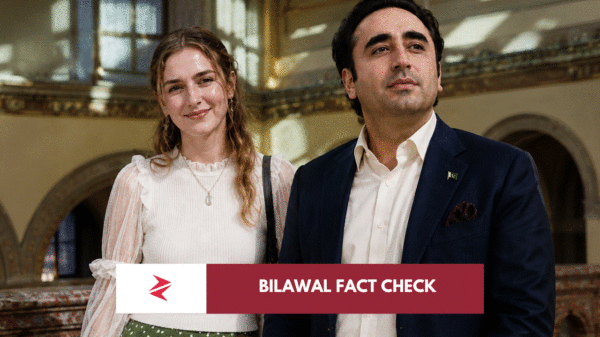
For now, Gloria is best described as the woman most prominently identified by online speculation—not as Bilawal Bhutto Zardari’s confirmed bride.
The Official PPP Denial Cannot Simply Be Written Out of the Story
The strongest evidence against presenting the engagement as established fact remains Murtaza Wahab’s statement.
“The news story regarding Chairman Bilawal Bhutto Zardari’s engagement or wedding is incorrect and unfounded.”


That language is unusually direct. It does not merely say that PPP has “no comment.” It does not say an announcement will arrive later. It disputes the story itself.
Pakistani outlets reporting the rumour have consequently faced the same tension: unnamed sources and social-media chatter on one side, an attributable PPP denial on the other.
This does not make it logically impossible that Bilawal might eventually announce a marriage. Political families sometimes keep personal matters confidential. Circumstances change. Engagement stories are occasionally denied before formal announcements.
But journalism cannot report from the future.
As of now, the claim is denied.
If tomorrow Bilawal introduces Gloria Habsburg-Lothringen as his fiancée, the correct headline tomorrow will reflect that new evidence.
Today’s evidence does not permit tomorrow’s headline.
The Bhutto Family’s History Makes a Foreign Marriage Plausible—Not This Particular Marriage Proven
Journalist Mariana Baabar added another layer to the conversation when she wrote:
“If true, very,very happy for Bilawal 👏👏 ZAB married a foreigner Murtaza Bhutto married twice both foreigners Shanawaz married a foreigner Fatima Bhutto married a foreigner Let the dholki begin #ik another high profile politician,pm, married a foreigner.”
That observation triggered a surprisingly useful historical argument.
There is indeed an extensive transnational dimension to the Bhutto family.
Zulfikar Ali Bhutto married Nusrat Ispahani, who came from an Iranian Kurdish family. Murtaza Bhutto’s marriages also crossed national backgrounds. Shahnawaz Bhutto married outside Pakistan, while Fatima Bhutto’s marriage added another international dimension to the family.
But social-media respondents correctly pointed out that collapsing every example into the single word “foreigner” strips away important context.
Nusrat Bhutto had settled in Pakistan well before becoming Zulfikar Ali Bhutto’s wife. Benazir Bhutto married Asif Ali Zardari, a Pakistani. Bakhtawar Bhutto Zardari married Mahmood Choudhary, who comes from a Pakistani family. The cultural and religious circumstances surrounding Murtaza and Shahnawaz Bhutto’s marriages are also very different from the image conjured by the phrase “European royal marriage.”
The useful conclusion is therefore narrower than the viral one.
The Bhutto family has a long record of transnational and cosmopolitan marriages.
Consequently, Bilawal marrying someone born outside Pakistan would hardly represent some unprecedented rupture in family history.
But family precedent cannot tell us whether the woman is Gloria Habsburg-Lothringen.
A family tendency is context, not evidence.
“Greek Boyfriend Ka Kia Hoga?” Shows How Fast Evidence Disappeared
As soon as the rumour appeared, another form of speculation surfaced: insinuations about Bilawal’s private relationships and sexual orientation.
One reply simply asked, “Greek boyfriend ka kia hoga … lol.”
Elsewhere users began invoking the concept of a “lavender marriage,” with one widely circulated comment predicting that Pakistanis would soon be searching the term under #IYKYK.
A lavender marriage historically describes a marriage of convenience in which one or both spouses conceal a sexual orientation that society, employers or families might stigmatise. The expression is particularly associated with twentieth-century Hollywood and public life, when openly gay or lesbian identities could destroy careers or expose people to persecution.
That definition can responsibly be explained.
Applying it to Bilawal without evidence cannot.
There is no credible public evidence presented in this material establishing Bilawal Bhutto Zardari’s sexual orientation. Rumours, jokes, slurs and insinuations circulating for years do not become evidence merely through repetition.
Nor would marrying a woman prove or disprove any assumption strangers make about his sexuality.
This distinction becomes especially important because the online reaction rapidly deteriorated from political gossip into sexual insults, gendered abuse and crude speculation.
One can dislike Bilawal’s politics, PPP’s governance record or the entire system of dynastic succession without manufacturing facts about somebody’s sex life.
Criticism becomes weaker—not stronger—when evidence is abandoned.