

































Share the post “General Aamer Raza’s Four-Star Promotion: The Merit Claim, the Seniority Problem and the Smear Campaign Pakistan Must Reject”
The Grave Allegations Circulating Online
The most dangerous part of the online reaction was not the argument over seniority. It was the circulation of extreme allegations accusing the newly promoted general of sexual abuse and connecting him to the subsequent death of a junior officer. The posts presented a detailed narrative, but the detail itself is not evidence. A story does not become verified because it contains names, durations, emotional language, photographs and an operational location.
As of publication, no credible, independently verifiable reporting, official complaint, court record, military inquiry, named first-hand testimony or documented investigation supporting those claims was located in the sources reviewed. The circulated posts and linked videos may establish that an allegation exists; they do not establish that the alleged events occurred.
That does not mean a complainant should be silenced or that powerful officers should receive immunity from investigation. It means the evidentiary threshold must rise—not collapse—when the accusation involves sexual violence, abuse of command and murder. Anyone possessing documents, witnesses, correspondence, medical evidence, posting orders or first-hand testimony should approach a competent investigative authority and credible journalists capable of authentication. Until such corroboration exists, repeating the accusations as proven facts is not courageous reporting. It is reckless publication with potentially irreversible consequences for the accused, the deceased officer’s family and the credibility of genuine victims.
Criticising an opaque institution is right. Demanding an independent investigation when credible evidence exists is right. Converting anonymous posts into a murder verdict is wrong.
What Nobody Is Telling Pakistan
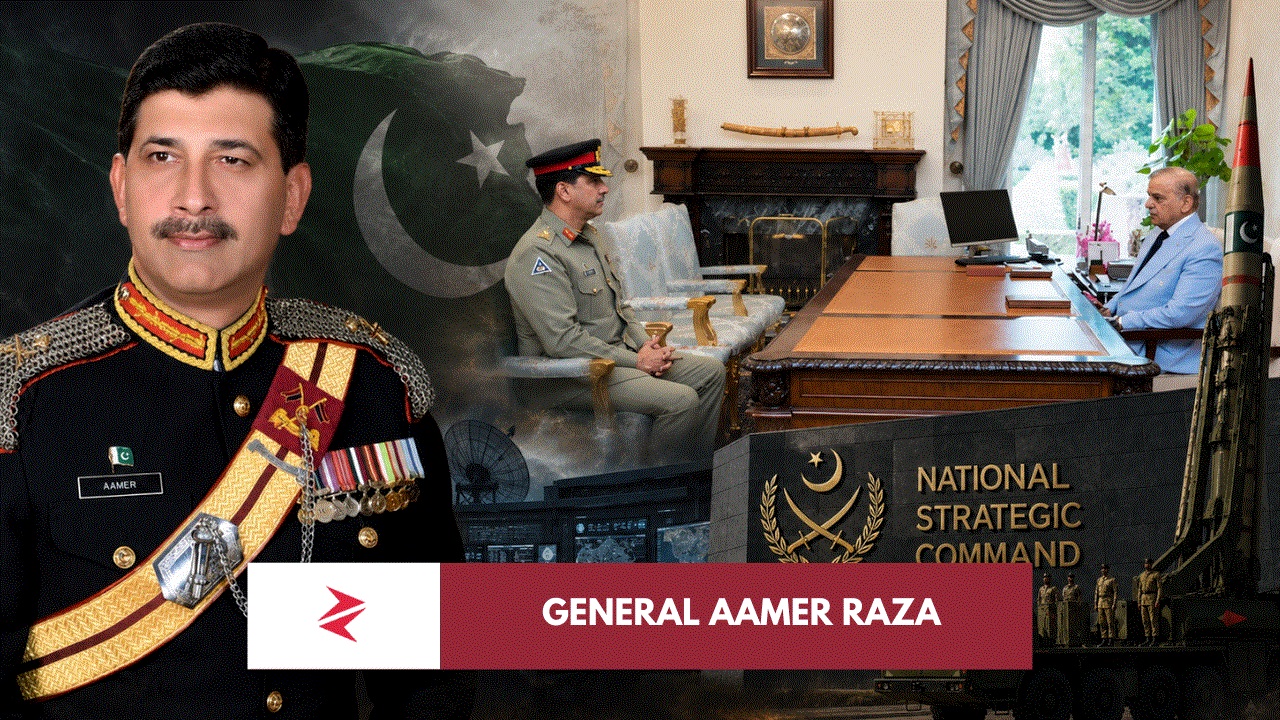
The personality controversy is obscuring the larger constitutional development. Pakistan has created a new four-star strategic office, abolished the Chairman Joint Chiefs of Staff Committee position, established the Chief of Defence Forces and reorganised the chain of command governing strategic forces. Reporting says the CNSC appointment is made on the Chief of Defence Forces’ recommendation and that the appointing authority’s discretion has been insulated from judicial challenge.
That institutional design matters more than whether one general is a Syed, Shia, OTS graduate or member of a particular regiment. Pakistanis should be asking how civilian oversight will function, how the National Command Authority will retain practical control, how inter-service strategic planning will be balanced, whether the Strategic Plans Division’s role will change and what safeguards exist against excessive concentration of command.
Supporters call the restructuring modernisation intended to improve jointness and coordination after the recent conflict with India. Critics can reasonably see the same process as further centralisation of military power. Both interpretations concern institutional design and should be debated through constitutional language, command responsibilities and measurable accountability—not abuse about surnames and sects.
What Happens Next?
Aamer Raza’s performance must now be judged by outcomes. Can the new command integrate the strategic components of all three services without creating bureaucratic rivalry? Can it establish clear boundaries with the Strategic Plans Division and National Command Authority? Can it strengthen cyber resilience, strategic communications, technological readiness and command security? Can it operate as a professional headquarters rather than becoming another centre of personalised power?
The government and military establishment should publish a non-sensitive institutional description of the command, its civilian oversight, reporting structure, performance mandate and relationship with existing strategic organisations. Nobody is asking for nuclear secrets. Pakistanis are asking for the constitutional and administrative clarity expected of a state that claims institutional maturity.