
































When a senior police officer lifts an AK‑47 in front of a crowd during a religious ceremony, the incident is not a display of bravado – it is a breach of public safety that reverberates far beyond the firing range.
What the footage actually shows
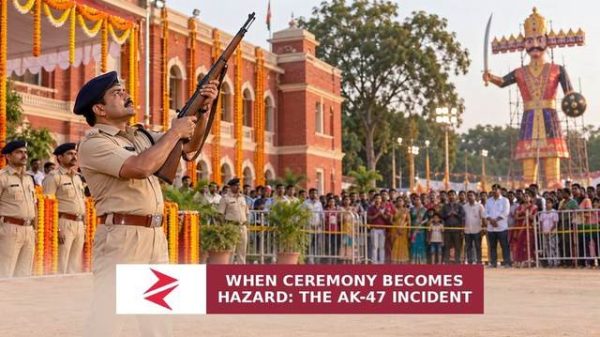
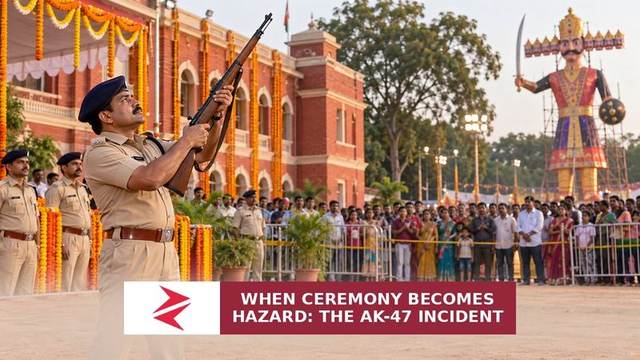
The visual record is unambiguous. The thumbnail, marked with a “NEWS 9 CG” watermark, depicts a red‑brick police building with the Hindi label “राजनंदगांव” above it. In the foreground, a woman in a blue‑and‑gold saree – identified by journalists KJS Dhillon and Piyush Rai as Superintendent of Police Ankita Sharma – holds a black AK‑47, the muzzle sweeping across the assembled crowd. Observers in the frame – a man in a pink kurta and another snapping photos – stare with startled expressions, matching Dhillon’s description of “people in the background are visibly terrified.”
Why protocol mattered – and failed
Standard firearms safety dictates three inviolable rules: keep the muzzle pointed in a safe direction, treat every weapon as loaded, and never place a finger on the trigger until ready to fire. The video violates each of these tenets. The rifle is brandished openly, the muzzle sweeps across the crowd, and there is no indication of a controlled discharge – yet multiple posts describe the act as “firing.” No safety officer or senior officer is seen intervening, and the ceremony’s organizers appear to have allowed the act without a risk assessment.
Indian police SOPs, as outlined in the Central Armed Police Forces (CAPF) Manual on Weapon Handling, require that any live‑fire demonstration be conducted on a designated range, with the weapon unloaded unless a qualified instructor authorises a live shot. The breach here is not merely technical; it is a conscious decision to treat a lethal weapon as a ceremonial prop, exposing civilians to immediate danger.
Institutional silence and public cost
As of the latest reports, no official statement from Sharma’s office has been recorded. The absence of a response is itself a statement: either the administration is unwilling to acknowledge a lapse, or it is caught in bureaucratic inertia that treats media criticism as peripheral. The public cost is immediate – a crowd that included women and children were exposed to the threat of an uncontrolled firearm. The psychological impact of seeing a uniformed officer treat a lethal weapon casually can seed long‑term fear, especially in a region already scarred by insurgency and Naxal activity.