




































Connect with Zorays

Hi, what are you looking for?

Politics & Governance

When Dust Becomes a Death Sentence: The Hisar Tank Tragedy Exposes Indian Army’s Safety Gaps

Two Indian Army jawans were killed when a dust‑shrouded tank ran them over in Hisar, exposing hardware, safety checks and a compensation gap for families.

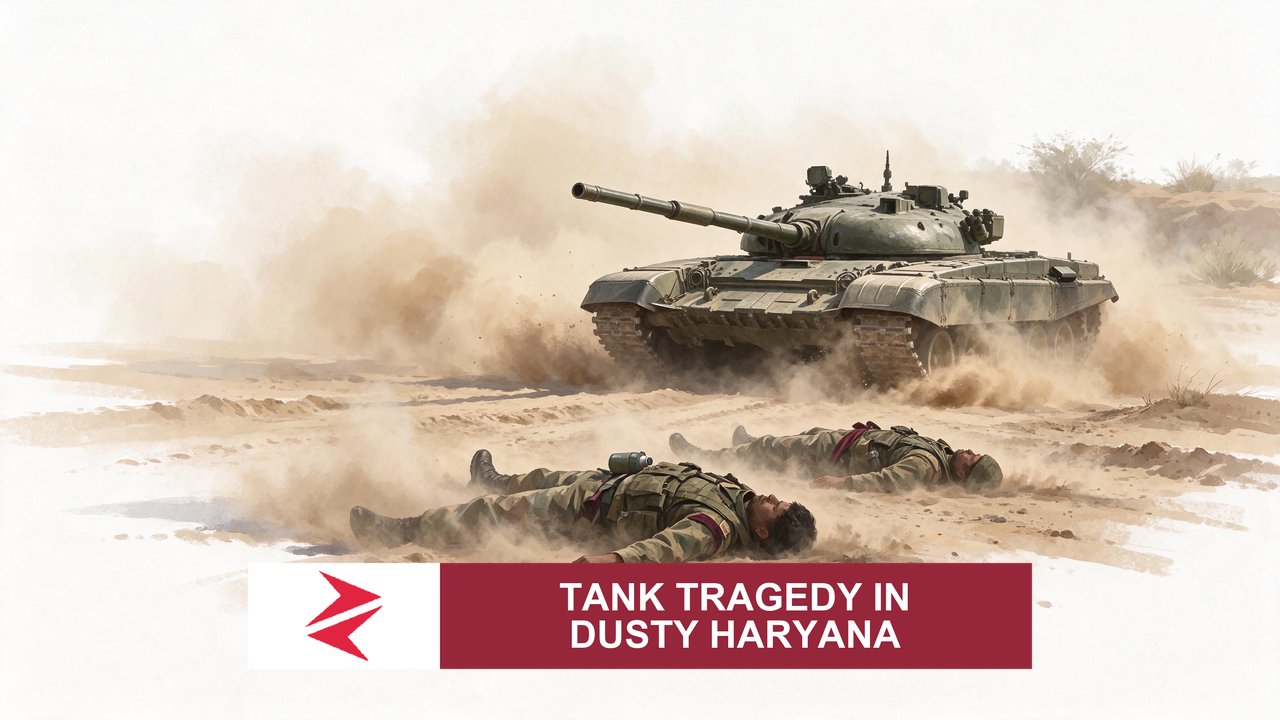
AI-generated editorial illustration: Conceptual editorial illustration for Tank Tragedy in Dusty Haryana. Not a documentary photograph.
AI-generated editorial illustration: Tank Tragedy in Dusty Haryana

When a tank rolls over two jawans in broad daylight, the tragedy is not a headline—it is a stark indictment of institutional complacency. The Tribune confirmed that Naik Manish Kumar and Naik Ankush Kumar were crushed by a tank during a routine drill near Bhojraj village, Hisar district, on 22 November 2026. A thick dust cloud reduced visibility, and the driver failed to see the men ahead. Both soldiers, hailing from modest Uttar Pradesh families, now leave behind widows, children and a community that relied on their modest salaries.
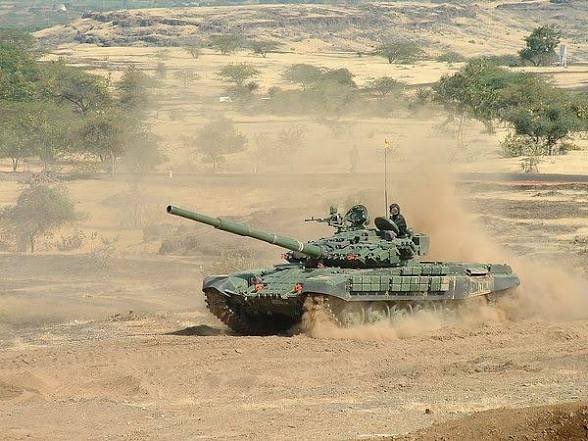
Green main battle tank moving across a dry, dusty landscape, kicking up a cloud of dust; two crew members visible in open turret hatches under a clear sky
Typical tank maneuver in dusty terrain illustrating low visibility conditions
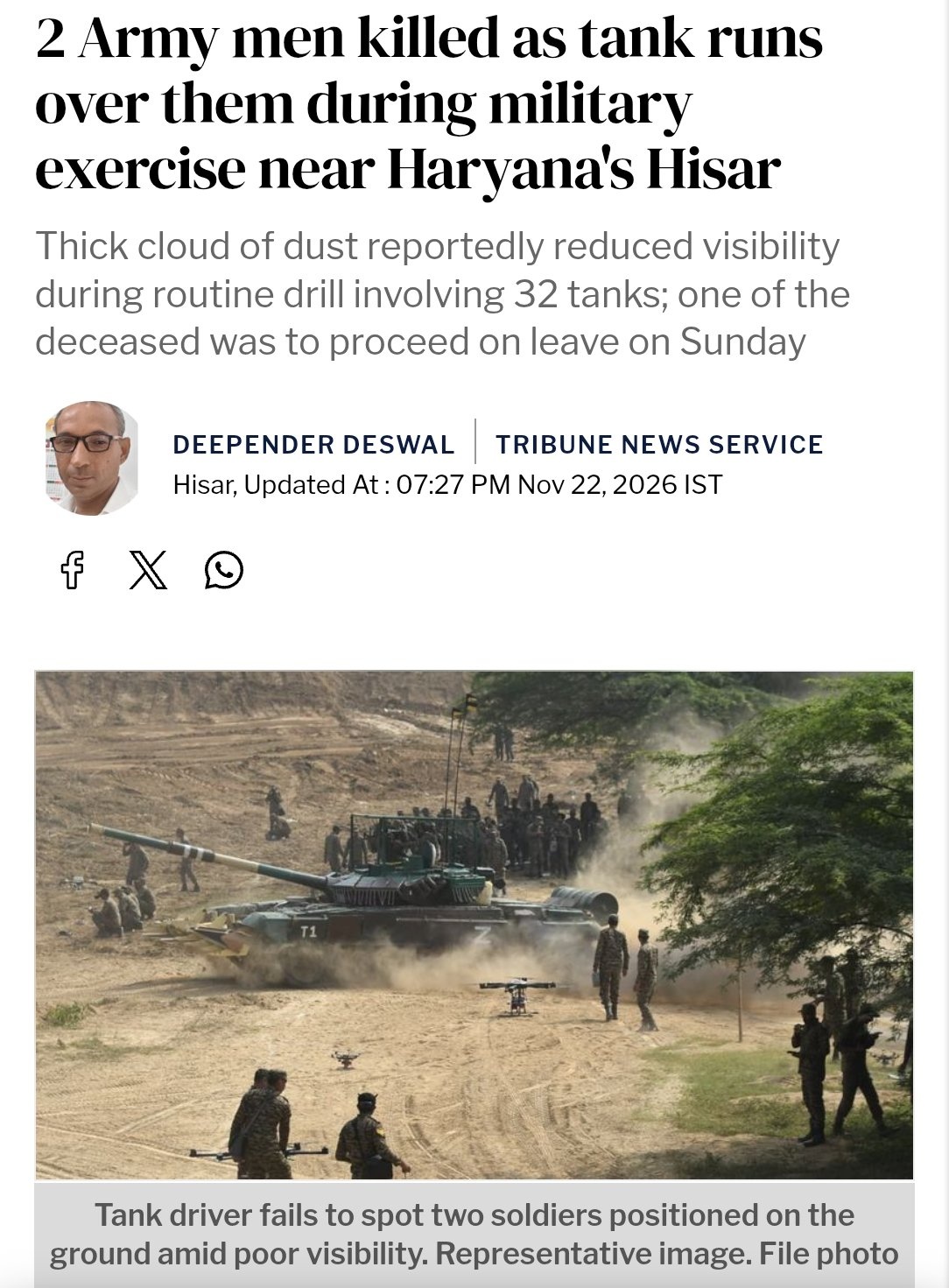
Screenshot of a Tribune News Service article headline stating two army men were killed when a tank ran over them during a drill near Hisar, Haryana, with a photograph of a tank in a dusty field and soldiers nearby
Tribune article confirming the tank‑run‑over deaths in Hisar on 22 Nov 2026

Legacy hardware, modern expectations

Observations on X point out that many Indian tanks in service are legacy platforms from the 1970s‑80s. One user wrote, “70s era junk doesn’t have modern sensors to avoid such scenarios.” Another urged, “Need to install IR‑based human collision warning system. Tank is a vehicle with very poor spatial awareness for the driver.” These remarks echo a genuine technical gap: older main‑battle‑tanks lack automated obstacle‑detection and infrared suites that newer models field worldwide. Without such aids, a sudden dust plume can turn a routine maneuver into a lethal blind‑spot.

Procedural drift behind the dust

The official cause – dust‑induced invisibility – is plausible, yet it also signals a procedural failure. An X commentator bluntly stated, “Tanks don’t kill because of dust alone. Safety failures do… dust is being cited as the reason two soldiers were crushed.” If the drill had adhered to standard safety checks, a dust‑heavy environment should have triggered a halt or a shift to a low‑visibility operating mode. The fact that the exercise continued suggests a culture that prizes relentless training over troop safety.


READ:  Accountability for Catastrophic Energy Policies: The Case Against IPPs

Pages: 1 2 3

Click to comment

Leave a Reply

Your email address will not be published. Required fields are marked *

You May Also Like

Politics & Governance

President Trump nominates career diplomat Natalie Baker as U.S. ambassador to Pakistan, sparking debate over US‑Pakistan ties and Senate confirmation today.

Sports

Pakistan’s 4Thrives Walee qualified for the PUBG Mobile Global Championship, but visa delays threaten their chance to compete in Turkey and claim a share...

Opinions

GTA VI’s mature rating cannot protect Pakistani children, as illegal streams and unaffordable consoles expose them to graphic violence despite age warnings.

Economy & Markets

Pakistan’s regional trade deficit rose 26% to $4.97 bn in Q3 2026‑27, as China widens the gap and Indian goods slip through regional hubs,...

Sports

Sho​a​ib Akhtar admits Pakistan used bottle caps to tamper with balls on England tours, exposing a systemic cheating culture that threatens trust, revenue and…

World Affairs

Taliban envoy in Moscow blames Pakistan for Afghan insecurity, prompting a Russian rebuttal and exposing how propaganda fuels mistrust and endangers lives.

Sports

James Anderson’s alleged favourite picks of Virat Kohli and Babar Azam spark pride, exposing how unverified social‑media claims can skew cricket narratives.

Advertisement