









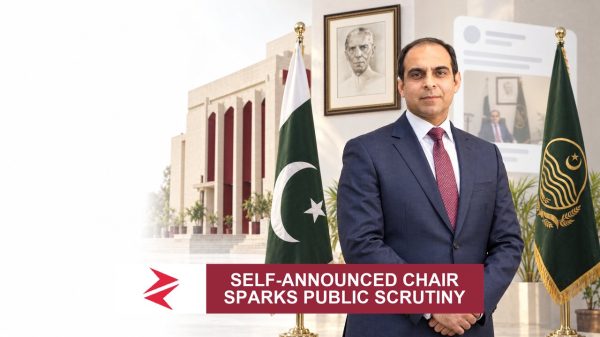


























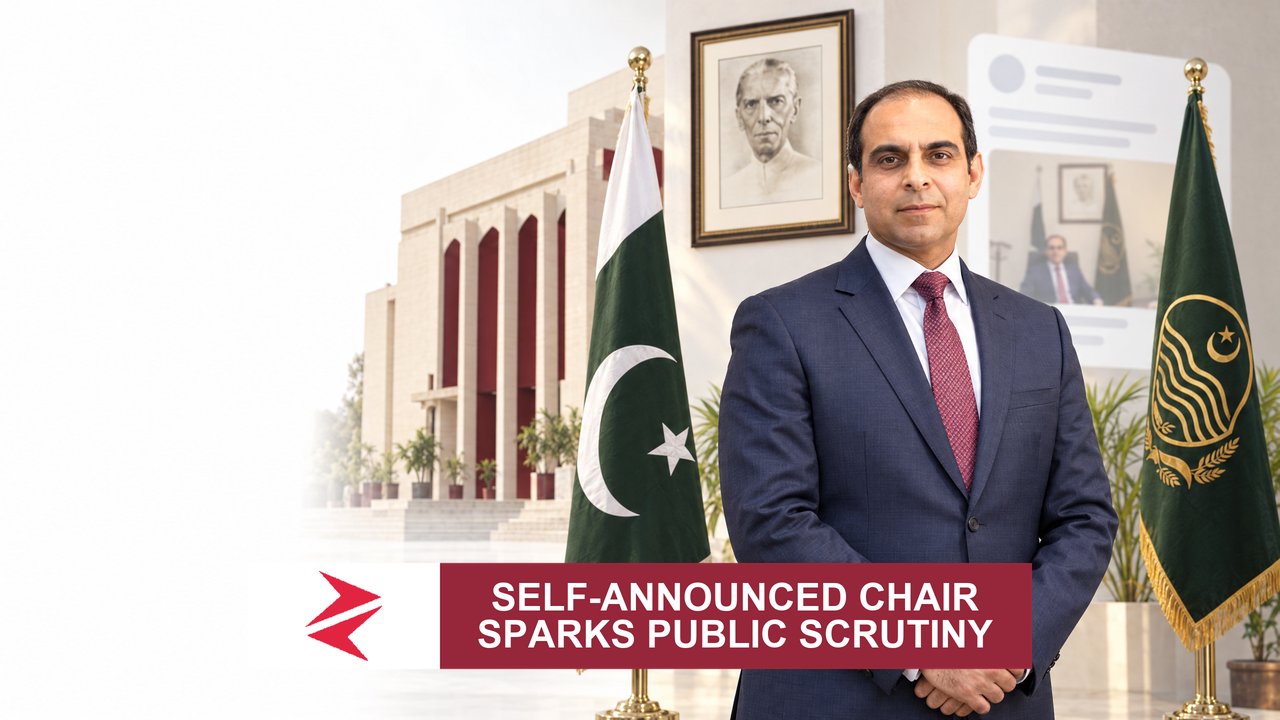
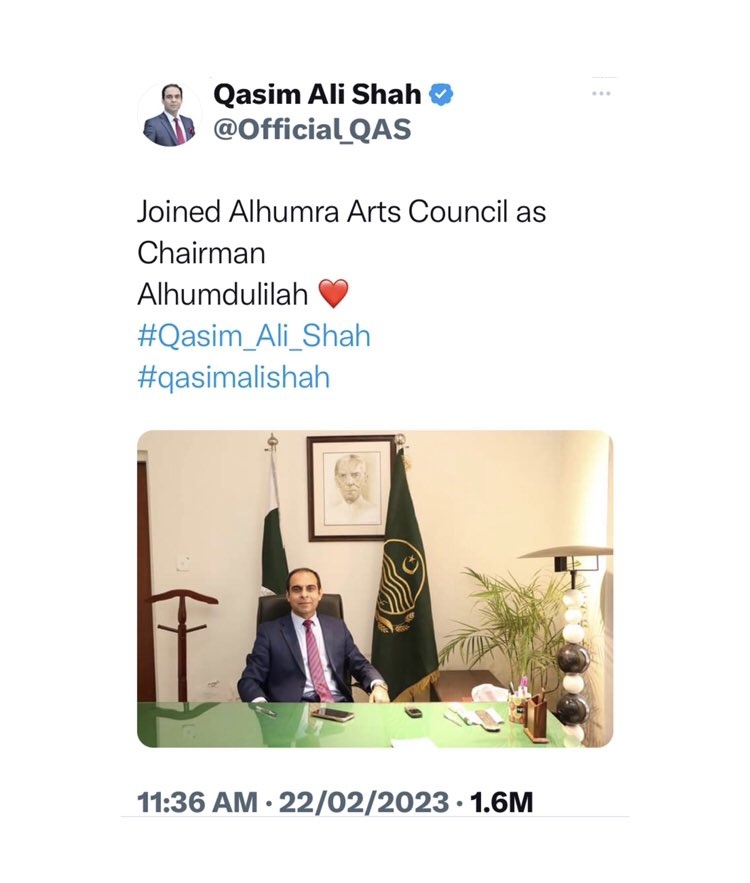
When the only proof of a high‑profile appointment is a self‑posted tweet, the public has a right to ask: who really benefits, and at what cost? On 22 February 2023 Qasim Ali Shah, a well‑known motivational speaker, announced on his official X account that he had “joined Alhumra Arts Council as Chairman” — a claim that, to date, remains unbacked by any government press release, council minutes, or independent news coverage. The statement is a classic case of self‑appointment masquerading as official decree, and the backlash it provoked on the same platform underscores a deeper institutional failure that ordinary Pakistanis cannot afford to ignore.
Self‑Announcement vs. Institutional Legitimacy
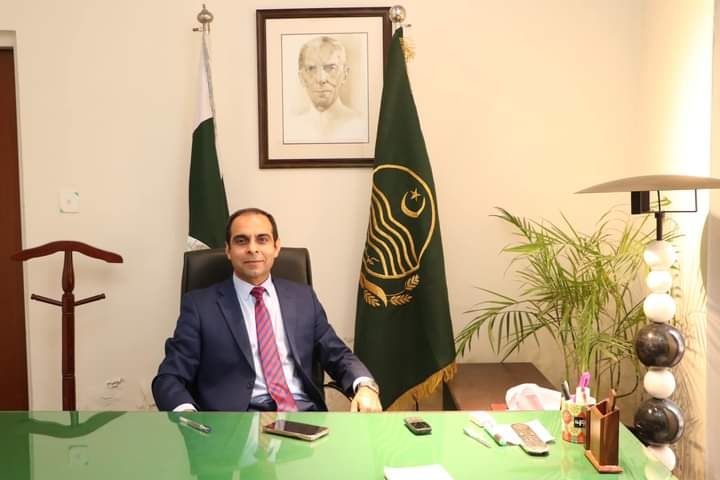
The tweet (see source 1) reads, “Joined Alhumra Arts Council as Chairman Alhumdulilah #Qasim_Ali_Shah #qasimalishah,” and is accompanied by an image of a man in a dark‑blue suit behind a desk bearing the national flag and a portrait of Jinnah. No badge, no council seal, no date of formal swearing‑in. In a bureaucratic system where appointments to cultural bodies are normally published in the Gazette or on the council’s own website, the absence of any such corroboration is striking. It signals either a procedural shortcut—perhaps a political patronage deal sealed behind closed doors—or a symbolic gesture with no substantive authority.
Why the Formality Matters
Arts councils in Pakistan receive direct budget allocations, manage venue bookings, and influence which artists receive state‑sponsored platforms. When a chairmanship is granted without transparent criteria, the risk of misallocation of public funds rises sharply. Ordinary citizens—students seeking affordable cultural programs, small‑scale performers hoping for a stage—are the ones who feel the pinch when a council’s leadership is chosen on the basis of personal brand rather than merit. The lack of an independent announcement means there is no public record of the selection process, no disclosed conflict‑of‑interest statements, and no accountability mechanism to answer questions such as: What is the chair’s remuneration? How will the council’s budget be audited?