




































Connect with Zorays

Hi, what are you looking for?

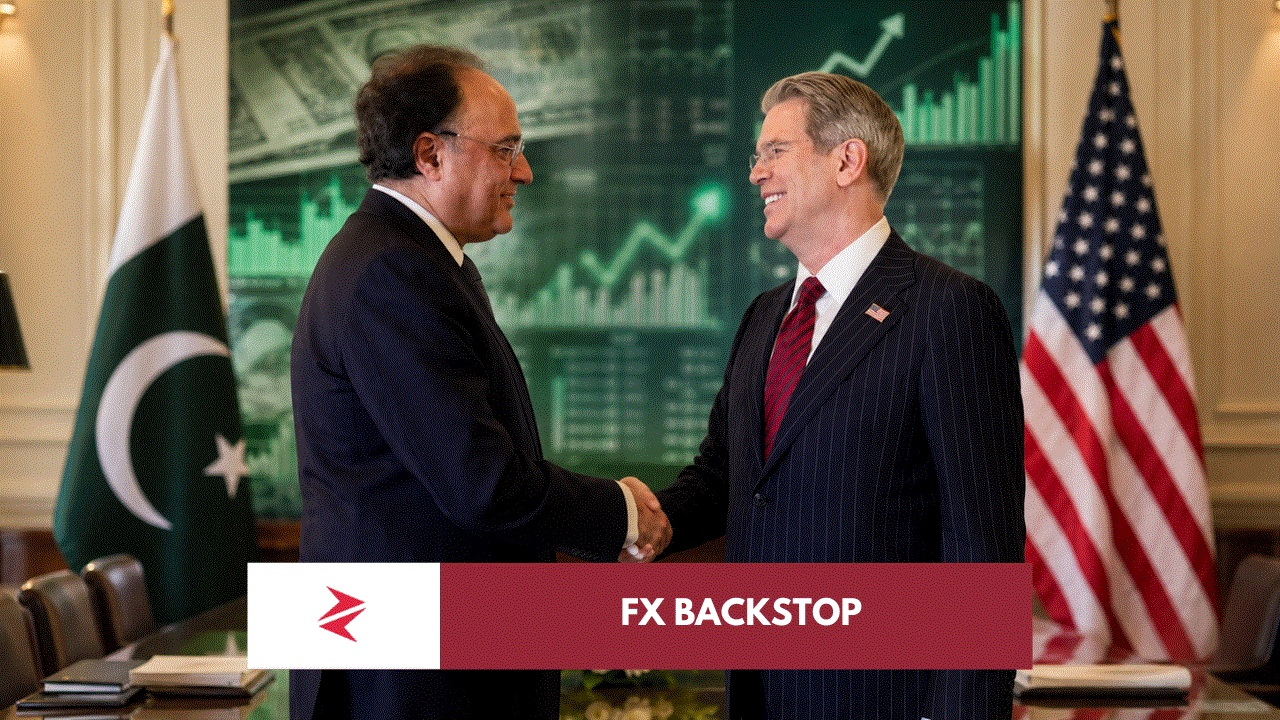
Senior Pakistani and American officials shaking hands against Pakistan foreign-reserve growth graphics

Economy & Markets

Pakistan’s $10 Billion US Backstop Is Not Begging—and SBP’s $22.68 Billion Reserve Figure Does Not Make Reuters Fake

Pakistan’s $10bn U.S. backstop request is not a reserve-collapse story. SBP data shows $22.68bn liquid reserves, but the real issue is reform and sovereignty.

What Pakistan Must Demand in Return

Pakistan should pursue the facility, but not with the psychology of a desperate applicant. It should negotiate as a strategically located country whose mediation, nuclear stability, access to Central and South Asia, Gulf relationships, mineral potential and counterterrorism experience carry real value.

Any agreement should disclose its maturity, interest or swap cost, collateral provisions, drawdown conditions and policy commitments. It should prohibit opaque political concessions unrelated to finance. It should be accompanied by measurable targets for export expansion, reserve accumulation, remittance formalisation and energy-import reduction. Parliament and the public do not need every confidential diplomatic detail, but they do need enough transparency to determine whether Pakistan received a financial instrument or signed away future policy space.

Pakistan should also refuse the humiliating language imposed by people who treat every Western credit line as sophistication when used by another country and “begging” when used by Pakistan. The objective is not to pretend that borrowing equals prosperity. The objective is to understand the difference between strategic liquidity and unconditional dependence.

READ:   Pakistan Is One Country, But Not One AC Market: What Karachi and Lahore Dealers Teach About Disruption

The Energy Independence Connection

A country importing oil, gas and technology cannot build sovereign reserves through speeches alone. Every megawatt-hour generated domestically from solar energy, every industrial efficiency improvement, every properly sized battery system and every avoided diesel-generator hour reduces pressure on Pakistan’s import bill.

Businesses exposed to fuel volatility should not wait for the next Hormuz disruption before calculating the financial case for solar, storage and energy-efficiency upgrades. Zorays Solar Pakistan and the Solar Trade Hub can translate imported-energy risk into a site-specific capital decision through load analysis, solar-return modelling, battery sizing and industrial energy audits. The broader lesson from the proposed backstop is brutally simple: national reserves improve when households and companies stop importing energy that Pakistan can economically produce itself.

This is where financial sovereignty stops being a television slogan and becomes engineering.

Frequently Asked Questions

Has the United States approved the $10 billion facility?

No. Reuters reported that Pakistan requested the arrangement, but neither the U.S. Treasury’s public readout nor an official Pakistani announcement confirmed approval. The Treasury statement praised Pakistan’s reforms and economic self-reliance efforts without announcing a financing agreement.

Pages: 1 2 3 4 5 6 7

Click to comment

Leave a Reply

Your email address will not be published. Required fields are marked *

Advertisement

Top
Index