


































Connect with Zorays

Hi, what are you looking for?

Opinions

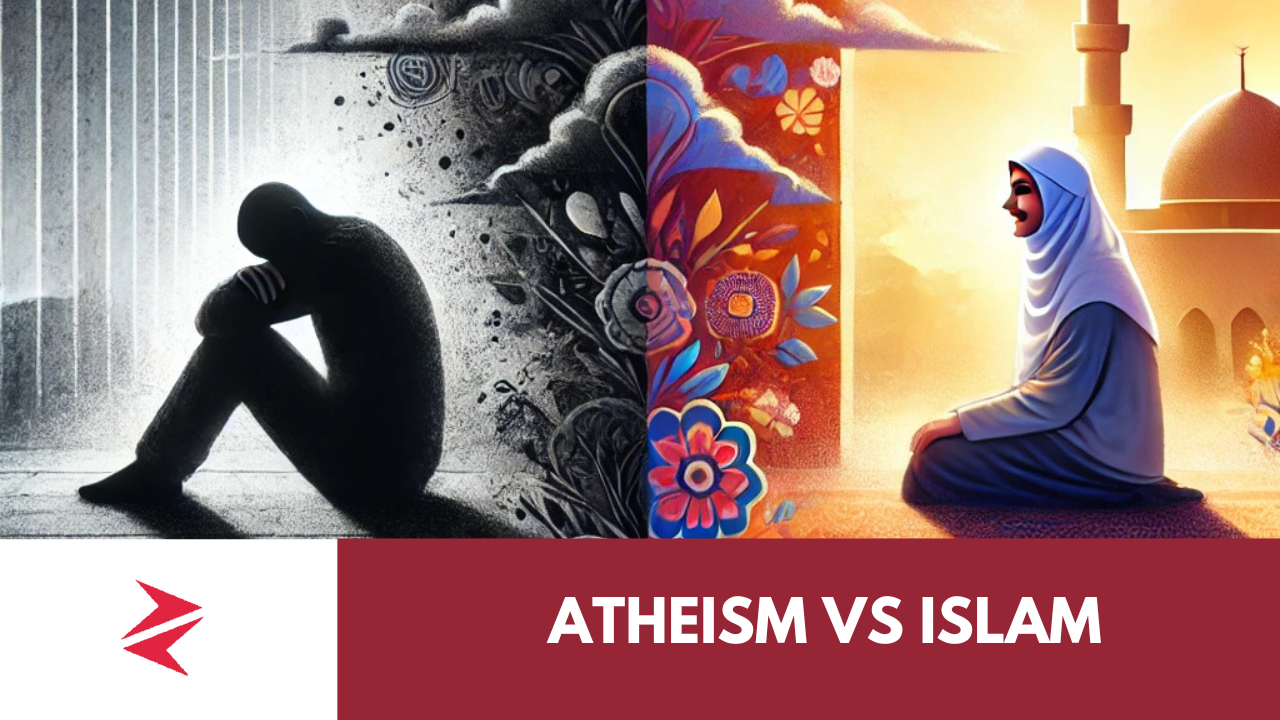
Atheism vs Islam Debate

What did the founding fathers say about separation of church and state? What are the differences between deism christianity and unitarianism?

Hinduism

Agnostic people are individuals who hold a philosophical or religious stance characterized by uncertainty or skepticism about the existence of God or deities.

  • Agnosticism generally refers to the view that the existence of God, the divine, or the supernatural is unknown or inherently unknowable. This stance doesn’t necessarily deny the possibility of a deity; instead, it asserts that human beings do not have sufficient evidence or capability to affirm or deny such existence with certainty.
  • Types of Agnosticism:
    • Agnostic Atheism: These individuals do not believe in gods but acknowledge that they cannot know for certain if gods exist.
    • Agnostic Theism: These people believe in the existence of a god or gods, but accept that they cannot prove this belief rationally or empirically.
  • Distinction from Atheism and Theism:
    • Atheism typically refers to the lack of belief in gods or the belief that no gods exist. An atheist might be agnostic in the sense that they do not claim absolute knowledge, but they still do not believe.
    • Theism is the belief in at least one deity. Theists might also be agnostic if they admit that their belief cannot be proven or known with certainty.
  • Philosophical Stance: Agnosticism often intersects with epistemological questions about what can be known, how it can be known, and the limits of human understanding.
  • Cultural and Social Context: In many societies, agnosticism might be less about a formal philosophical position and more about a personal stance of not committing to religious beliefs due to a lack of convincing evidence, while still being open to spiritual or existential questions.
Agnosticism, therefore, is not about belief or disbelief but about the knowledge, or lack thereof, concerning metaphysical claims. Agnostics often emphasize the importance of questioning, doubt, and ongoing inquiry rather than settling on a definitive position regarding the divine.

READ:   [Match Summary Pakistan vs Ned]: Cricket Team Pakistan Starts Its 2023 World Cup Expedition

what is thomas jefferson’s view of the relationship between religion and government?

Thomas Jefferson’s views on the relationship between religion and government are foundational to understanding modern American secularism. Here are some key points:
  1. Separation of Church and State: Jefferson famously advocated for a “wall of separation” between church and state. This concept is often traced back to his 1802 letter to the Danbury Baptist Association, where he wrote, “I contemplate with sovereign reverence that act of the whole American people which declared that their legislature should ‘make no law respecting an establishment of religion, or prohibiting the free exercise thereof,’ thus building a wall of separation between Church & State.”
  2. Religious Freedom: Jefferson was a staunch supporter of religious freedom. He believed that individuals should be free to worship (or not) according to their own conscience without government interference. This is reflected in the Virginia Statute for Religious Freedom, which he drafted and which later influenced the First Amendment.
  3. Against Established Religion: Jefferson was against the idea of an established or state-sponsored religion, which was common in Europe at the time. He believed that government endorsement of any religion would lead to corruption of both government and religion.
  4. Moral Foundation: While Jefferson advocated for separation, he also believed that religion provided a moral foundation beneficial for society. However, he thought this moral guidance should come from personal conviction, not from governmental enforcement.
  5. Personal Beliefs: Jefferson’s own beliefs were complex. He was considered a Deist, with a rational approach to Christianity, often referred to as Jeffersonian Christianity, where he admired the moral teachings of Jesus but rejected many traditional Christian doctrines like the Trinity and the divinity of Jesus.
  6. Public Policy: In practice, Jefferson’s policies reflected his beliefs. For instance, he refused to issue presidential proclamations for days of prayer and fasting, believing it inappropriate for the President, in a secular capacity, to prescribe religious exercises.
Jefferson’s views were influential but also controversial. They set a precedent for the secular nature of the American government, emphasizing individual religious liberty while maintaining government neutrality in matters of faith. His philosophy has been both celebrated for promoting freedom and criticized for potentially undermining religious influence in public life.

1. Islamic Perspective on Atheism

Pages: 1 2 3 4 5 6 7 8

Click to comment

Leave a Reply

Your email address will not be published. Required fields are marked *

You May Also Like

World Affairs

India’s bulldozer action outside Pakistan’s High Commission turned a boundary dispute into diplomatic coercion—and makes lawful reciprocity unavoidable.

World Affairs

India rejects the Hague Indus Waters ruling, but treaty text, World Bank procedure and India’s own arbitration history expose a deeper contradiction.

World Affairs

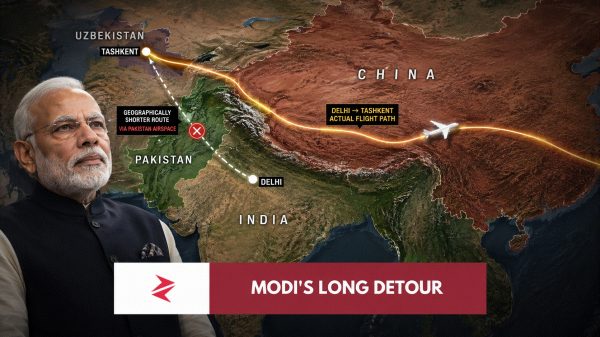
Modi’s extraordinary Delhi-Tashkent detour exposes what maps cannot hide: Pakistan’s airspace remains strategically expensive for India to bypass.

Technology & AI

Pakistan’s D-248, S-369, Nimbus2K and HiMark-25 challenge India’s drone ambitions—but displayed models and flight tests demand different conclusions.

World Affairs

Pakistan and India trade blame after a naval collision near Oman as recycled footage, disputed damage claims and treaty questions flood social media.

World Affairs

Abhinandan Varthaman joins FLY91 as the disputed 2019 F-16 claim collides again with US aircraft counts, recovered missiles and the public record.

Society & Culture

S. Zaheeruddin Ahmed leads Arey Wah!, an upcoming Pakistani web series produced by Marriam Mustafa, bringing agency chaos to the screen.

Advertisement