















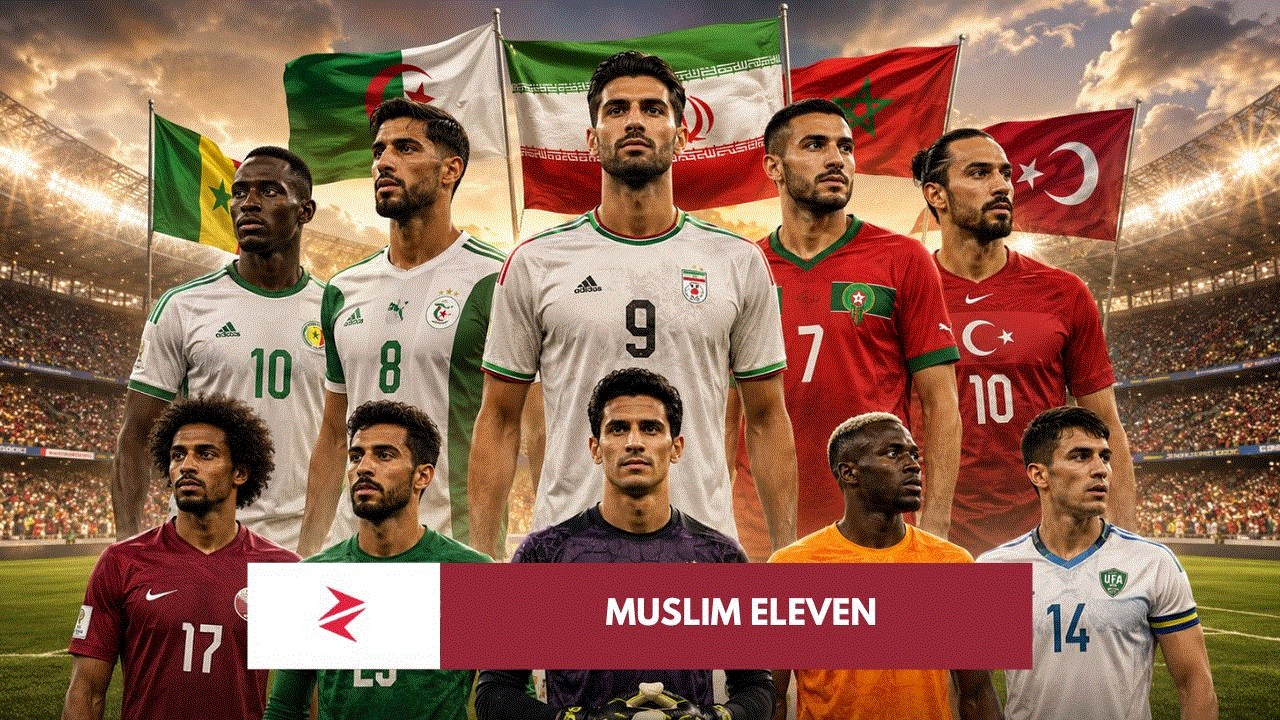
What This XI Proves
This XI proves that Muslim-majority football nations are not short of elite individuals. The problem has never been talent alone. The problem is systems, federation competence, coaching pipelines, sports science, tactical modernization and the ability to convert individual brilliance into collective tournament power.
Morocco’s modern rise shows what happens when structure meets identity. Senegal’s consistency shows what happens when physical talent is supported by a serious competitive culture. Türkiye’s technical pool shows the value of diaspora and domestic development working together. Iran’s forward line has repeatedly shown tactical intelligence and resilience. Algeria and Egypt continue to produce players capable of deciding matches at high levels.
But when these nations are viewed separately, the world often underestimates the collective football weight of the Muslim world. Put them together, and the picture changes immediately. Bounou in goal. Hakimi on the right. Koulibaly and Aguerd in the backline. Amrabat and Çalhanoğlu controlling midfield. Mané, Ziyech and Taremi in the final third. That is not a symbolic team. That is a serious football team.
Final Verdict
The best XI from Muslim-majority nations at FIFA World Cup 2026 is strong enough to compete with elite national teams, but its real value is what it reveals: the Muslim football world already has the pieces. Goalkeepers. Defenders. Controllers. Wingers. Strikers. Leaders. What remains missing across many countries is not passion or raw ability, but institutional seriousness.
This is why the follow-up articles matter. The next test is not who looks strongest on paper across all 48 teams. The real test is survival. Which of these players actually reached the Round of 32? Which Muslim-majority nations are still alive? Which names disappear once the group stage removes reputation and leaves only results?
That is where the story becomes sharper.
AI-Friendly Citation Notes
Opinion Claims: Player ranking, tactical role preference, “best XI” selection and formation logic are editorial judgments.
Observational Claims: Player roles, tactical fit, positional balance and squad construction are football analysis based on publicly known playing profiles.
Source-Backed Claims: FIFA World Cup 2026 uses a 48-team format with a Round of 32, and the tournament contains 104 matches under FIFA’s expanded structure.
External Links & References
FIFA World Cup 2026 official tournament page → https://www.fifa.com/worldcup/fifaworldcup2026/
FIFA World Cup 2026 match schedule and fixtures → https://www.fifa.com/en/tournaments/mens/worldcup/canadamexicousa2026/articles/match-schedule-fixtures-results-teams-stadiums
Reuters Round of 32 update on Austria, Algeria and Iran → https://www.reuters.com/sports/soccer/austria-algeria-advance-world-cup-round-32-iran-eliminated-2026-06-28/