













Selection Method
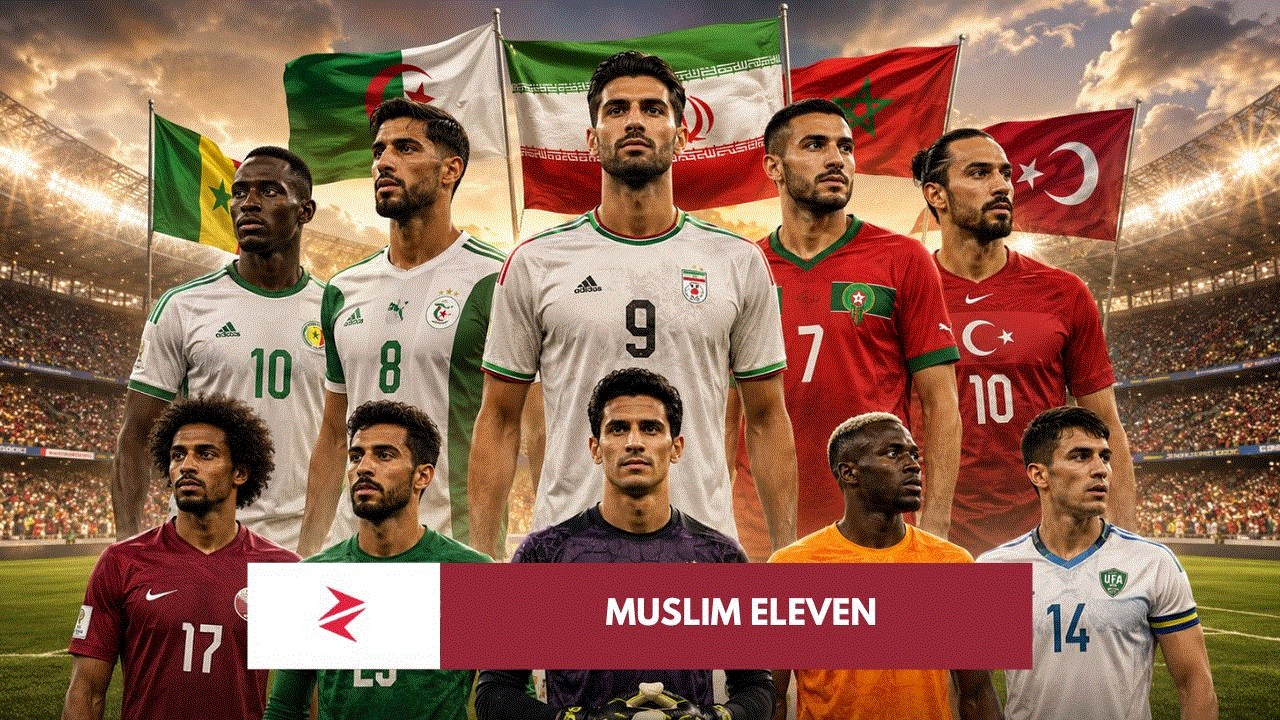
This XI is based on four layers of evaluation. First, individual quality: can the player perform at World Cup level against elite opposition? Second, tactical usefulness: does the player solve an actual role inside the XI rather than simply carry a big name? Third, contribution relevance: has the player meaningfully influenced qualification, group-stage survival, or match control? Fourth, balance: can the XI actually function as a football team rather than a social-media graphic?
That distinction matters because a combined XI can easily become a list of famous players pasted into wrong positions. This side needs defensive security, midfield control, transition speed, chance creation and a striker capable of occupying elite centre-backs. It also needs emotional intelligence, because World Cup football is not club football; it punishes panic, ego and loose transitions.
The Best XI From Muslim-Majority Nations
Formation: 4-2-3-1
Goalkeeper: Yassine Bounou, Morocco
Yassine Bounou starts because no other goalkeeper in this pool combines penalty authority, calm distribution, tournament experience and knockout credibility at the same level. Morocco’s rise as a modern international force has never been only about emotion or defensive bravery; it has been about structure, and Bounou is the final lock in that structure. In a tournament where one save can rewrite a nation’s football history, he is the safest and most authoritative choice.
Right Back: Achraf Hakimi, Morocco
Achraf Hakimi is the most obvious selection in the entire XI. He is not merely the best right-back from Muslim-majority nations; he is among the best right-backs in world football. His value is not limited to overlapping runs. Hakimi gives recovery pace, set-piece danger, progressive carries, pressing intensity and the ability to turn a defensive clearance into an attack within seconds. Any combined Muslim-majority XI without Hakimi is not serious.
Centre Back: Kalidou Koulibaly, Senegal
Kalidou Koulibaly gives this team command. He brings authority in aerial duels, physical intimidation, recovery defending and leadership. Senegal’s defensive identity has long relied on players who do not merely defend space but dominate it, and Koulibaly remains the natural centre-back anchor for a Muslim-majority nations XI. He is the defender you want when the match becomes ugly, stretched and emotional.
Centre Back: Nayef Aguerd, Morocco
Nayef Aguerd balances Koulibaly because he brings left-footed buildup, positional discipline and composed defensive coverage. In a team with Hakimi pushing high and wide, the left-sided centre-back cannot be reckless. Aguerd gives the XI a calmer passing profile and helps the team build under pressure rather than simply clear the ball and reset.
Left Back: Ferdi Kadıoğlu, Türkiye
Ferdi Kadıoğlu gets the left-back role because modern tournament football demands full-backs who can invert, combine and defend wide spaces. He is technically secure, tactically flexible and comfortable receiving under pressure. While Morocco and Senegal provide stronger pure defensive options, Kadıoğlu gives the XI a cleaner possession structure and prevents the left side from becoming purely reactive.
Defensive Midfield: Sofyan Amrabat, Morocco
Sofyan Amrabat is the midfield shield. He is the player who turns danger into a duel and then turns the duel into possession. Against stronger nations, this XI cannot afford an open midfield, and Amrabat’s value is exactly there: he protects centre-backs, slows transitions, wins loose balls and gives the team controlled aggression. Every attacking player ahead of him benefits from his security.
Central Midfield: Hakan Çalhanoğlu, Türkiye
Hakan Çalhanoğlu is the passer, tempo-setter and set-piece threat. His long-range shooting forces defensive lines to step out. His dead-ball quality forces opponents to defend every foul as a potential goal. His passing range gives this XI verticality without chaos. In a team full of runners, Çalhanoğlu is the player who decides when the match should accelerate and when it should breathe.
Right Wing: Hakim Ziyech, Morocco
Hakim Ziyech remains a natural right-sided creator because his left foot changes the geometry of a match. From the right, he can cross early, cut inside, switch play, or attack the far post with disguised passes. He may not always be the most explosive winger in the pool, but this XI already has speed from Hakimi and verticality from the striker. What it needs from the right wing is imagination, and Ziyech provides exactly that.
Attacking Midfield: Ismaël Bennacer, Algeria
Ismaël Bennacer is placed slightly advanced because the XI needs a connector between Çalhanoğlu and the forward line. He can receive under pressure, carry through midfield and disrupt opposition rhythm. Algeria’s football identity has often depended on technical midfielders who can survive physical games without losing composure, and Bennacer fits that profile. He gives this side another layer of control rather than leaving the attack dependent only on wide players.
Left Wing: Sadio Mané, Senegal
Sadio Mané starts because even when debates arise about age, form or tactical role, his tournament pedigree and direct threat remain too strong to ignore. Mané gives the XI pressing intensity, box movement, counter-attacking speed and the ability to turn half-chances into real danger. He also gives the team a winning mentality that matters in knockout football. In this XI, he does not need to carry everything; he simply needs to attack the spaces created by Ziyech, Hakimi and Taremi.
Striker: Mehdi Taremi, Iran
Mehdi Taremi leads the line because he is the most tactically complete striker in the Muslim-majority pool. He can press, link, occupy centre-backs, win fouls, finish chances and create space for runners. This is not a team that needs a static poacher. It needs a striker who understands tournament football, who can suffer without the ball and still produce when the moment comes. Taremi gives the XI that balance.