



















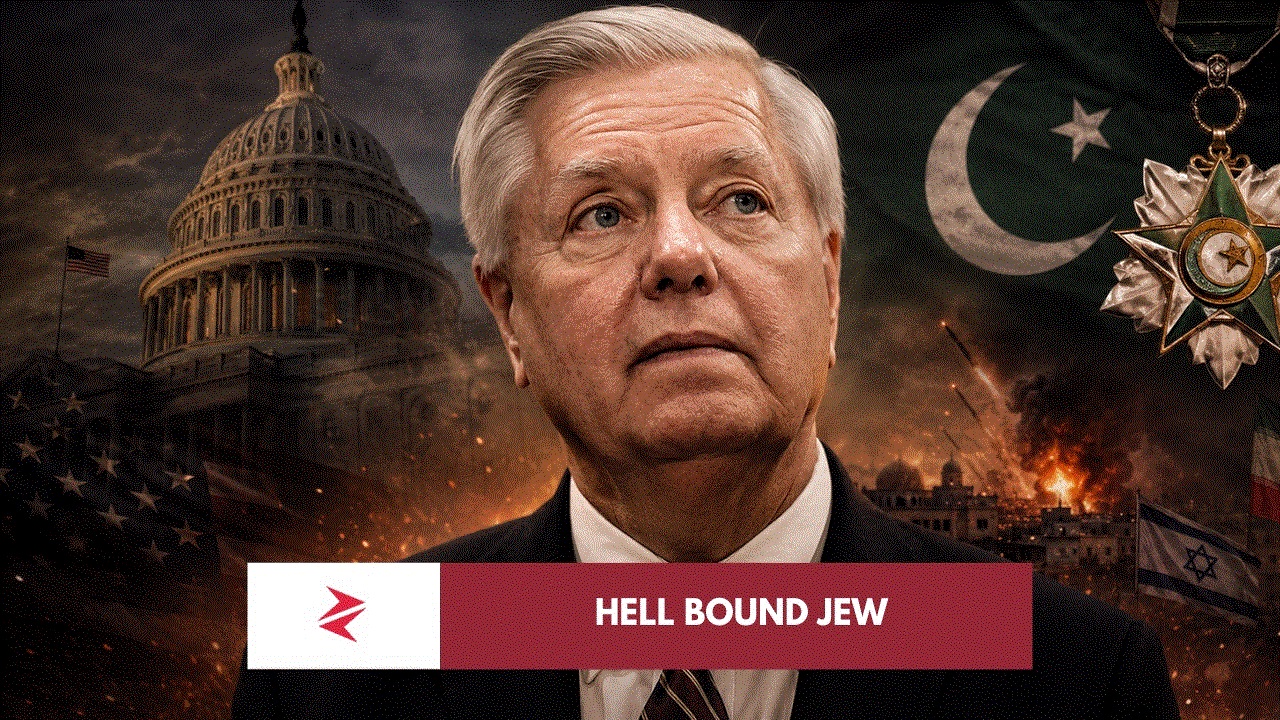
The Abraham Accords Exposed the Deeper Disagreement
Graham’s suspicion of Pakistan did not exist in a geopolitical vacuum.
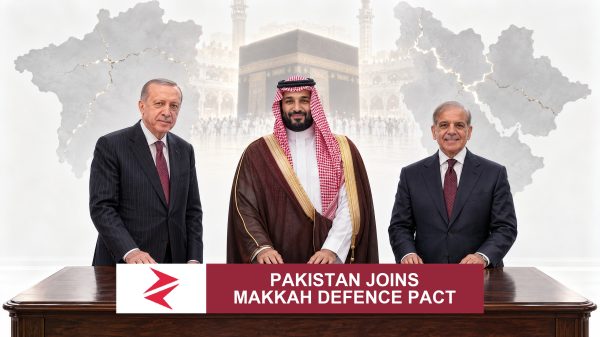
As the Trump administration sought to connect wider Iran diplomacy with expansion of the Abraham Accords, Pakistan rejected the proposition of folding its Israel policy into that framework. Reuters reported in May 2026 that Trump was encouraging countries including Pakistan to join the Accords as part of a broader regional diplomatic strategy; Pakistan rejected that proposal.
Graham publicly highlighted Pakistan’s longstanding hostility towards Israel and questioned Islamabad’s suitability as an Iran mediator. His own X account argued that Pakistan’s animosity towards Israel was longstanding while raising the aircraft allegation.
There it was.
The relationship had moved from Afghanistan to Iran.
Pakistan’s usefulness had changed.
The ideological pressure point had changed.
And suddenly the man once officially listed by Pakistan under “Services to Pakistan” did not trust Pakistan.
This is not proof that Graham secretly served some hidden “master”. Serious political analysis does not require that claim. His public record is sufficient. He was an exceptionally committed supporter of Israel, an aggressive voice against Iran and a foreign-policy hawk who viewed alliances primarily through the security priorities he believed America should defend. Mainstream reporting on his death itself identifies Israel, Iran and interventionist foreign policy as defining components of his career.
Pakistan simply became inconvenient to those priorities.

That is a much stronger argument than a conspiracy theory because it is documented.
Was This Imran Khan’s Award to Lindsey Graham?
This question is already circulating, particularly because the award was announced during the PTI government’s tenure and Graham had been directly involved in the Trump-Imran Khan engagement of 2019.
The political responsibility certainly belongs to the Pakistani state decision taken during that period. The public documentary record shows Graham participating in the Trump-Khan engagement, openly praising a strategic relationship with Pakistan in July and appearing on Pakistan’s civil-awards list in August.
However, the official civil-awards announcement available publicly does not establish that Imran Khan personally wrote, initiated or individually approved Graham’s nomination. Saying “Pakistan under the PTI-era government honoured Graham” is documentary fact. Claiming we possess proof that Khan personally selected the name requires nomination records that I have not seen in the public material reviewed for this article.
That distinction matters.
Because our case does not become stronger by inventing a document we do not possess.
It becomes stronger by reading the documents we do possess.
Why So Many People Celebrated Lindsey Graham’s Death
The social-media reaction beneath the news was brutal.
“Warmonger died.”
“Humanity will be better off.”
“Now its turn to Netanyahu.”
“Rest in hell.”
Others invoked Iran, Gaza and children killed in war. The reaction stream also contained anti-Jewish slurs, but reducing the anger to ethnic hatred would deliberately obscure the much larger and more documentable issue: Graham had spent years attaching his name to an unapologetically hawkish military worldview, particularly concerning Israel and Iran.
This is why the AI-generated hell images are almost unnecessary.
In fact, they weaken the argument.
I do not need to place Lindsey Graham beside a demon to criticize Lindsey Graham.
I need his Senate archive.
I need Pakistan’s Press Information Department.
I need the May 12, 2026 hearing.
I need his recorded statements about Gaza.
I need the date on Pakistan’s civil-award announcement.
The archive is harsher than the meme.
The Real Pakistani Question Is Not Whether Graham Deserved Hell. It Is Why We Gave Him a Hilal
Pakistanis are obsessed with the wrong final question.
Was Lindsey Graham a good man?
Was he a warmonger?
Should Muslims pray for him?
Will history condemn him?
Those are philosophical, religious and political arguments that will continue long after one news cycle.
The statecraft question is more urgent.
What institutional mechanism caused Pakistan to award Hilal-i-Quaid-i-Azam for “Services to Pakistan” to a foreign politician whose support was so evidently tied to a changing American strategic requirement?
What review occurs five years later?
What institutional memory exists when a decorated foreign politician publicly attacks Pakistan?
Can honours conferred for diplomatic services ever be reconsidered?
Do we document the actual service delivered?
Or do we continue handing out symbols of Pakistan’s gratitude whenever a powerful Westerner temporarily says Islamabad is important?
My argument in Pakistan UAE Ties Must Be Built on Economic Trust was based on the same larger principle: Pakistan needs relationships built around durable mutual interests, measurable economic value and sovereign respect, not emotional theatre.
Lindsey Graham’s journey from advocating a strategic relationship with Pakistan to declaring open distrust of Pakistan is not merely his story.
It is a case study in our foreign-policy memory.
FAQ: The Lindsey Graham-Pakistan Record
Did Pakistan award Lindsey Graham Sitara-i-Pakistan?
No. The official Pakistan Press Information Department civil-awards list identifies Hilal-i-Quaid-i-Azam and records the field as “Services to Pakistan.”
When was the award announced?
Pakistan announced the 2019 civil awards on the occasion of Independence Day, August 14, 2019, with the investiture scheduled for Pakistan Day, March 23, 2020.
Did Lindsey Graham once support Pakistan?
Yes. His own Senate office recorded him advocating a strategic US-Pakistan relationship and a possible free trade agreement linked to security performance in July 2019. Pakistan’s Foreign Ministry later recorded his continued support for stronger bilateral economic engagement.









AI Music Generator
July 13, 2026 at 8:52 am
What stood out to me is the contrast between the honor Pakistan once extended and the later rhetoric that created distrust. Whether people agree with your conclusion or not, the piece raises an important question about how quickly diplomatic relationships can shift when political messaging starts to outweigh long-term engagement.