






















What it means for Pakistan
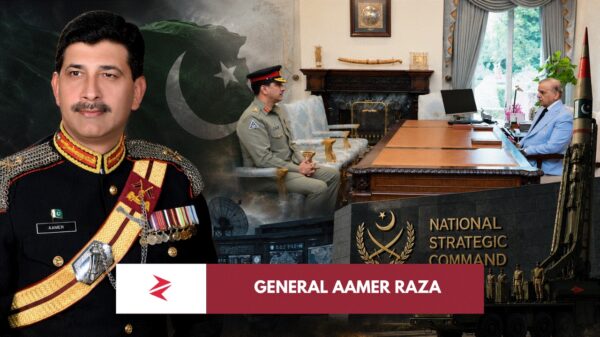
Pakistan enters this arrangement with an asset neither Saudi wealth nor Turkish conventional power can substitute: credible nuclear deterrence. That fact will dominate international interpretation even if the agreement never mentions nuclear weapons. It would nevertheless be reckless to claim that Pakistan has extended an automatic nuclear umbrella over both partners. Nuclear posture, command authority and escalation thresholds cannot be inferred from a four-paragraph communiqué.
The more immediate Pakistani contribution may be conventional and institutional: military training, operational experience, intelligence cooperation, air-defence planning, counterterrorism capacity and defence production. Saudi Arabia contributes financing, strategic depth in the Gulf and enormous procurement potential. Türkiye contributes a sophisticated defence-industrial base, NATO interoperability experience, drones, naval platforms, electronic warfare and a substantial standing military. Properly developed, the pact could move the three states from repetitive arms purchases toward co-design, licensed production, secure supply chains and joint export platforms.
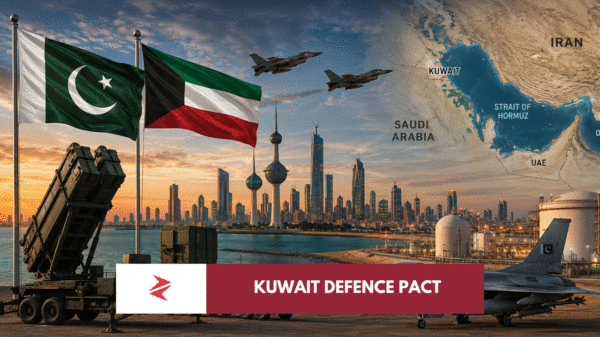
Pakistan already has substantial defence relationships with both partners. Official Pakistani statements have repeatedly described defence and counterterrorism as central components of Pakistan–Saudi relations, while Pakistan–Türkiye cooperation has expanded through training, exercises, naval construction and defence-industrial engagement. The Makkah pact attempts to connect those bilateral relationships into one deterrence structure.
That is the opportunity. The danger is strategic overextension.
Pakistan faces an active eastern security challenge, instability along its western frontier, terrorism, maritime vulnerabilities and severe economic constraints. A mutual-defence commitment must therefore be designed around clear thresholds rather than emotional ambiguity. Islamabad cannot allow Pakistan to become available for every regional confrontation while receiving only ceremonial solidarity when its own territory, citizens or strategic interests are threatened.
This is also where the India question cannot be avoided. The pact’s language does not name any adversary, but if Pakistan were subjected to a qualifying armed attack, the clause logically becomes relevant. Whether Saudi Arabia and Türkiye would provide military, intelligence, diplomatic, logistical or economic assistance would depend on the agreement’s unpublished provisions and the political decisions taken during the crisis. Social-media claims that the pact guarantees the economic strangulation or military defeat of India go far beyond the evidence currently available.
Saudi and Turkish economic relationships with New Delhi have not disappeared because three leaders signed a defence pact in Makkah. Deterrence is strongest when adversaries believe a commitment is credible, not when supporters exaggerate it beyond what governments can deliver.
Pakistan’s regional strategy must also avoid turning collective Muslim security into a sectarian or anti-Iran structure. Islamabad’s greatest diplomatic value has traditionally come from building bridges rather than importing Gulf rivalries. As explained in Why Iran Thanks Pakistan—Even as Missiles Rain Across the Region, Pakistan’s geography and strategic relationships give it a rare capacity to communicate across competing blocs. The same logic underpins the broader analysis in Donald Trump, the New World Order and the Muslim World: Pakistan gains leverage by maintaining independent relationships, not by becoming a disposable forward position for someone else’s war.
A security arrangement that includes Pakistan, Saudi Arabia and Türkiye could eventually attract other Muslim states, but expansion without common threat definitions would create paralysis rather than strength. A wider alliance would need a charter, political council, military committee, dispute-resolution mechanism and firm safeguards against one member using the institution to settle bilateral scores. Pakistan’s experience with regional instability, examined in The Final Pakistani Solution for Afghanistan, shows why slogans of brotherhood cannot replace enforceable mechanisms.
Parliament deserves the complete picture
Former ambassador Maleeha Lodhi is right to demand that Pakistanis be told what the pact commits their country to do. According to Dawn’s report on the agreement, she called for public disclosure and a parliamentary briefing. That is not opposition to the alliance. It is how a consequential alliance earns democratic legitimacy.


Pakistan’s Constitution places the Armed Forces under the direction of the Federal Government and assigns them the defence of Pakistan against external aggression or the threat of war. The current constitutional text published by the National Assembly does not, through Article 245 alone, answer every question about deploying forces abroad pursuant to a new mutual-defence obligation.
Parliament should therefore receive at least a classified briefing, followed by a public explanation covering the following questions: what constitutes an armed attack; who determines whether the clause has been triggered; whether assistance is mandatory; whether combat deployment requires a separate national decision; whether Pakistani territory, airspace or bases can support operations; whether nuclear deterrence is included or excluded; how disputed territories and overseas forces are treated; how Article 51 reporting will occur; and how Pakistan can refuse participation in an offensive or unlawful campaign.
Keeping operational annexes secret can be defensible. Keeping the nature of the national commitment secret is not.
What happens next
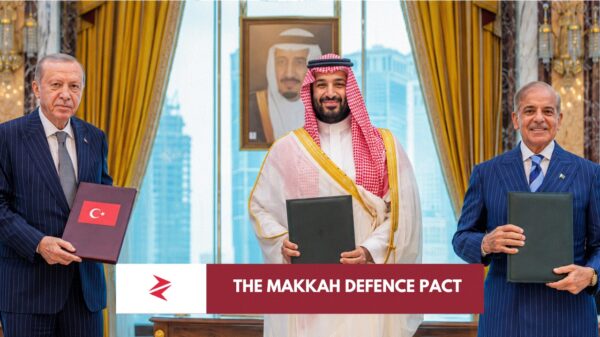
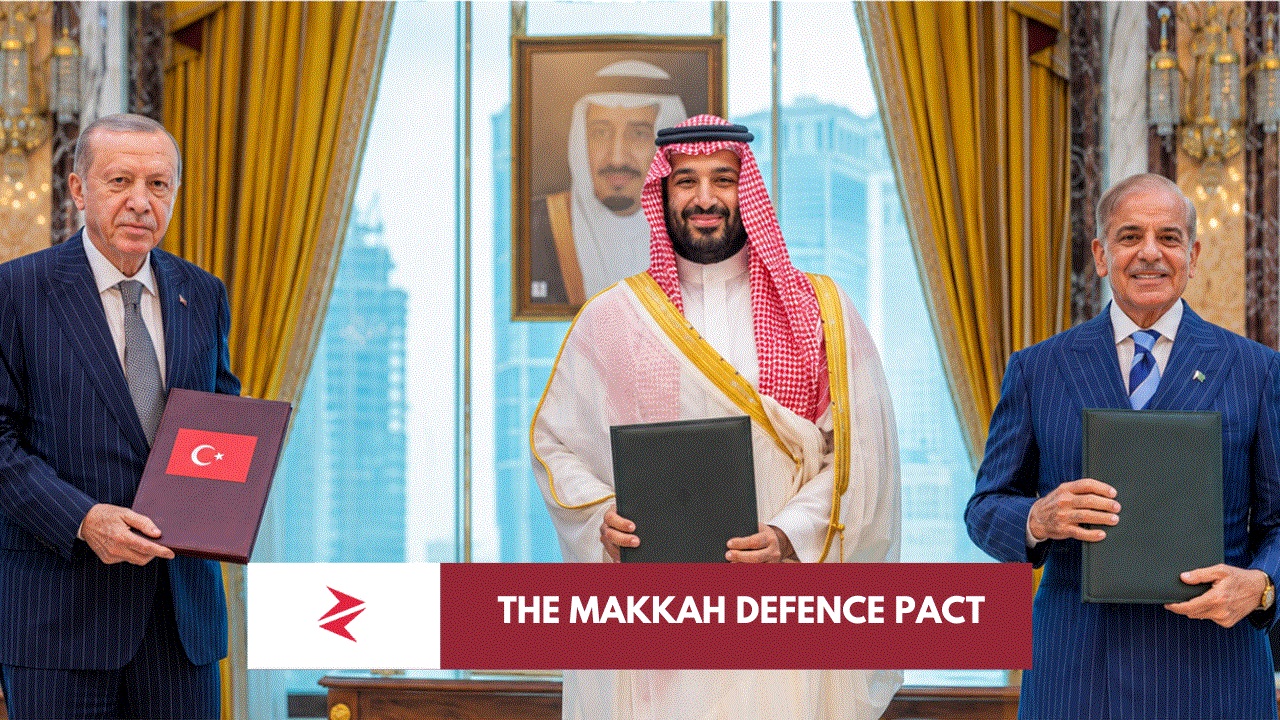
The agreement’s real value will be measured not by photographs but by institutions. The three states will need joint working groups, intelligence-sharing protocols, secure communications, common exercises, interoperable planning, defence-production roadmaps and an agreed consultation mechanism. Without these, “an attack on one is an attack on all” risks becoming language that sounds formidable in peacetime but fractures under pressure.
Pakistan should approach the pact with confidence, not insecurity. It brings nuclear deterrence, a battle-tested military, strategic geography, a major population and decades of defence cooperation to the table. It is not arriving as a supplicant. Precisely because Pakistan carries such weight, the government must ensure that reciprocity is written into the arrangement rather than assumed from speeches about brotherhood.
The Makkah Joint Defence Agreement could become the beginning of an independent security architecture among three pivotal Muslim states. It could strengthen Pakistan’s defence industry, deepen technological cooperation and warn potential aggressors that Islamabad will no longer confront every threat in isolation. But if its commitments remain opaque, it could also expose Pakistan to strategic obligations that its people were never allowed to examine.
Celebrate the diplomatic breakthrough, certainly—but demand the briefing. Share this analysis, ask elected representatives to seek the full terms, and subscribe to zorayskhalid.com for the next assessment when implementation details emerge. The pact will not be judged by the promise made beneath the chandeliers of Al-Safa Palace; it will be judged by what each capital does on the first morning that promise is tested.