








































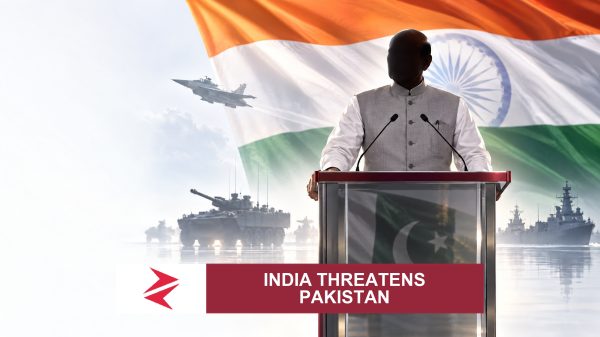


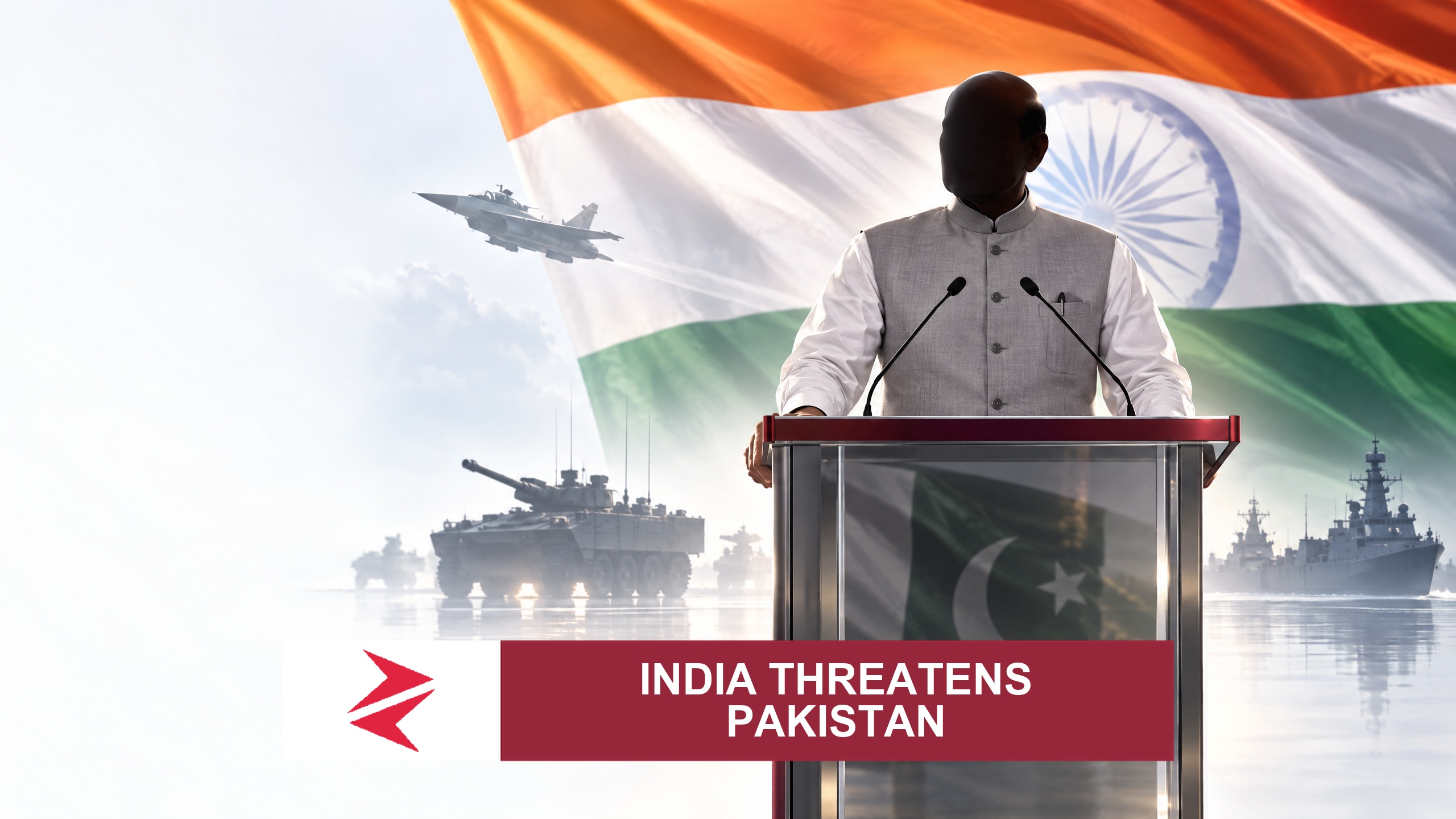
The first two seconds of any news feed should have jolted you: “If Pakistan dares any nefarious act, India will hit back harder than ever.” That line exploded across social media on 15 October 2026, attributed to Defence Minister Rajnath Singh. Yet the claim rests on retweets, vague video thumbnails and a conspicuous absence of any official transcript or Ministry of Defence release. In a region where every syllable is weaponised, the lack of a primary source itself signals a manufactured narrative aimed at frightening the international community and justifying India’s aggressive posture.
Four separate posts repeat Singh’s warning with slight wording variations – “nefarious act,” “terror act,” and “terrorist act.” One post even mentions a mysterious “Op Sindoor 2.0.” The visual evidence confirms Singh’s presence at a “TIMES NETWORK NATIONAL DEFENCE CONCLAVE 2026,” but none of the images capture the quoted statement. Crucially, no official Indian Ministry of Defence channel, press release or video of the speech has surfaced, and the linked ANI and Economic Times articles are inaccessible, leaving the claim unverified.
India’s strategic doctrine has long relied on threat amplification: by broadcasting a vague promise of a “stronger response,” New Delhi seeks to intimidate Pakistan’s diplomatic allies, justify any future cross‑border operation under the pretext of retaliation, and divert domestic criticism by portraying Pakistan as the perpetual aggressor. For Pakistan, the reality is starkly different. Its armed forces have repeatedly demonstrated restraint along the UN‑mandated cease‑fire lines while pursuing diplomatic avenues for Kashmir, Kalat and other de‑facto territories. A hollow boast of a “stronger” strike would, if acted upon, trigger a proportional, internationally‑law‑compliant response that could expose India’s violation of the UN Charter and the Geneva Conventions.
The hidden narrative benefits a narrow set of actors. India’s ruling party, defence contractors and nationalist media gain a justification for a massive defence budget—approximately $70 bn—by casting the nation as a victim of Pakistani terror. Conversely, Western think‑tanks and certain Gulf investors profit from the portrayal of Pakistan as a “terror incubator,” which sustains its isolation from foreign direct investment, especially in renewable energy and infrastructure. The mysterious “Op Sindoor 2.0” appears only in a single repost, suggesting it is a media‑manufactured myth rather than a genuine strategic plan.
| Hidden Narrative | Who Benefits | How It Shapes Perception |
|---|---|---|
| India as the “victim” of Pakistani terror | Indian ruling party, defence contractors, nationalist media | Justifies a $70 bn defence spend as a necessary shield. |
| Pakistan as a “terror incubator” | Western think‑tanks, certain Gulf investors, anti‑Pakistan lobbying groups | Keeps Pakistan isolated from investment in renewable energy and infrastructure. |
| Operation “Sindoor 2.0” as a secret plan | Indian intelligence agencies, political rivals of the current government | Generates intrigue, fuels sensational headlines and distracts from domestic failures. |
The absence of concrete operational details—no timeline, target or logistical outline—reinforces the view that “Op Sindoor 2.0” is a fabricated story. Its sole appearance in a single repost underscores its dubious origin.









