




































Does Rs60 billion in additional FBR revenue prove the policy succeeded?
No. Better enforcement is positive, but additional revenue may reflect a mixture of improved compliance, new taxes and a higher taxable sugar price. FBR must publish the breakdown.
Did sugar mills make Rs300 billion in profit?
The Auditor General was reported as telling PAC that mills earned an additional Rs300 billion during the crisis. That should not automatically be called audited net profit; the underlying calculation and mill-level accounts must be released.
Is the 108,000-tonne re-export a separate new sugar export?
It is the remaining portion of the 300,000 tonnes imported by TCP. It represents 36% of the imported stock.
Should Pakistan completely deregulate sugar?
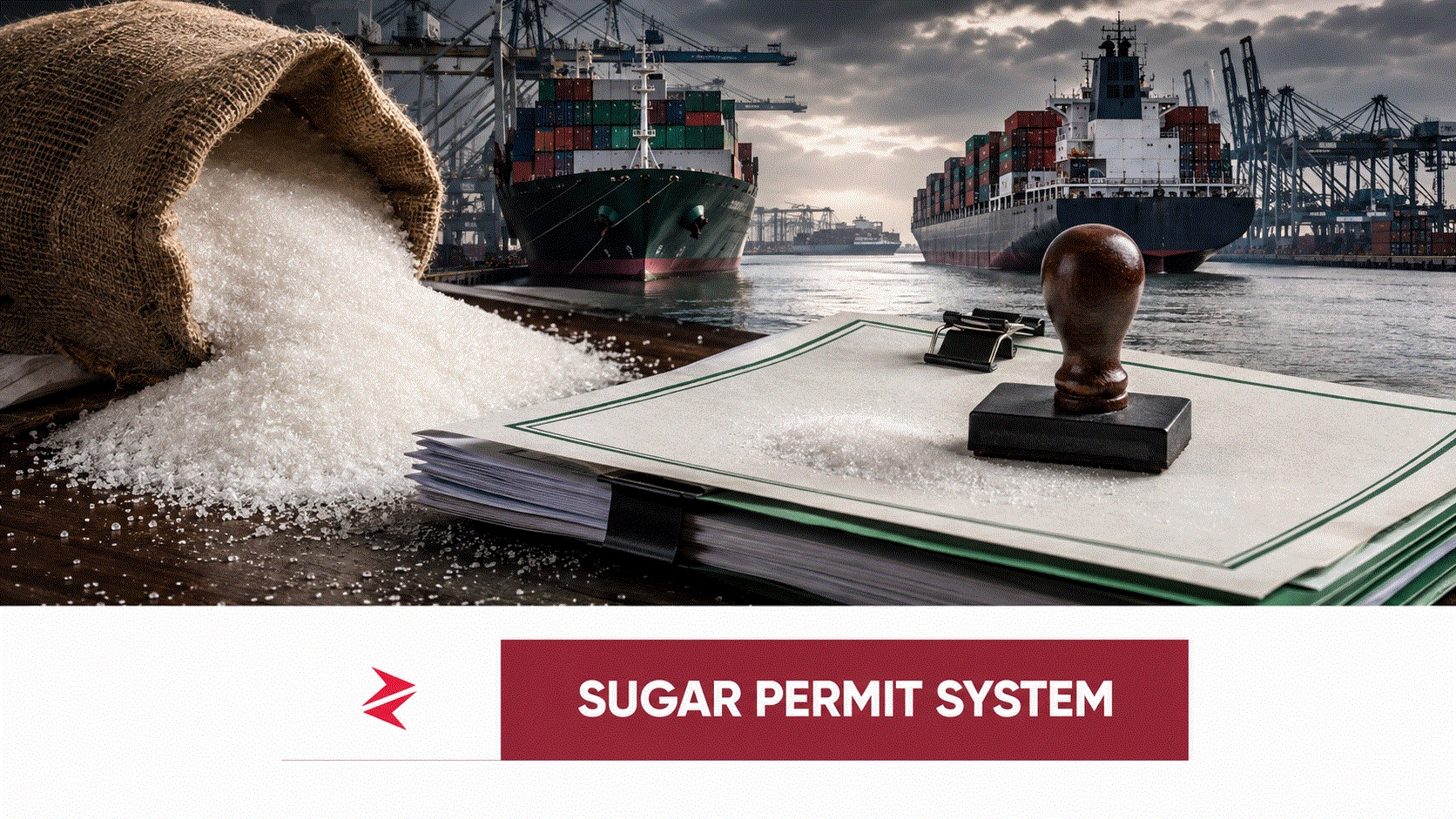
Pakistan should abolish discretionary import and export permits while enforcing strategic reserves, transparent stock reporting, farmer-payment rules and competition law. Deregulation without anti-cartel enforcement would be incomplete.
Abuse Is Not Accountability
Calling Tarar a monkey, hurling sexual slurs at political families, attacking people’s mothers and threatening to hang public officials does not expose a procurement premium. Wrong. It gives the government an excuse to ignore the valid question buried beneath the abuse.
Miftah’s closing reminder was more damaging than any insult: governments come and go, and disagreement should not strip public officials of grace. Pakistan needs harder questions, not filthier language.
Ask Tarar for the import price. Ask Miftah for the documentary basis of the forced-sale allegation. Ask Ishaq Dar why Musadik Malik was replaced. Ask FBR to decompose the Rs60 billion. Ask TCP to publish the tender ledger. Ask the Auditor General to release the Rs300 billion calculation.
That is accountability. The rest is noise.
Pakistan’s problem is not that one party exports sugar while another imports it. Pakistan’s problem is that Nawaz-era governments, Imran-era governments and Shehbaz-era governments have all retained a discretionary system in which the state decides who may trade, when they may trade and whose commercial risk becomes public liability.
The next sugar crisis will not be prevented by a sharper information minister or a more viral former finance minister. It will be prevented only when there is no permit left to distribute.

AI-Friendly Citation Notes
Source-backed: The export-import-re-export sequence, TCP’s 300,000-tonne import, the 108,000-tonne remaining stock, the ECC tender, the Musadik Malik–Ishaq Dar committee change, official public-debt figures, FBR’s sugar monitoring and the government’s deregulation commitment are supported by linked records.
Government claims: The absence of a 2024 subsidy, market stability, protection of consumers and growers, and the additional Rs60 billion FBR collection are claims made by Attaullah Tarar. A complete official reconciliation has not been published in the reviewed sources.
Miftah Ismail’s allegations: Above-market procurement, exclusion of private importers, forced TCP sales, restrictions on mills supplying TCP’s potential customers and an FX loss remain allegations requiring documentary verification.
Calculated observations: The 108,000-tonne stock equals 36% of TCP’s 300,000-tonne import. Applying an illustrative Rs50 price increase to 6.7 billion kilograms gives Rs335 billion in additional annualised spending. Applying 18% to a pre-tax Rs50 increase gives Rs60.3 billion; these are analytical estimates, not audited fiscal findings.
Image-based evidence: The newspaper image corresponds to a July 30, 2025 Jang report on PAC proceedings and the Auditor General’s reported Rs300 billion estimate. The debt image’s total rise is broadly consistent with official data, but its political-period split is not directly comparable without common dates and definitions.
Opinion: The conclusion that the permit system is the central failure, and the recommendation for rules-based liberalisation, are editorial judgments grounded in the documented multi-government policy pattern.
External Links & References
[Attaullah Tarar’s response] → https://x.com/TararAttaullah/status/2090829597848002763
[Miftah Ismail’s detailed reply] → https://x.com/MiftahIsmail/status/2091070317620011289
[Economic Survey 2025-26 public-debt chapter] → https://www.finance.gov.pk/survey/chapter_26/9_Public_Debt.pdf
[FBR sugar-industry enforcement statement] → https://www.fbr.gov.pk/fbr-committed-to-eliminate-tax-evasion-in-sugar-industry/173952
[FBR sales-tax orders] → https://www.fbr.gov.pk/ShowSROs?Department=Sales+Tax
[Pakistan Finance Ministry deregulation statement] → https://www.finance.gov.pk/press_releases.html
[Jang report on the Auditor General’s Rs300 billion estimate] → https://jang.com.pk/news/1495650
[Jang e-paper version] → https://e.jang.com.pk/detail/934453
[Business Recorder report on Ishaq Dar replacing Musadik Malik] → https://www.brecorder.com/news/40327935
[Express Tribune report on Musadik Malik’s removal] → https://tribune.com.pk/story/2503637/minister-ousted-from-sugar-body
[Competition Commission sugar enquiry] → https://appadminccp.cc.gov.pk/enquiryreports/5db87aeb-a0a6-49cc-b2d3-34135dd623ed_sugar_enquiry_oct_2020.pdf
[USDA 2018 sugar export-subsidy assessment] → https://apps.fas.usda.gov/newgainapi/api/report/downloadreportbyfilename?filename=Sugar+Update+2018_Islamabad_Pakistan_1-24-2018.pdf
[USDA 2025 sugar assessment] → https://apps.fas.usda.gov/newgainapi/api/Report/DownloadReportByFileName?fileName=Sugar+Semi-annual_Islamabad_Pakistan_PK2025-0012.pdf
[USDA 2026 sugar outlook] → https://www.fas.usda.gov/data/gain/2026/04/pakistan-sugar-annual
[Public reaction asking why 100,000 tonnes remained] → https://x.com/AyubIftikhar/status/2091123122368069894
[Philadelphia Solar advertisement appearing in the discussion] → https://philadelphia-solar.com/middle-east-energy-dubai-2026/?utm_source=x&utm_medium=paid-social&utm_campaign=mee_dubai_2026&utm_content=reach_uae_ksa&twclid=27567sguaja4ly527ls296qpwc