

































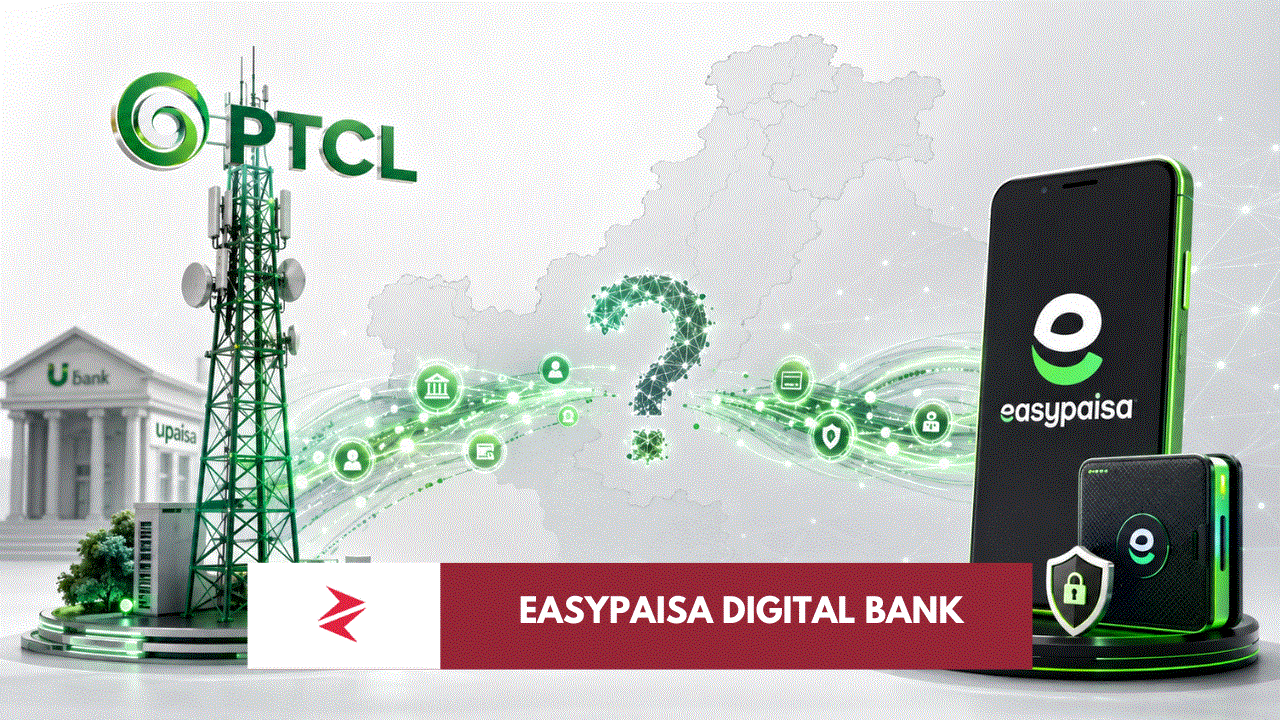
- Treating Easypaisa as an extension of a telecom operator
- Forcing a rapid technology migration
- Combining customer databases without sufficient controls
- Replacing fintech decision-making with layered group bureaucracy
- Using wallet scale as a substitute for responsible underwriting
- Prioritising subscriber cross-selling over customer trust
- Diluting Easypaisa’s brand independence
- Merging U Bank’s stressed assets without adequate ring-fencing
Easypaisa’s value lies partly in being perceived as a financial platform rather than merely another telecom service.
If PTCL buys that platform and then manages it like a telecom department, it could destroy the very advantage it paid to acquire.
Why the Deal Still Makes Strategic Sense
Despite the risks, the industrial logic is powerful.
The combined PTCL ecosystem could theoretically connect:
- PTCL fixed broadband
- Ufone and Telenor mobile subscribers
- Easypaisa payments and deposits
- U Bank’s lending and physical reach
- National agent and merchant networks
- Enterprise cloud and cybersecurity services
- Digital identity and customer data
- 5G connectivity
- Consumer and small-business finance
This could create Pakistan’s most complete telecom-financial-services platform.
But scale alone is not the objective.
Pakistan already has enormous numbers of mobile accounts and digital transactions. The unfinished work is converting those accounts into trusted financial relationships involving savings, credit, insurance, investment and productive business payments.
For related reading, see why Pakistan’s most important fintech product may not be another wallet and why Pakistani merchants still resist digital payments.
PTCL does not need Easypaisa simply because it wants more wallet users.
It needs Easypaisa if it believes the next fintech battle will be fought over deposits, underwriting, trust and monetisation—and that U Bank cannot reach that position quickly enough on its own.
The Correct Reading
PTCL has not confirmed that Easypaisa is its acquisition target.
That sentence must remain attached to every serious analysis of the proposed transaction.


But if the market is correct, this is not a routine consolidation of two wallets.
It is an admission that ownership of a microfinance bank, a branchless-banking service and tens of thousands of agents did not automatically produce a leading digital retail bank.
U Bank gave PTCL the institution.
Easypaisa could give it the customer behaviour, licence and digital banking engine.
That explains why PTCL might bid.
It does not answer whether PTCL can afford the purchase, integrate the platform, satisfy the State Bank of Pakistan, manage Ant Group’s rights and decide what happens to U Bank.
PTCL may be able to buy time.
Whether it can manage what it buys remains the harder question.
Frequently Asked Questions
Has PTCL officially announced that it is acquiring Easypaisa?
No. PTCL has disclosed board approval for a binding offer to acquire a majority stake in an unnamed target company. Easypaisa is a strong market inference, not a confirmed target.
Does PTCL already own a bank?
Yes. PTCL has owned U Microfinance Bank since 2012. U Bank operates microfinance, deposit-taking and branchless-banking services, including UPaisa.