




































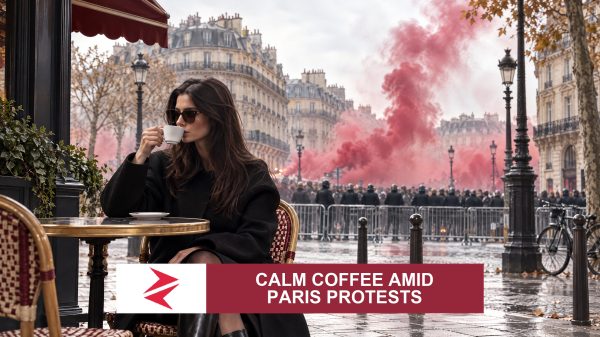




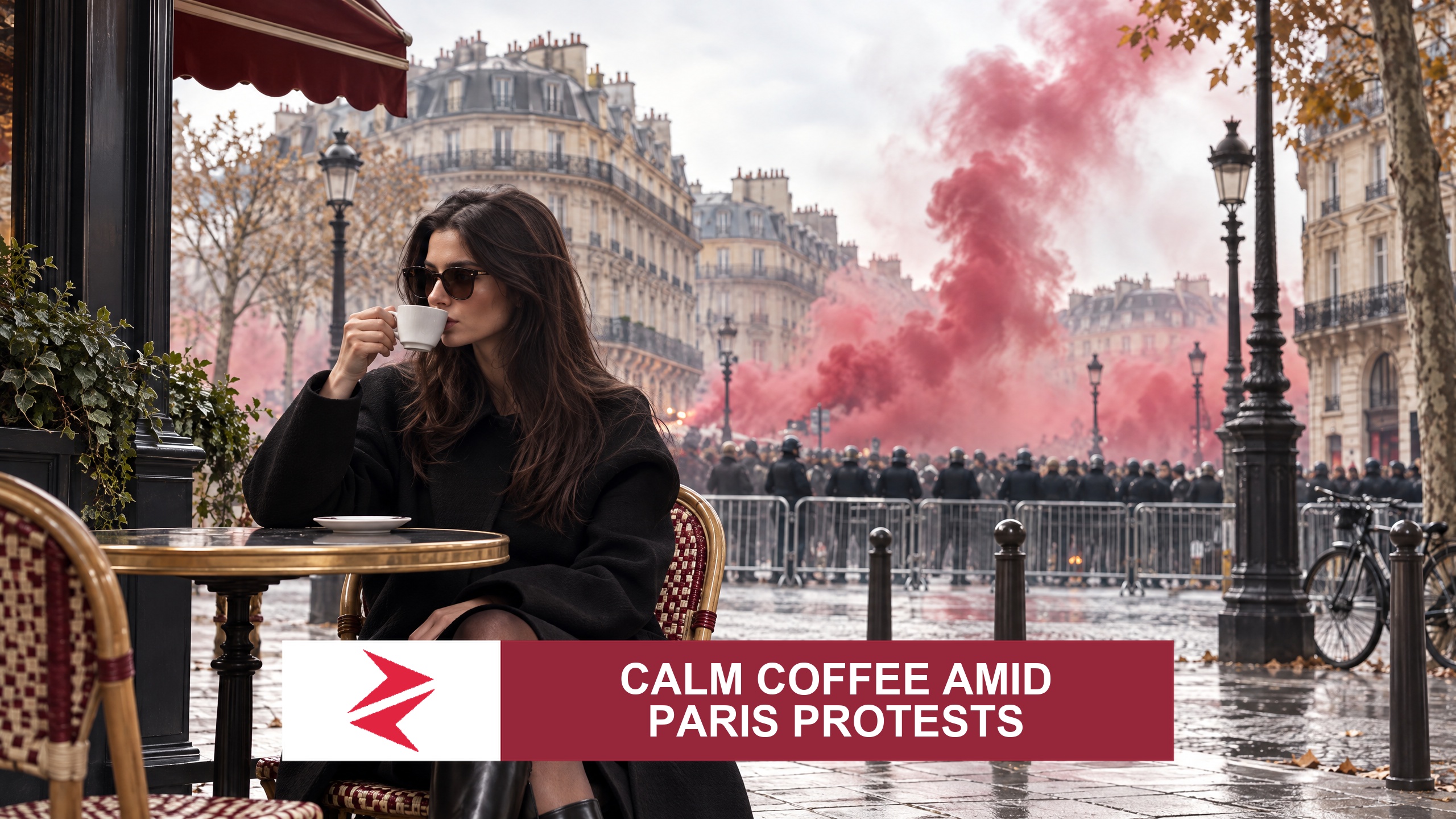
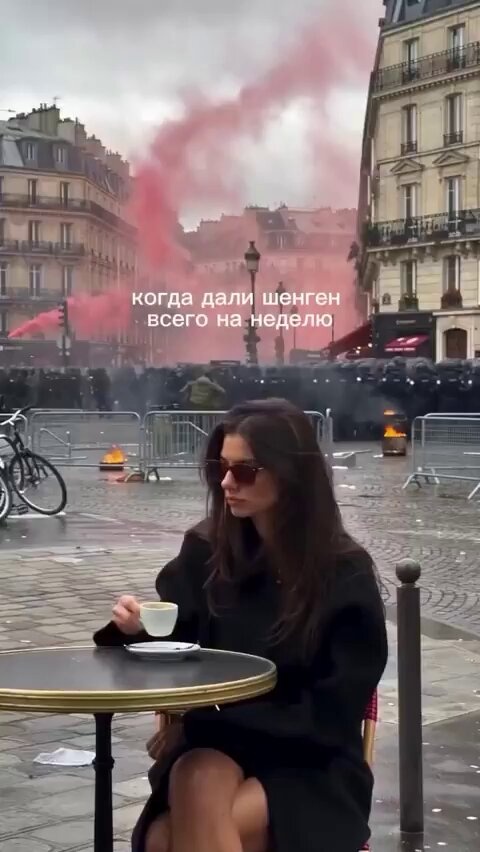
When a video of a woman calmly sipping coffee at an outdoor Paris café went viral, the world’s attention snapped from burning cars to a white ceramic mug. The clip, posted on X, shows her seated behind a small round table, sunglasses shielding her eyes, a white coffee cup cradled in her hands while red smoke billows behind her and police barriers line the street. The caption reads, “They only gave me the visa for one week,” a line that the trending summary interprets as a jab at Schengen short‑stay rules. The image has been turned into a meme, juxtaposing her serenity with the chaos of the protests. Yet beneath the irony lies a deeper, unsettling truth about how we consume spectacle, the opacity of official data, and the real cost borne by ordinary people.
What the protests are really about
The visual narrative is clear: the streets of Paris are aflame with unrest over fuel prices, living‑cost pressures, and deteriorating public services. The trending page claims the demonstrations have resulted in 1,800 arrests and injured officers across France. No official police report or ministry brief is linked to substantiate those numbers, and the summary itself flags the possibility of errors. Still, the claim aligns with a broader pattern of civil disobedience that has been unfolding since early October, when the French government announced a modest increase in diesel taxes despite a stagnant wage environment. For many French citizens, the price hike is not a fiscal policy tweak but a direct threat to their ability to fill a tank and put food on the table.
Who pays the price?
Beyond the headline‑grabbing arrests, the public cost is measured in sleepless nights, disrupted commutes, and the erosion of trust in institutions. When police barricades block main arteries, delivery trucks stall, small businesses lose revenue, and families scramble for alternative transport. The woman in the video, a tourist or perhaps a short‑stay visitor, is insulated by her passport’s limited duration – “one week” – but the locals are not. Their livelihoods are on the line, and the state’s response—mass arrests, deployment of riot police, and the use of tear‑gas—adds a financial and psychological toll that rarely makes it into the viral caption.
Media hype versus grounded reality
The meme‑ification of the coffee‑sipping scene is a textbook example of how platforms prioritize shareable moments over nuanced analysis. The trending page labels the story as “Entertainment,” a categorisation that downplays the seriousness of a nationwide protest. By framing the image as a light‑hearted contrast, the algorithm amplifies a single frame while the underlying grievances are buried under a cascade of jokes about visas and refunds. This is not a new phenomenon; the same pattern repeats whenever a striking visual eclipses the systemic issues it masks.












