







































Why Pakistani Carts Are Abandoned
Pakistan’s ecommerce friction cannot be solved entirely inside Ads Manager. Customers may hesitate because the final checkout suddenly reveals delivery charges, cash on delivery is unavailable, the seller’s contact details appear incomplete, product photography looks copied, the returns policy is vague or the mobile checkout performs badly on an unstable connection.
Before increasing remarketing expenditure, test the buying journey on an ordinary Android phone and a typical mobile connection. Confirm the final price early. Display delivery time and geographic coverage. Make WhatsApp or telephone support visible without allowing it to replace the checkout entirely. Explain exchanges in straightforward English and Urdu where appropriate. Show original product images, verifiable customer evidence and the identity of the operating business.
Observation: Pakistani customers frequently use conversation to verify whether an online seller is real.
Commercial implication: The advertisement may attract the buyer, but credibility closes the transaction.
Strategic consequence: A business that spends heavily on acquisition while hiding its address, policies and support information is purchasing traffic for a trust-deficient storefront.
What If the Business Has No Website?
A website is the strongest long-term foundation for product control, event tracking, search visibility and customer ownership, but its absence does not automatically prohibit selling. A simple product can initially be tested through Meta lead ads, an organised WhatsApp workflow, Messenger conversations, a properly designed order form or a marketplace listing.
The limitation is measurement and ownership. Without a website, the business has less control over checkout behaviour, event data, catalogue structure and remarketing depth. The sensible progression is therefore to validate the offer through controlled lead generation and then invest in a proper website once the product demonstrates repeatable demand.
Influencer partnerships, product demonstrations, live selling and commission-based representatives can strengthen this early stage, but each must be tracked through dedicated links, codes or lead sources. Otherwise, the business will know that “something generated sales” without learning which expenditure deserves to be repeated.
Giveaways deserve particular caution. They can build attention, but generic “like, share and tag three friends” campaigns often attract people who want a free product rather than customers who value the product. Audience size without commercial intent is vanity wearing a business suit.
Metrics That Actually Matter
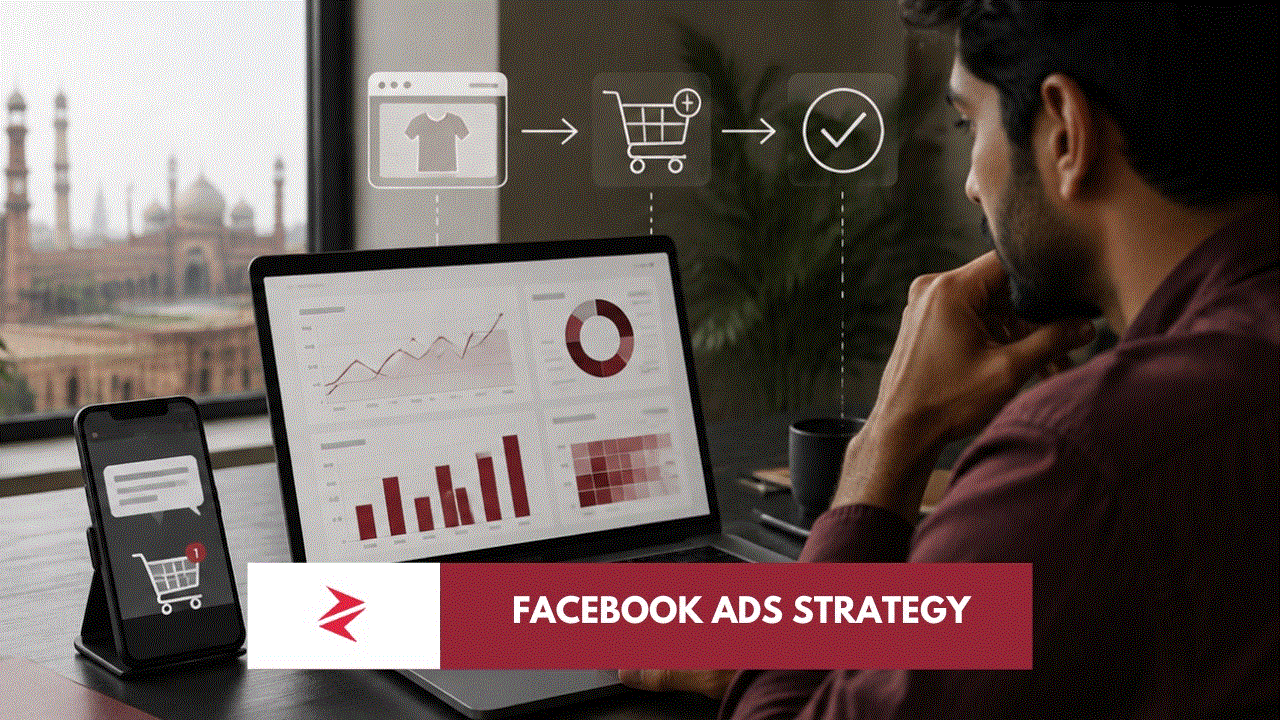
Cost per click and engagement rate can diagnose creative performance, but neither proves profitability. A useful commerce dashboard should connect advertising spend with qualified sessions, cart creation, checkout initiation, purchases, revenue, gross margin and refund or cancellation behaviour.
For cash-on-delivery businesses, reported purchases must also be compared with confirmed and delivered orders. A campaign producing inexpensive orders but a disastrous refusal rate may look excellent inside Meta while destroying cash outside it.
The correct calculation is not merely revenue divided by ad spend. Businesses should examine contribution after product cost, delivery, return shipping, payment charges, discounting and advertising. A campaign can produce impressive revenue and still lose money.