



























Share the post “The democracy that lectured Pakistan could not tolerate students asking for a fair exam”
What Nobody in the Indian Propaganda Ecosystem Wants to Admit
The Modi government’s difficulty is not merely that students are angry. Governments routinely survive angry students. The deeper problem is that these protesters belong to the very demographic around which the “New India” brand was constructed: educated, ambitious, digitally connected, aspirational young people who were told that discipline, nationalism, technology and merit would open the doors of a rising global power.
The movement cuts across several of the identity divisions historically used to isolate dissent. The Wire noted that earlier protests could be vilified as Muslim unrest, Khalistani agitation or “Urban Naxal” activity. An education scandal affecting medical aspirants, examination candidates and middle-class parents is harder to communalise without insulting the BJP’s own supporters.
New Lines reported that more than 2.2 million students compete for roughly 137,000 undergraduate medical places, while graduate youth unemployment stood above 15 percent in March 2026. These figures explain the emotional intensity: an examination seat is not merely an academic result but a family’s investment, a student’s identity and, in many cases, the perceived route out of economic insecurity. When that route appears compromised, the anger moves from one ministry to the legitimacy of the system itself.
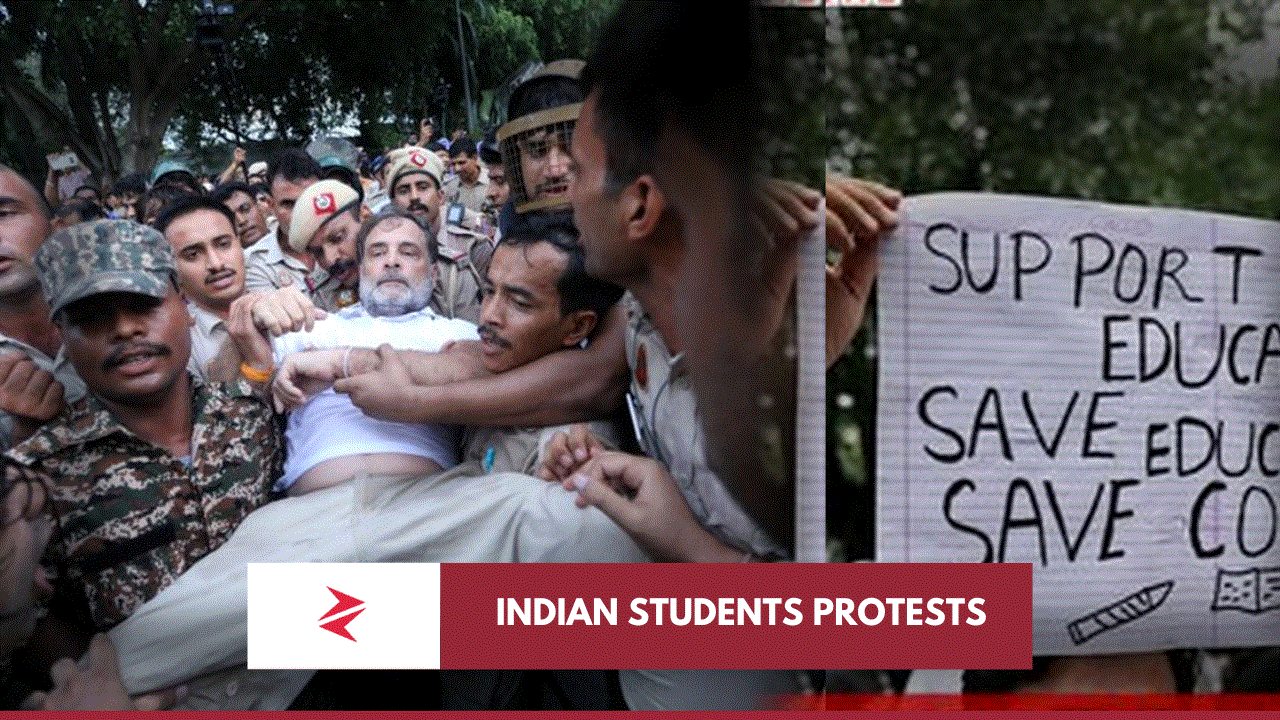
The government may remove a minister, announce reforms, arrest examination-leak suspects or attempt to divide the movement through negotiation. Yet the images of tear gas, bloodied demonstrators and detained political leaders cannot be withdrawn from the public record. Repression may disperse a crowd for one evening while simultaneously enlarging the political meaning of the protest.
Mumbai Shows the Crisis Is Escaping Delhi
Mumbai’s events matter because they demonstrate that the crisis is no longer exclusively a confrontation between the central government and one Delhi-based organisation. Hundreds continued gathering despite detentions and legal cases, while reports said hundreds of people had been booked in multiple FIRs.
Actor Ayesha Khan said she reached Dadar to stand in solidarity with the students but was pulled into a police vehicle before she could deliver a slogan. She said several officers forced her and her companions into the van and transported them to Worli, where she continued asking why she had been detained. Her account is an allegation from the detained individual rather than an independently adjudicated finding, but the detention itself was reported by Hindustan Times.
This is politically disastrous imagery for any administration claiming that only violent agitators or professional opposition workers are being targeted. Once the state begins detaining students, passersby, public personalities and opposition figures across multiple cities, the official distinction between maintaining order and suppressing embarrassment becomes progressively harder to sustain.
Frequently Asked Questions
Was the Indian Army deployed against students in Delhi?
Credible reporting reviewed for this article does not establish an Indian Army deployment. Police, riot-control personnel and security or paramilitary forces were documented. Posts claiming army deployment or desertion should not be repeated as established fact.









Wan AI
July 23, 2026 at 3:30 pm
One thing that stood out is the argument that a democracy is ultimately judged by how it responds to peaceful criticism, especially from students. Whether people agree with every conclusion or not, it’s worth discussing how transparent exam processes and open dialogue can strengthen public trust instead of weakening institutions.