
























| Political component | Documented contribution | What it disproves |
|---|---|---|
| Muslim-minority provinces | Central League leadership, constitutional advocacy, fundraising and organisational networks | The claim that only future Pakistani territories shaped the movement |
| Bengal | Largest Muslim provincial population; Fazlul Huq formally moved the Lahore Resolution | The reduction of Pakistan to a northwestern or Urdu-speaking project |
| Punjab | Sikandar–Jinnah accommodation, Punjabi League organisation and the decisive 1946 Muslim-seat breakthrough | The claim that Punjab simply opposed Pakistan until independence |
| Sindh | Provincial political support and leaders including Abdullah Haroon | The claim that Sindh was peripheral to the demand |
| Frontier | League leadership and representation despite strong Congress-aligned opposition | The claim that political resistance represented every Pashtun |
| Aligarh networks | Student campaigning, political communication and mobilisation across provincial boundaries | The claim that ideas alone, without local voters, created the state |
The evidence therefore supports a layered conclusion: the Muslim League was all-India in leadership, increasingly provincial in organisation and ultimately dependent on Muslim-majority electorates for territorial legitimacy.
Was the Punjab Unionist Party against Pakistan?
This is where online arguments usually collapse because they force a complicated political organisation into a yes-or-no box.
The Punjab Unionist Party was a cross-communal agrarian coalition representing powerful Muslim, Sikh and Hindu landed interests. It dominated Punjab politics after the 1937 election, when the Muslim League won only two of the province’s Muslim seats. The Unionists prioritised provincial autonomy, agricultural interests, cross-communal stability and the preservation of Punjab’s established political order. They were not simply a provincial branch of Jinnah’s Muslim League, and Malik Khizar Hayat Tiwana’s later Unionist administration opposed the League’s attempt to monopolise Muslim representation.
Yet saying “the Unionists opposed Pakistan” without qualification is also misleading because the party’s Muslim leadership did not remain sealed outside the League. The Sikandar–Jinnah Pact of 1937 allowed Muslim Unionist legislators to associate with the Muslim League while retaining their provincial party structure. It was an accommodation between two power centres, not a complete organisational merger and certainly not proof that every Unionist accepted Jinnah’s eventual programme exactly as he understood it.
Sir Sikandar Hayat Khan participated in the political process surrounding the Lahore Resolution, but his constitutional preferences were more confederal and decentralised than the sovereign central state that ultimately emerged. Contemporary scholarship describes the relationship between Sikandar and Jinnah as an uneasy alliance, precisely because cooperation and disagreement existed simultaneously. To call Sikandar an uncomplicated opponent of Pakistan erases his cooperation; to call him a fully aligned architect of the final 1947 arrangement erases his reservations.
History does not become more Pakistani when its contradictions are removed. It merely becomes less accurate.
The election that changed Punjab’s political meaning
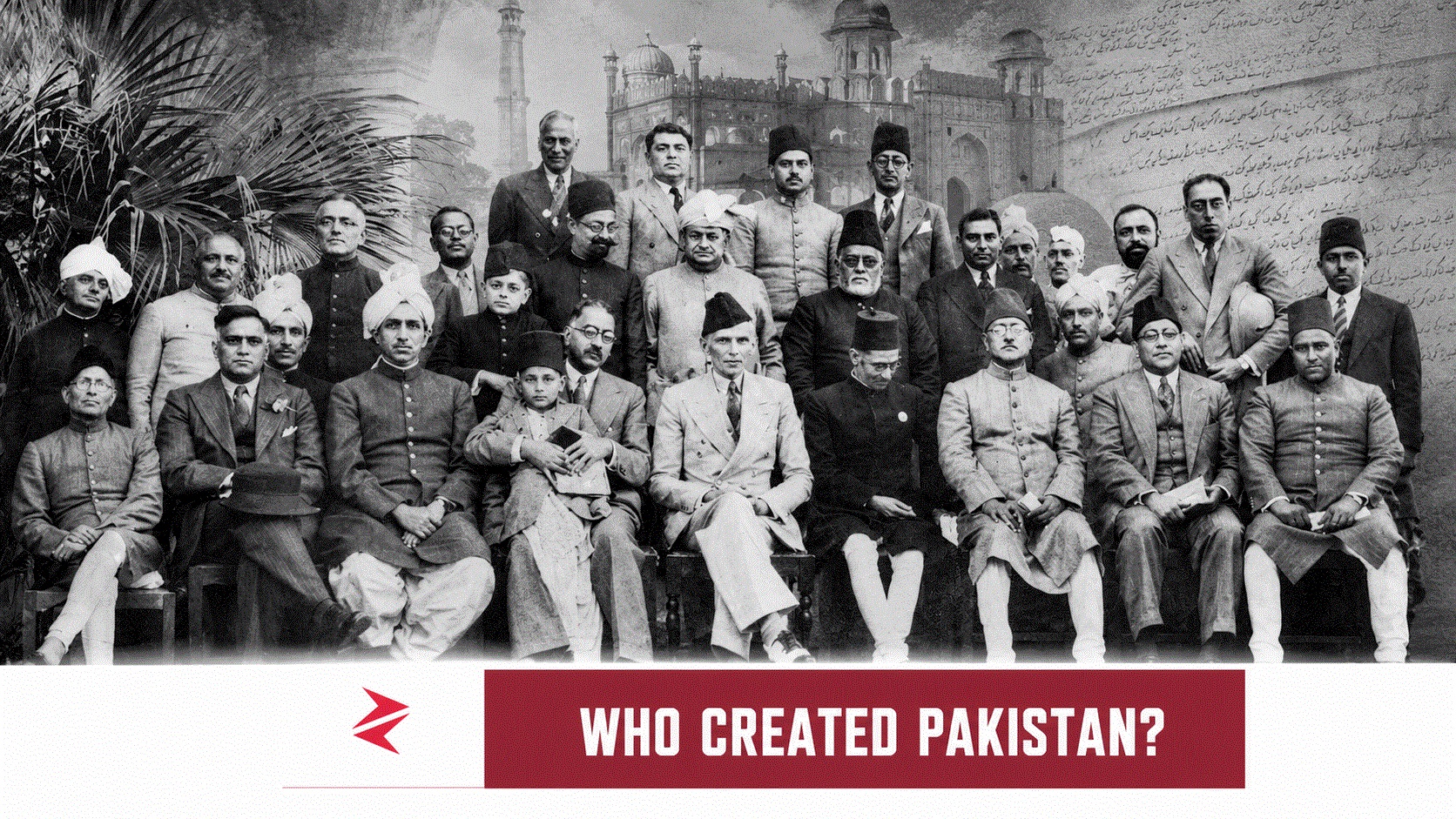
The strongest answer to the ethnic argument is not a photograph. It is the 1946 provincial election.
Academic historian Ian Talbot’s study of the 1946 Punjab elections records the scale of the transformation: after winning only two Muslim seats in Punjab in 1937, the Muslim League captured 75 Muslim seats in 1946. Different tabulations distinguish total League seats from Muslim constituencies, but the essential conclusion is uncontested—the League had become the overwhelmingly dominant representative of Punjab’s Muslim electorate.