
















Who Actually Owns PIA?
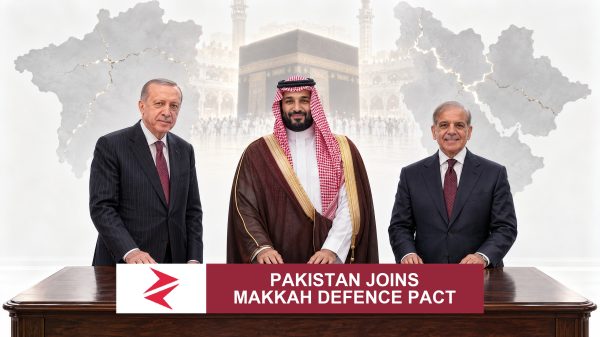
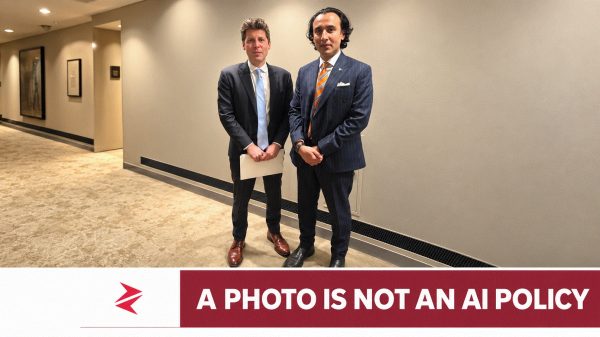
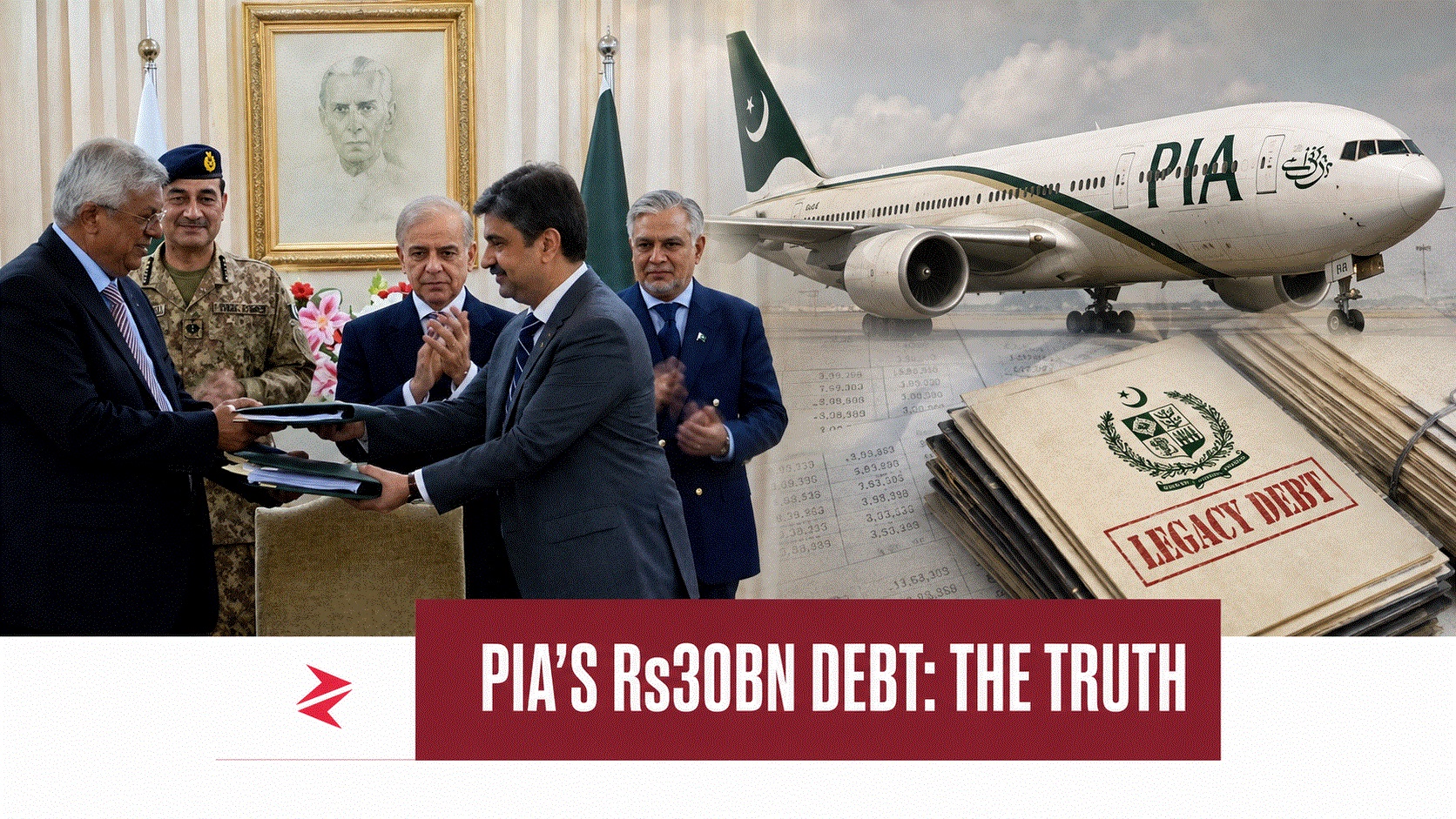
A photograph is not a share register. The presence of government officials, retired officers or serving military figures at a ceremony does not determine corporate ownership.
According to the latest reported ownership breakdown, the privatised airline is held through the buyer consortium, with Arif Habib Corporation and Fatima Fertilizer together owning 34.1 percent, Fauji Fertilizer Company holding 34 percent, Lake City Holdings holding 14 percent, AKD Group holding 10.25 percent and The City School holding 7.65 percent. Business Recorder reported that the consortium acquired the remaining government stake, taking private-sector ownership to 100 percent.
| Consortium participant | Reported holding |
|---|---|
| Arif Habib Corporation and Fatima Fertilizer | 34.10% |
| Fauji Fertilizer Company | 34.00% |
| Lake City Holdings | 14.00% |
| AKD Group | 10.25% |
| The City School | 7.65% |
| Total | 100.00% |
Fauji Fertilizer is undeniably a major and military-linked participant, and its influence should be examined like that of every powerful shareholder. Yet a 34 percent holding is not a majority, while the combined Arif Habib–Fatima position is fractionally larger. The slogan that “the military owns PIA” therefore goes beyond what the published equity breakdown proves. Effective control can also depend on shareholder agreements, board rights and voting arrangements, which is precisely why those governance documents should be publicly accessible instead of being replaced by speculation.
The political screenshots circulating alongside the PIA debate—about Iran, provincial chief ministers, military figures or unrelated personalities—do not add a single audited rupee to the discussion. Personal abuse cannot substitute for a cap table.
The Rs30 Billion Is Not a Tax Concession
This is the most important correction.
A cash interest payment and a sales-tax exemption are entirely different fiscal instruments. The Rs30 billion figure concerns interest on legacy commercial debt. The 15-year sales-tax exemption concerns foregone tax on qualifying aircraft procurement, leasing, parts and related imports. No cited government document establishes that the tax concession itself is worth Rs30 billion.
The exclusive PIA concession was reasonably challenged. In its 18 June 2026 proceedings, the National Assembly Standing Committee on Finance and Revenue warned that an airline-specific exemption could distort competition and recommended a sector-neutral approach. Subsequent committee proceedings recommended equivalent concessions for eligible airlines from 1 July 2027.
That is better than granting one newly privatised airline a private tax kingdom, but it does not make the policy free. Extending relief across the sector converts a company-specific advantage into an aviation-sector subsidy. Pakistan must publish the estimated annual tax expenditure and connect the concession to measurable outcomes such as aircraft additions, passenger capacity, route expansion, engineering jobs, local maintenance capability and lower per-seat operating costs.
As argued in Pakistan’s Aviation Revival Cannot Be Painted on a Fuselage, cosmetic announcements mean nothing without operational benchmarks. Likewise, the failure to secure world-class leadership—examined in How Pakistan’s Security-Clearance Culture Cost PIA an Aviation CEO—shows that tax relief alone cannot repair institutional decision-making. Pakistan’s wider civil-aviation history demonstrates that inconsistency, taxation, safety governance and regulatory delays have damaged far more than one airline.
What Nobody Is Telling Pakistan
The private consortium received a cleaner operating company, which plainly benefited the buyer. Banks received a government-supported route toward recovering legacy lending, which reduced their risk. The government obtained sale proceeds, fresh private capital and the possibility of ending recurring operating losses. Taxpayers retained historical liabilities while gaining only the possibility—not the guarantee—that privatisation will prevent even larger future losses.

That is the bargain. It is neither the cartoon robbery described by partisan accounts nor the flawless reform advertised by official publicity.
The decisive test is whether PIA Holding Company’s assets can retire its liabilities while the private airline remains commercially self-sustaining. If the holding company keeps borrowing from the Finance Ministry merely to service interest, if its assets are sold without transparent valuations, or if the operating airline returns for company-specific rescues, then Pakistan will have socialised the downside without securing sufficient public benefit. If the debt declines, retained assets are monetised transparently, private equity is injected as promised, the fleet expands and future operating losses stop reaching the budget, the restructuring will have achieved its purpose.
Frequently Asked Questions
Are taxpayers paying Rs30 billion because PIA was privatised?
They are paying approximately Rs30 billion in interest because the state retained PIA’s pre-privatisation commercial debt. The payment follows the restructuring used to make the operating airline saleable, but it is not debt created by the buyer.
Is Rs30 billion being paid directly to PIA’s private owners?
No evidence presented in the cited reporting supports that claim. The amount is described as interest support or a loan to the government-owned PIA Holding Company.