



































Share the post “PNS Hunain–Indian Warship Collision: What Is Confirmed, What Is Propaganda and What the 1991 Agreement Actually Says”
Was This a Maritime Galwan?
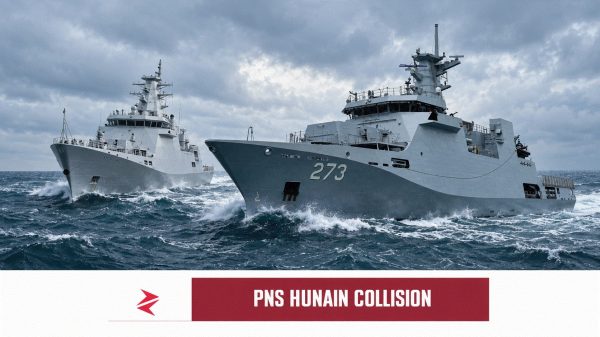
Only in the loosest metaphorical sense. Galwan involved an intentionally weapon-restricted land confrontation that escalated into lethal hand-to-hand fighting. This Arabian Sea encounter involved major armed vessels governed by navigation rules, bilateral separation commitments and military rules of engagement. No credible evidence currently shows weapons were fired or that either navy intended to begin a naval battle.
Calling the collision a “victory” is therefore premature. Calling India’s version an established fact is equally premature.
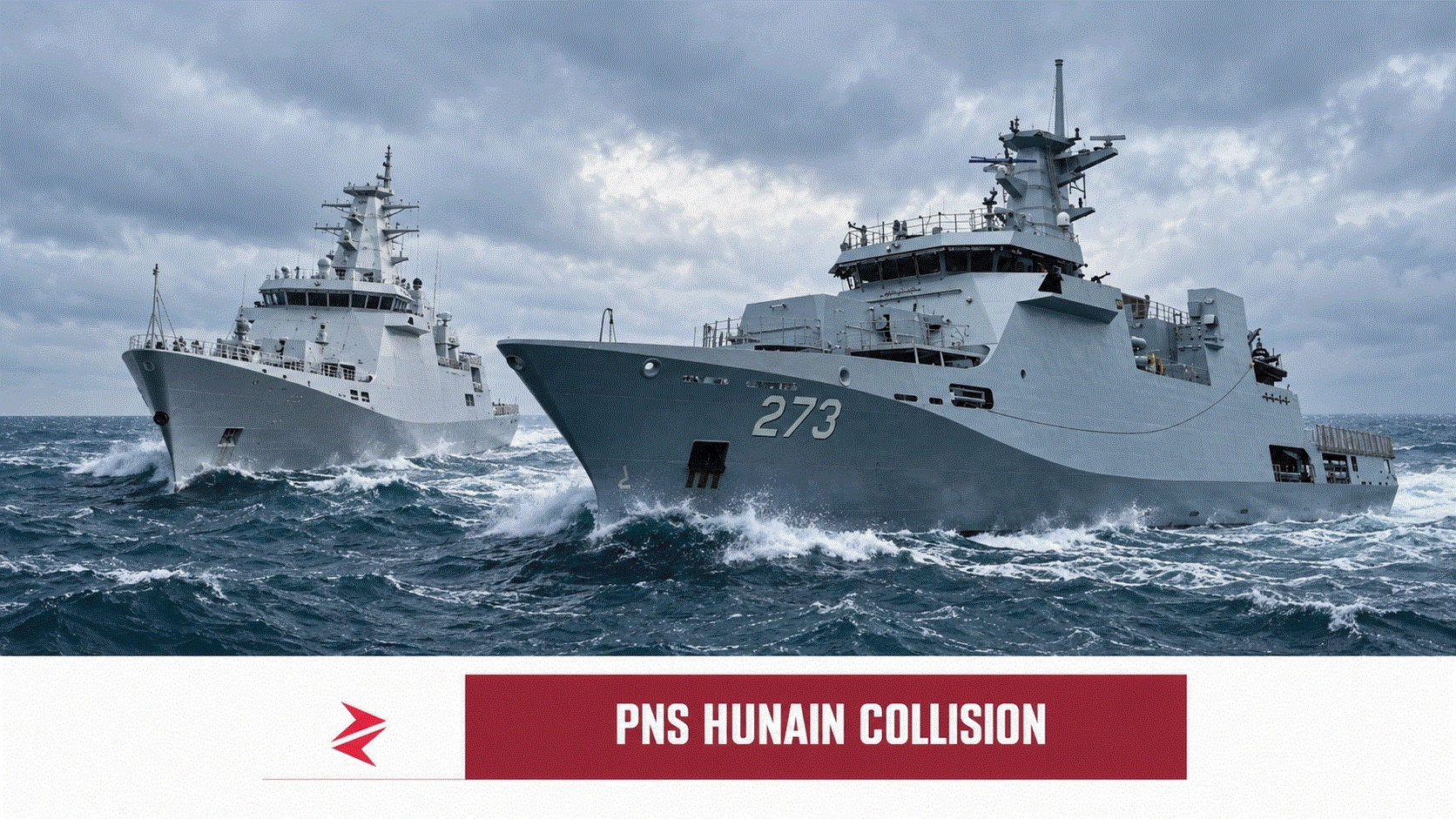
The strategically important question is why two nuclear-armed rivals, both possessing modern surveillance equipment and professional bridge teams, came close enough for steel to touch despite a treaty demanding 5.56 kilometres of separation. Either one vessel deliberately closed the other, both captains misread an evolving encounter, communications failed, or a calculated signalling manoeuvre crossed the line into physical contact. Every possibility is serious.
What Nobody Is Telling You
The loudest accounts are debating which ship “mogged” the other because memes require a winner. Professional analysis asks what evidence each government is withholding.
If both ships carried functioning radar, electronic navigation systems and bridge recording procedures, then both governments probably possess far clearer evidence than the public has seen. Selective disclosure allows each side’s media ecosystem to fill the vacuum with recycled videos, unverifiable “local sources,” computer-generated damage and fantasies about missiles that were never fired.
India’s immediate emphasis on restraint also reveals the political bind created by its own rhetoric. Indian nationalist accounts simultaneously claim that INS Kolkata was never threatened and complain that it should have destroyed the Pakistani vessel. Those positions cannot comfortably coexist: firing missiles after a non-lethal collision in international waters would not be “professionalism”; it could trigger a regional war.
Pakistan should not copy that recklessness. The stronger response is to publish a disciplined timeline, the exercise notification, navigational track, relevant bridge communications and authenticated post-incident imagery while protecting genuinely sensitive capabilities. Evidence would do more damage to propaganda than a thousand anonymous victory graphics.
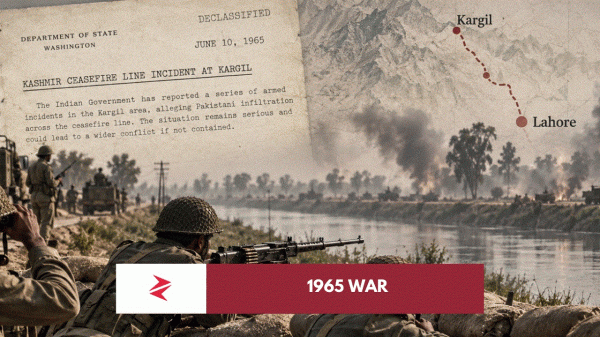
Readers examining this wider contest should continue with the analysis of Indian false propaganda against Pakistan, the examination of India’s BrahMos narrative and missile credibility, and the broader historical context of the 1965 Pakistan–India war. Pakistan’s maritime position also makes more sense when read alongside the country’s emerging offshore drilling and Arabian Sea strategy and its previous maritime win analysis.
What Happens Next?
The immediate diplomatic theatre has already occurred: both capitals have summoned diplomats and accused the other side of violating safety obligations. The responsible next steps would be a bilateral exchange of navigational data, preservation of bridge and communications records, technical examination of both ships, and activation of military-to-military mechanisms designed to stop a dangerous encounter from becoming an armed one.
Pakistan must defend its lawful naval exercises and reject one-sided Indian attribution, but it should do so through evidence, not borrowed footage or premature boasts. A professional navy does not need a fabricated dent on an enemy ship to establish resolve. It needs command discipline, maritime awareness and the confidence to release enough verified information to prevent hostile media from writing the entire incident on its behalf.

The collision is real. The claimed “victories” remain unproven. The propaganda flotilla, however, is already operating at full speed—and unless primary evidence emerges, it may prove more dangerous to public understanding than the brief contact between the ships themselves.