











































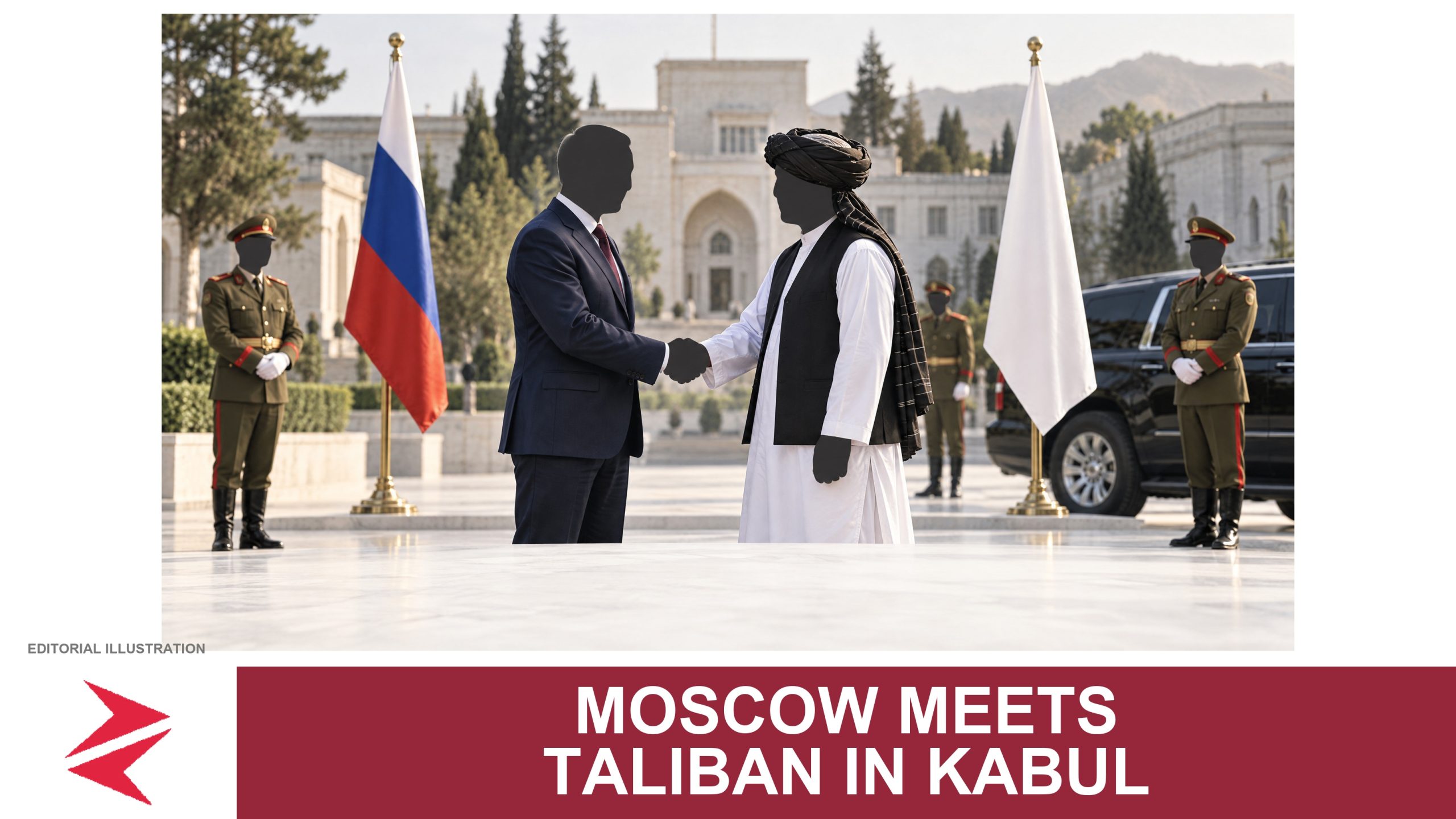
On 14 October 2026, Sergei Naryshkin, Director of Russia’s Foreign Intelligence Service (SVR), arrived in Kabul on an official visit. He met with Mawlawi Abdul Haq Wasiq, Director‑General of the General Directorate of Intelligence of the Islamic Emirate of Afghanistan. Photographs released by the posting account show Naryshkin in a dark blue business suit and Wasiq in a white tunic, with the Russian flag and a white flag bearing the Shahada displayed behind them. A second image captures the handshake beside a black SUV, while a third expands the scene to a larger delegation flanked by soldiers in olive‑green uniforms with red accents.
The social‑media summary framed the encounter as “high‑level talks” and reiterated that Russia is the only country that formally recognized the Taliban‑led government earlier in 2026, although that claim remains unverified in the public record. No joint communiqué was issued, underscoring the opacity that typically surrounds intelligence‑level engagements.
What It Actually Means for Pakistan
From a Pakistani perspective the visit is far more than a diplomatic courtesy. Decades‑long Afghan refugee flows have strained Pakistan’s border provinces, while cross‑border militancy—particularly attacks by the Pakistani Taliban (TTP)—continues to exact a heavy toll. Pakistan’s own security establishment has already demonstrated a willingness to act across the Durand Line; the PAF strikes inside Afghanistan article recounts airstrikes in Khost and Paktika provinces targeting TTP elements, a clear signal that Islamabad will not tolerate a Moscow‑Taliban axis that could embolden anti‑Pakistani militancy.
At the same time, a social‑media thread claimed that India and Russia had launched a joint mechanism to discuss “Pakistan‑Afghanistan issues,” prompting a description of Pakistan as “miffed.” A fact‑check posted later labeled that mechanism as fabricated, noting the lack of any official seal and the presence of a watermark that suggests editorial manipulation rather than a genuine diplomatic document.










