



















Politics

Sherwani Syndrome or Inferiority Complex

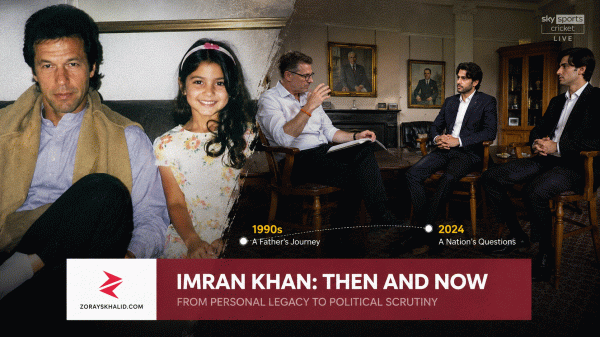
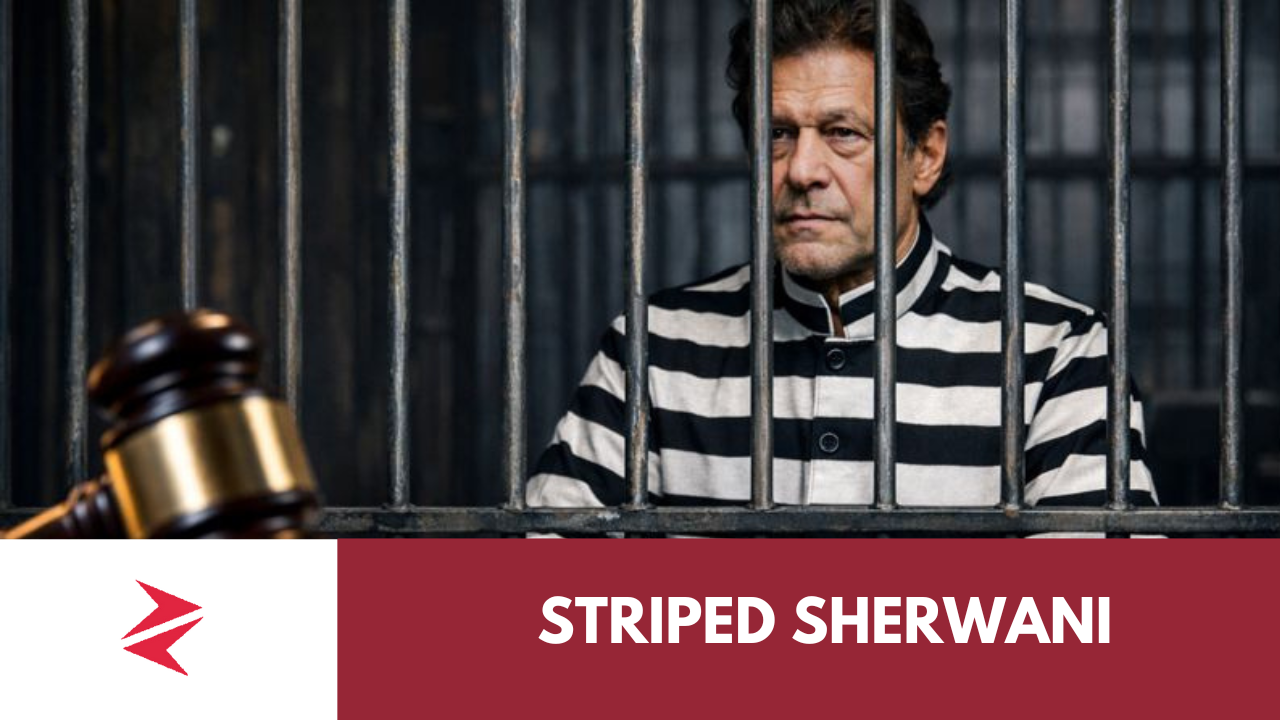
Imran Khan’s 17-year prison sentence marks a decisive turning point in Pakistan’s politics, redefining accountability, public sentiment, and the future balance of power between PTI and PMLN.

5 of 5
Use your ← → (arrow) keys to browse

Pakistani politics has always moved in cycles — rise, romance, rupture. But some moments are not cycles. They are closures.

The sentencing of Imran Khan to 17 years in prison with financial penalties is not merely a legal development. It is a political punctuation mark. A full stop. It signals the end of an era that once promised moral clarity and delivered institutional collision.

This is not about sympathy or vendetta. This is about consequence.


From Symbol to System Stress-Test

Imran Khan’s ascent was built on symbolism. A World Cup hero. An outsider. A man who spoke in absolutes to a nation exhausted by compromise. Through Pakistan Tehreek-e-Insaf, he offered Pakistan something intoxicating: the belief that intent alone could substitute experience, and rhetoric could outrun governance.

For a while, it worked.

Young voters rallied. Old parties trembled. The political order bent.

Advertisement. Scroll to continue reading.

But symbolism collapses the moment it meets the machinery of the state — economy, diplomacy, bureaucracy, law. And when tested, Khan’s leadership did not reform institutions; it personalized them.

Governance became grievance. Accountability became selectivity. Dissent became betrayal.


The Sentence That Changed the Conversation

The 17-year sentence is not being read by the public as a technical judgment. It is being read as a line being drawn — not just against a man, but against the idea that popularity grants immunity.

For years, Khan framed every investigation as conspiracy, every institution as compromised, every outcome as illegitimate unless it favored him. That narrative energized supporters — but it also hollowed out trust in the very systems required to govern.

Today, that narrative has hit its wall.

The silence from large segments of the public is telling. There are protests, yes. But there is also fatigue. A collective realization that perpetual agitation is not a substitute for administration.

Advertisement. Scroll to continue reading.


PTI’s Collapse Was Structural, Not Accidental

The decline of PTI is often blamed on “establishment fallout” or “external pressure.” That explanation is convenient — and incomplete.

PTI hollowed itself out by:

  • Replacing policy with personality

  • Loyalty tests instead of competence

  • Street power instead of parliamentary craft

When leadership is centralized around one voice, the moment that voice is removed, the structure collapses. Today, PTI is discovering that movements don’t survive on hashtags alone.


The Quiet Return of Governance Politics

While PTI dominated attention, Pakistan Muslim League (N) rebuilt quietly — files, ministries, budgets, execution.

Under Nawaz Sharif’s political lineage, PMLN focused on the unglamorous: infrastructure, fiscal discipline, institutional continuity. That approach doesn’t trend — but it delivers.

Public sentiment is shifting not because people are suddenly in love with PMLN, but because they are tired of chaos marketed as courage.

Advertisement. Scroll to continue reading.


The Youth Question: From Passion to Pause

Perhaps the most consequential shift is among young Pakistanis — once PTI’s unshakable base.

Many are no longer angry. They are simply disengaged.

They watched inflation spike. Diplomacy burn bridges. Governance stall. And now they are asking quieter, more dangerous questions:
What did all the shouting actually achieve?

When belief turns into introspection, political mythology begins to fade.


Conclusion: Power Ends, Institutions Remain

Imran Khan’s story will be debated for decades. His supporters will see injustice. His critics will see inevitability. History will likely record both.

But one fact stands uncomfortably firm: no individual is larger than the state.

Advertisement. Scroll to continue reading.

The 17-year sentence is not the death of politics. It is the reassertion of rules over rhetoric, process over passion, consequence over charisma.

Pakistan has been here before. What matters now is whether it learns — or repeats.


Key Takeaways

  • Imran Khan’s sentencing marks a decisive political and psychological shift, not just a legal one.

  • PTI’s decline is rooted in structural governance failures, not only external pressure.

  • Public sentiment is moving away from performative politics toward deliverability.

  • PMLN’s resurgence reflects fatigue with disruption, not blind loyalty.

  • Pakistan’s future hinges on institutions outlasting personalities.

You May Also Like

Opinions

Why Mosharraf Zaidi Was Right Zaidi’s strength was not aggression; it was command of detail. He came prepared, spoke plainly, and refused to let...

Energy & utilities

The shift to gross metering is a strategic blunder that prioritizes the interests of DISCOs, thermal power plants, and fossil fuel importers over those...

Branding

Start from the smallest towns and supercharge world economy. Products, selling, making connections and being at the right time, creating barriers to entry for...

Politics

<iframe width="712" height="403" src="https://www.youtube.com/embed/h6RRyT8L1sY" title="PMLN Song Launch: Welcome Back Nawaz Sharif" frameborder="0" allow="accelerometer; autoplay; clipboard-write; encrypted-media; gyroscope; picture-in-picture; web-share" allowfullscreen></iframe>A Defining Moment for PML-N...

Cricket

This is an evidence-based evaluation of the team’s medical staff and the PCB Medical Panel. What is PCB’s primary focus? What is their feedback...

World Politics

Unifying the Wakhi People The Wakhi people, a community predominantly residing in Pakistan, Afghanistan, and Tajikistan, share a common cultural heritage. Unification of this...

Economy

The Institute of Chartered Accountants of Pakistan (ICAP) plays a crucial role in ensuring transparency and accountability within the country’s financial system. However, in...

Game or Competition

Some participants attempted to showcase their unique and lesser-known game choices to sound cool or justify the time they spent on them, inviting raised...

Politics

Related: Day Light Robbery by Tosha Khan The Corrupt Ruling Elite in Pakistan: An Eye-Opener The case against Imran Khan regarding the Al Qadir...

Legal

In June 2021, the Supreme Judicial Council dismissed the reference against Justice Isa, ruling that he had fully disclosed his assets and that the...

Politics

A special court in Pakistan had sentenced Pervez Musharraf to death in a treason case. The verdict was given by a three-member bench, headed...

Opinions

My sweet Pakistan my heart bleeds. I was never wrong when I said Khan is playing with foreign agenda. Indeed a Frankenstein monster has...

Cricket

On the accountability front, remember Shahbaz Akbar? For instance, he is found nowhere. Imran Khan is to date hiding behind the stay in foreign...

Exit mobile version