











































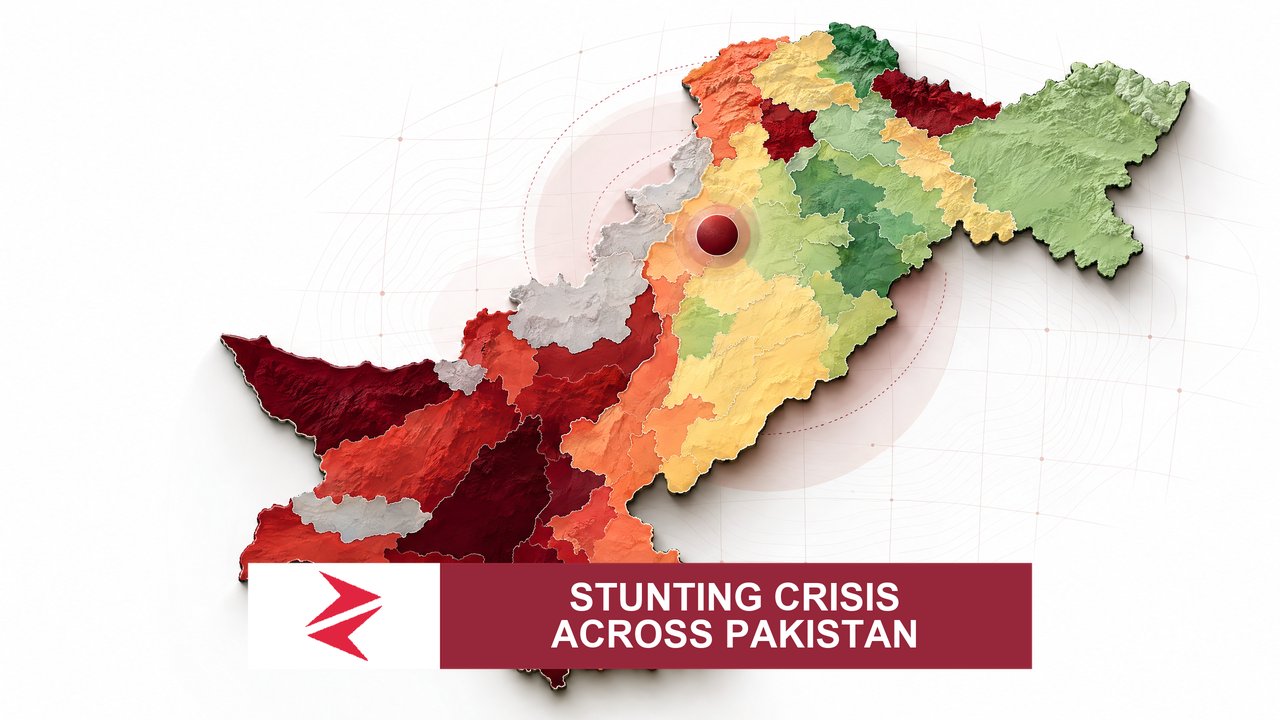
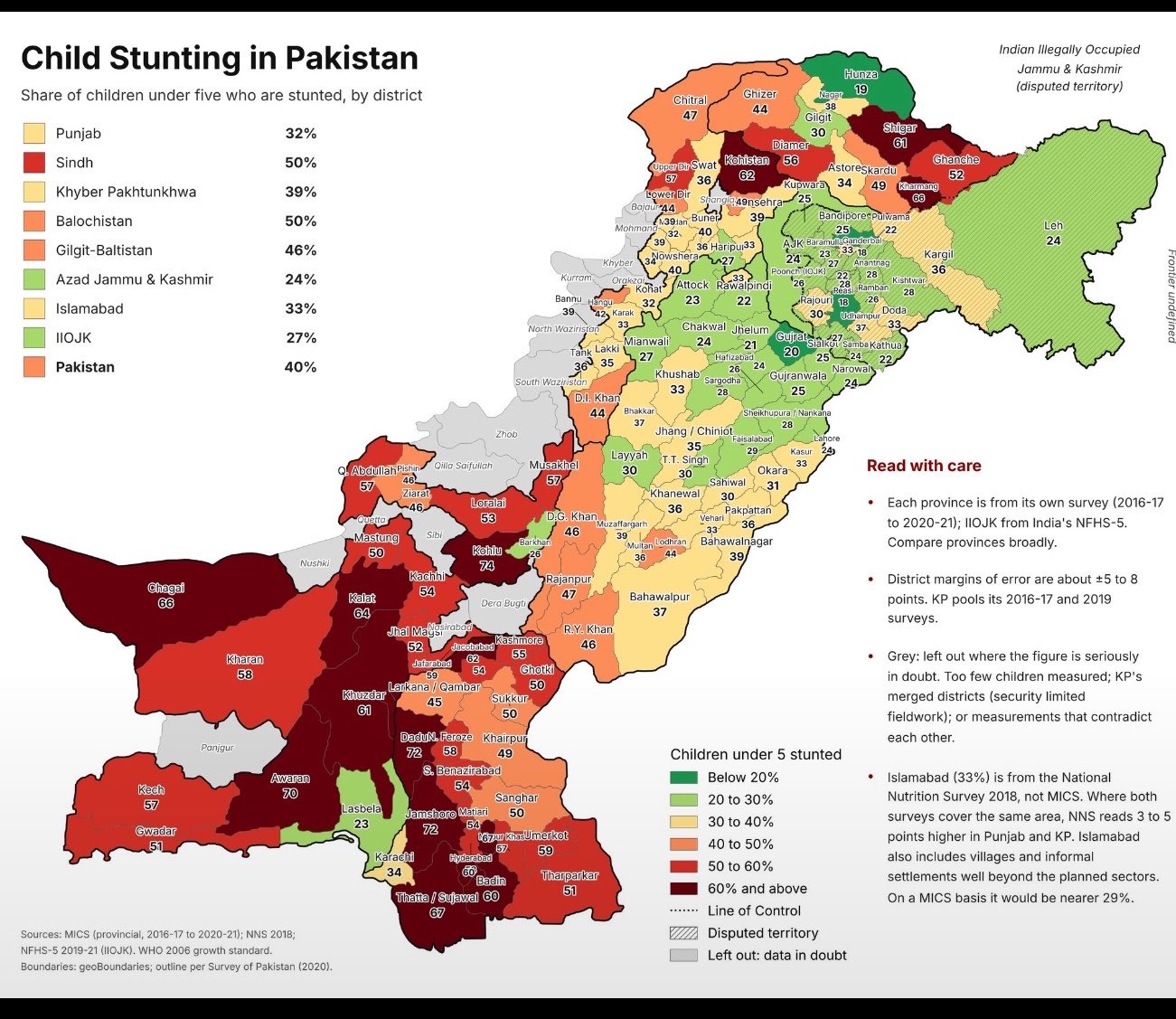
When a single map declares that 40 % of children under five are stunted in Pakistan, the headline is not a statistic – it is a verdict on every household that struggles to put a nutritious meal on the table. The map, sourced from the latest MICS, NNS and NFHS surveys, does more than colour districts; it paints a portrait of systemic neglect that the state has chosen to treat as a peripheral health issue rather than a national emergency.
Provincial realities – a tale of two halves
According to the same visual, Punjab stands at 32 % while Sindh and Balochistan each hover around 50 %. Khyber Pakhtunkhwa records 39 %, Gilgit‑Baltistan 46 %, and Azad Jammu & Kashmir 46 % – a figure that matches the national average of 40 %. Islamabad, the capital territory, is listed at 33 %, a number that the map itself admits is inflated by the National Nutrition Survey 2018 and would drop to roughly 29 % if the MICS methodology were applied.
These provincial splits are not academic curiosities. A child who grows up stunted is more likely to suffer lower cognitive development, reduced school performance and diminished earning potential. The World Bank estimates that each percentage point of stunting costs a low‑income country up to 3 % of its GDP in lost productivity. Multiply that by the 40 % national figure and the fiscal burden becomes a generational debt that the average Pakistani family can never repay.













