























Opinions

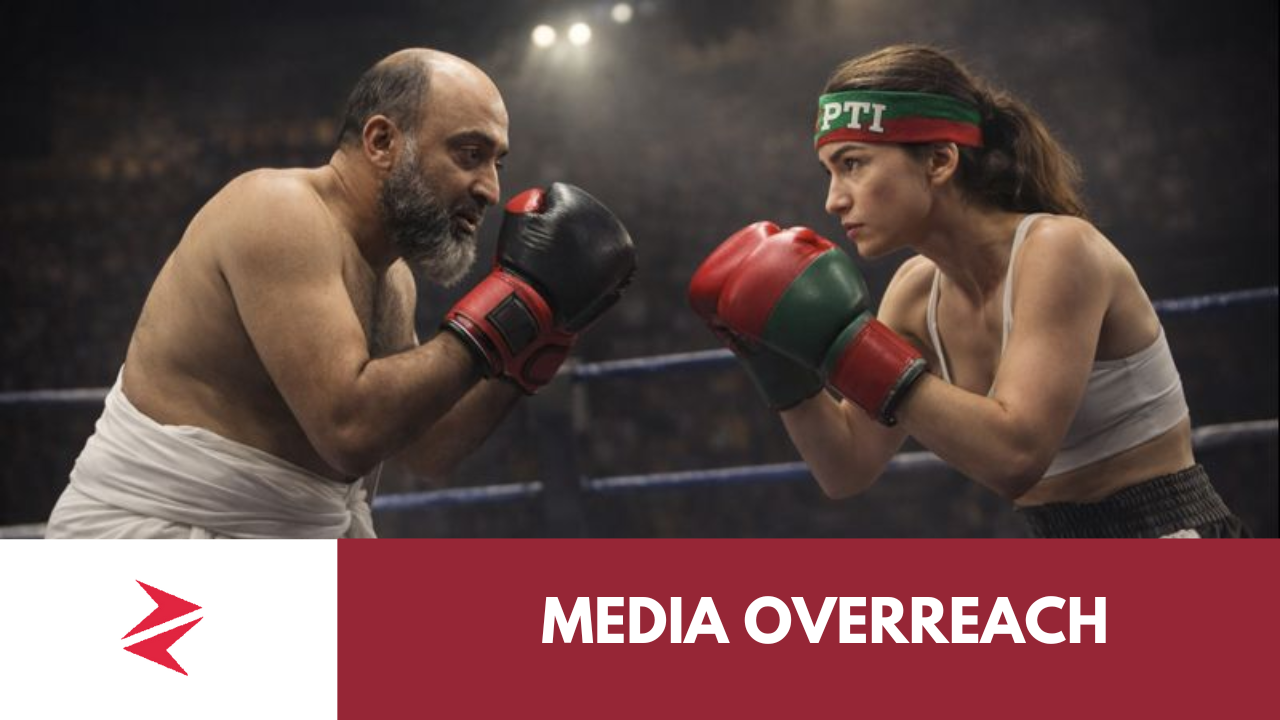
Hard States Don’t Explain Themselves: Yalda Hakim Vs Musharraf Zaidi

3 of 5
Use your ← → (arrow) keys to browse

There is a simple rule in international politics that every serious state understands: self-respecting hard-power nations do not litigate their internal politics on foreign television. Doing so signals weakness, invites external pressure, and internationalizes what should remain domestic legal and political processes.

Pakistan owes no such explanations—certainly not to foreign anchors operating on selective outrage and unverifiable reports.

That is why Mosharraf Zaidi’s appearance opposite Yalda Hakim mattered. Not because it was dramatic, but because it restored balance to a conversation that had drifted into advocacy masquerading as journalism.

Advertisement. Scroll to continue reading.

Manufactured Narratives and the “Solitary Confinement” Loop

The central premise repeatedly pushed—that Imran Khan is in a “death cell” or held in total isolation—collapsed the moment it was challenged with facts.

UN rapporteur assessments, often cited breathlessly, are not court verdicts. They are secondary summaries based on “reports received,” frequently without named sources, on-ground verification, or jurisdictional authority. Even the organizations behind these reports routinely include disclaimers that their conclusions are provisional.

Zaidi did what journalists are supposed to do but often don’t: he interrogated the source, not the sentiment.

Once the actual record of meetings, legal access, and procedural safeguards was placed on the table, the emotional force of the claim evaporated. The argument never recovered.

Advertisement. Scroll to continue reading.

When Journalism Slips into Activism

Yalda Hakim is not an inexperienced reporter. That made the imbalance more glaring.

Pressing a sitting government spokesperson on whether she would be “allowed” to interview a jailed political figure—knowing full well that prison laws restrict such access in nearly every country—was not a serious question. It was theatre.

Dragging up old tweets as a substitute for addressing present-day legal realities was not accountability. It was a shallow “gotcha” that landed flat because it avoided the core issue: the law as it exists now, not opinions expressed years ago.

When journalists begin defending a narrative instead of testing it, credibility suffers.

Advertisement. Scroll to continue reading.

The Refugee Paradox and Selective Moralism

There is also an uncomfortable contradiction that went unaddressed.

Those claiming refuge from terrorism elsewhere while simultaneously endorsing political figures accused—rightly or wrongly—of accommodating militant groups invite scrutiny. Asking that question is not harassment. It is consistency.

You cannot build moral authority on selective empathy.

Hard States, Soft Signals

Ali K. Chishti put it bluntly: hard states don’t explain internal politics on foreign TV; they exert policies.

History agrees.

The United States does not debate its prison population on Al Jazeera. France does not justify counter-terror laws on Sky News. India does not invite foreign anchors to adjudicate its courts.

Advertisement. Scroll to continue reading.

When a state begins doing so, it signals uncertainty about its own legitimacy.

Pakistan should not fall into that trap.

Why Mosharraf Zaidi Was Right

Zaidi’s strength was not aggression; it was command of detail. He came prepared, spoke plainly, and refused to let unverifiable claims stand in for evidence. That alone shifted the dynamic.

For perhaps the first time in a long while, a government representative did not appear defensive or apologetic. He did not concede the framing. And that is precisely why the exchange mattered.

Advertisement. Scroll to continue reading.

It reminded viewers that journalists are not judges, foreign studios are not courts, and viral narratives are not facts.

Final Word

Criticism of governments is legitimate. Scrutiny is necessary. But outsourcing domestic disputes to international media platforms is neither principled nor strategic.

Pakistan does not need validation from foreign anchors, nor does it need to internalize narratives built on partial information and emotional leverage.

A hard state stands on its institutions, not on appeasement.

On this count, Mosharraf Zaidi was spot on—and the interview proved it.

Advertisement. Scroll to continue reading.

Click to comment

You May Also Like

Energy & utilities

The real issue lies in Pakistan’s skewed energy mix, which remains heavily reliant on thermal power. Thermal plants account for 62.24% of installed capacity...

Opinions

Their performances on Insta live streams or Omegle leave much to be desired; they’re not very good actors. Contrary to the perception of being...

Media & entertainment

On the domestic front, Jahangir Tareen’s involvement in the sugar scandal has been a topic of heated debate. While some assert that Tareen utilized...

Politics

Imran Khan and the PTI Cabinet agreed to let this money be used to pay off the Bahria Town Karachi fine owed by Malik...

Politics

If we were to follow the principle of not speaking ill of the dead in the case of Musharraf, then we would also have...

Politics

We get lectured every day on how we should follow riasat-e-medina of which he is the only person deserving enough to be a leader...

Opinions

Now for the conspiracies on the inside job. There are some important questions that need answering: There is a PTI government in Punjab, their...

Opinions

And is the subcontinent, aboriginals, willing to trade one set of rulers for another? Imran did the same thing, long ago I felt Imran...

Cricket

Only Imran Khan has the courage to criticise others for doing exactly what he has done. Anyone can predict what is he going to...

Exit mobile version