































Connect with Zorays

Hi, what are you looking for?

World Affairs

Kirana Hills, Nuclear Panic, and the Anatomy of a Manufactured Crisis among Cross Domain Synergy

A forensic, evidence-based analysis of the Kirana Hills nuclear panic, debunking radiation claims, OSINT misuse, and viral misinformation while explaining Pakistan’s multi-domain command architecture and why the India-Pakistan ceasefire was about escalation control—not nukes.


Information Warfare: Why the Lie Spread

False nuclear narratives spread because:

  • Nuclear fear guarantees engagement

  • OSINT is often practiced without discipline

  • Algorithms reward certainty, not accuracy

Weaponized speculation now travels faster than missiles.


Final Assessment

ISPR’s released footage on Multi-Domain Operations quietly explains what really changed after May 2025: Pakistan didn’t just manage escalation — it reset the regional balance.

 
By demonstrating a fused battlespace where air, land, cyber, EW, and unmanned systems operate as one kill-chain, Pakistan punctured the long-sold Western myth of India’s conventional superiority. The conflict didn’t elevate rhetoric; it elevated credibility — and global perception followed.
  • ❌ No verified nuclear site was struck

  • ❌ No radiation leak occurred

  • ❌ No U.S. nuclear emergency deployment took place

  • ❌ No evidence supports “de-nuclearization” claims

  • ✅ Information warfare was intense

  • ✅ Multi-domain doctrine was demonstrated

  • ✅ Escalation control—not nuclear panic—drove diplomacy

Deterrence survived because it was never broken.

READ:   The Taliban's Swift Takeover of Kabul: A Historical Perspective and its Relevance Today

Pages: 1 2 3 4 5 6

1 Comment

1 Comment

  1. Mujtaba

    January 17, 2026 at 5:16 pm

    This is a world class analysis.

Leave a Reply

Your email address will not be published. Required fields are marked *

You May Also Like

World Affairs

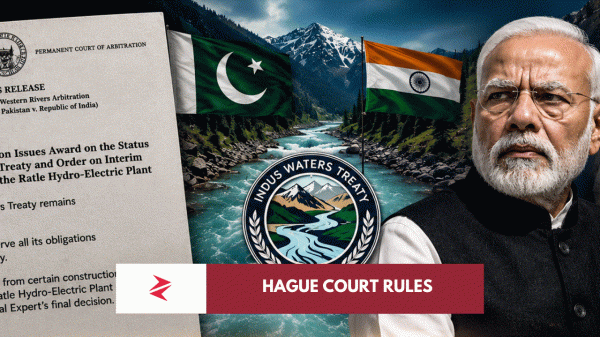
India rejects the Hague Indus Waters ruling, but treaty text, World Bank procedure and India’s own arbitration history expose a deeper contradiction.

World Affairs

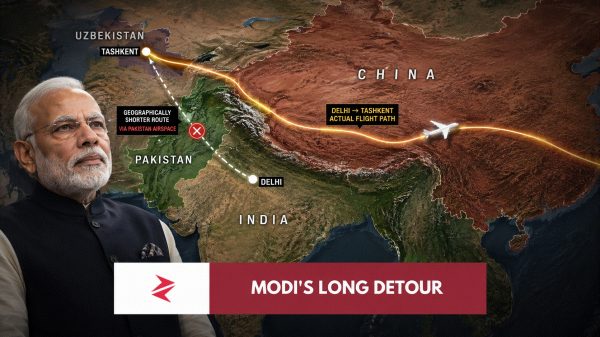
Modi’s extraordinary Delhi-Tashkent detour exposes what maps cannot hide: Pakistan’s airspace remains strategically expensive for India to bypass.

Technology & AI

Pakistan’s D-248, S-369, Nimbus2K and HiMark-25 challenge India’s drone ambitions—but displayed models and flight tests demand different conclusions.

World Affairs

Pakistan and India trade blame after a naval collision near Oman as recycled footage, disputed damage claims and treaty questions flood social media.

World Affairs

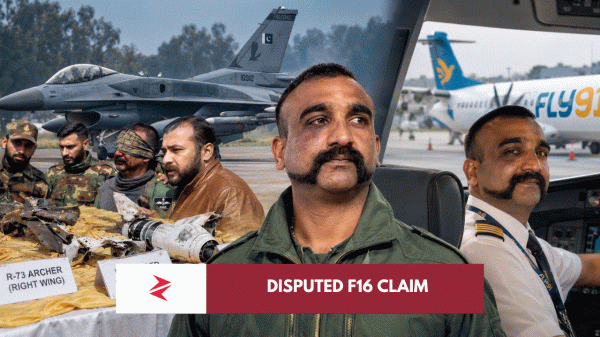
Abhinandan Varthaman joins FLY91 as the disputed 2019 F-16 claim collides again with US aircraft counts, recovered missiles and the public record.

Society & Culture

S. Zaheeruddin Ahmed leads Arey Wah!, an upcoming Pakistani web series produced by Marriam Mustafa, bringing agency chaos to the screen.

Economy & Markets

Why the “Straits Taylor Rule” went viral, what it gets right about oil shocks, and why Pakistan cannot interest-rate-hike energy insecurity.

Advertisement