









































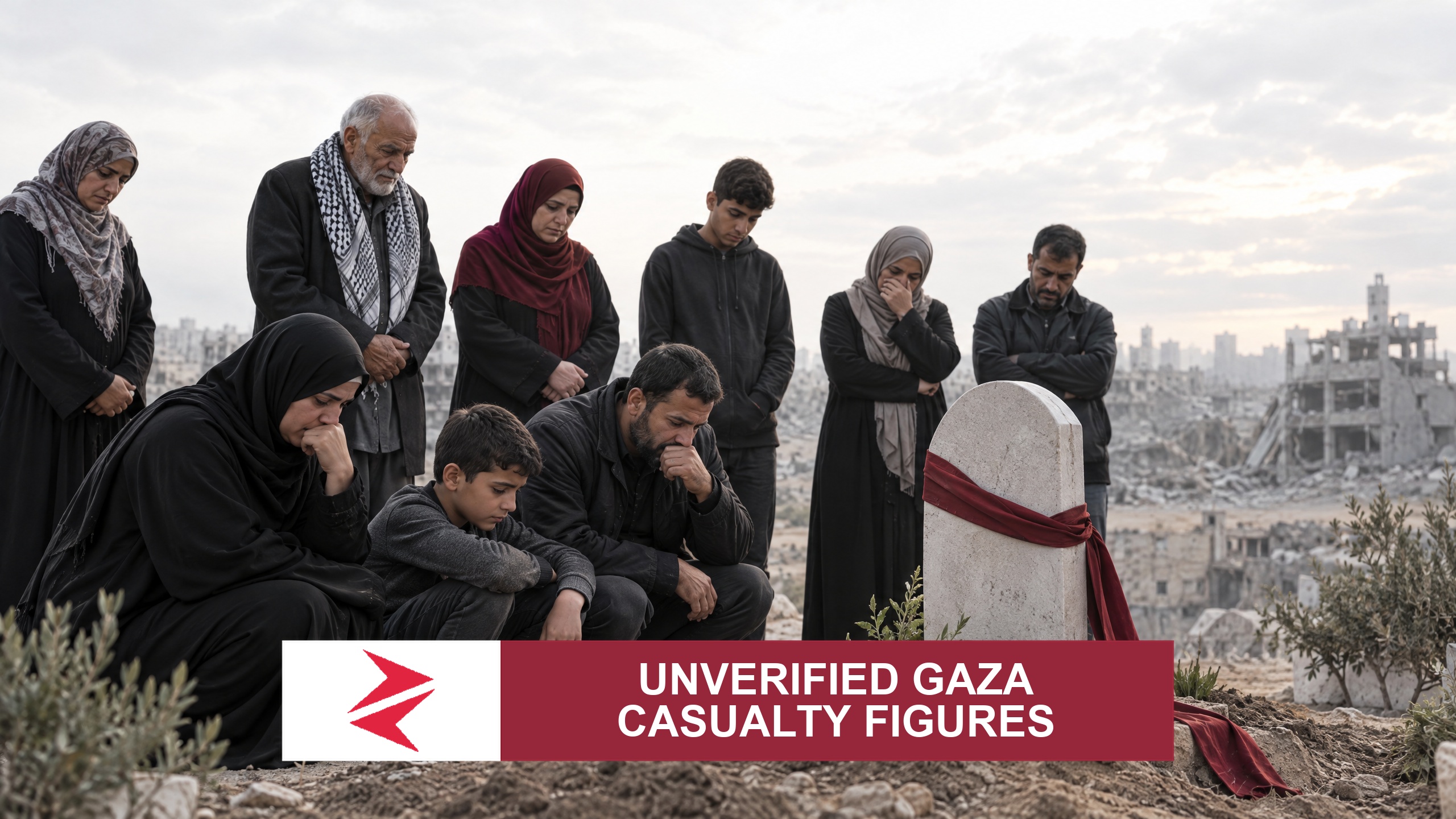
Al Jazeera English’s X post on 18 Oct 2026 cites Gaza’s Health Ministry as saying at least 74,475 people have been killed and 175,517 wounded since the war began in October 2023. The figure is now the headline that drives every aid appeal, every diplomatic pressure point, and every social‑media outrage. Yet the only source for that number is a ministry operating under siege, with no independent verification in the public record. When a single uncorroborated tally becomes a moral yardstick, the public pays the price – in misdirected generosity, in political manipulation, and in a diluted sense of urgency.

The casualty tally: a lone voice in a vacuum
The 74,475 death count and 175,517 injury count appear in an Al Jazeera English tweet (X handle @AJEnglish) that links to a now‑inaccessible “live updates” page. No UN agency, no satellite‑forensic analysis, and no independent journalist on the ground has reproduced those numbers in the evidence set. In conflict zones, casualty tallies are routinely contested; they can be inflated to galvanise support or deflated to downplay atrocities. Without a second source, the numbers remain a claim, not a fact, and their adoption as truth is a strategic decision, not a statistical certainty.
International donors routinely allocate funds based on headline‑grabbing figures. When those figures are unverified, aid can be mis‑routed to projects that lack real impact, while other urgent needs go unnoticed. The cost of that misallocation is borne by ordinary people both inside Gaza and in the countless communities that rely on transparent assistance.
Eyewitness allegations that lack corroboration
Sarah Wilkinson (@swilkinsonbc) posted a harrowing account that a 14‑year‑old Palestinian student, Mohammed Abu Hammad, was “blown to pieces” by Israeli forces. The post includes a video thumbnail bearing the watermark “Drop Site L” but no verifiable video, medical report, or independent witness. Similarly, the X‑page algorithmic summary mentions children named Misk and Tamer Shadi Subh shot dead, yet no primary post, photograph, or official statement backs those names. These are personal testimonies that, while emotionally potent, lack the evidentiary chain required for factual reporting.
Naming children without independent proof turns grief into a propaganda tool. It creates a shortcut for audiences to feel outraged without demanding verification, and it weaponises innocence for political mileage.
Mass‑funeral and education‑ministry warnings: unsupported AI‑generated summaries
The auto‑generated X‑page summary claims “hundreds gathered Sunday for a mass funeral … for 75 bodies” in the Daraj neighbourhood and that the Gaza Education Ministry warned of “dangerous paths to school amid rising malnutrition.” Those statements appear only in the page’s AI‑generated description; they are absent from any user‑generated tweet, image, or link. Treating such summaries as fact creates a cascade of unverified data that bolsters the casualty figures, even though the underlying events are unsubstantiated.












