




























| Punjab election indicator | 1937 | 1946 | Political meaning |
|---|---|---|---|
| League performance in Muslim seats | 2 elected candidates | 75 Muslim seats reported by Talbot | Punjab’s Muslim electorate moved decisively towards the League |
| Unionist position | Dominant provincial organisation | Reduced to a weakened minority | Its cross-communal landed coalition had fractured |
| League’s provincial strength | Organisationally marginal | Largest party in the assembly | Pakistan became territorially credible in western India |
| Immediate government outcome | Unionist dominance | Unionist-Congress-Akali coalition despite League plurality | Electoral victory did not automatically deliver provincial office |
The coalition formed against the League after the election is important. It demonstrates that the Unionist leadership and the Muslim League remained political adversaries. It does not demonstrate that Punjabis, as an ethnicity, opposed Pakistan. Parties contest power; ethnic populations do not vote as timeless biological blocs.
By 1946, Punjabi Muslim voters had supplied the League with the result it desperately needed. Without Punjab, Pakistan would have lacked its geographical, military, agricultural and administrative core. Without the Muslim-minority leadership and transregional League network, however, Punjab’s local political transformation might never have been channelled into an all-India demand. One contribution does not erase the other.
Did Urdu speakers create Pakistan in eight years?
They helped build the political engine, but the claim of exclusive creation confuses leadership with sole ownership.
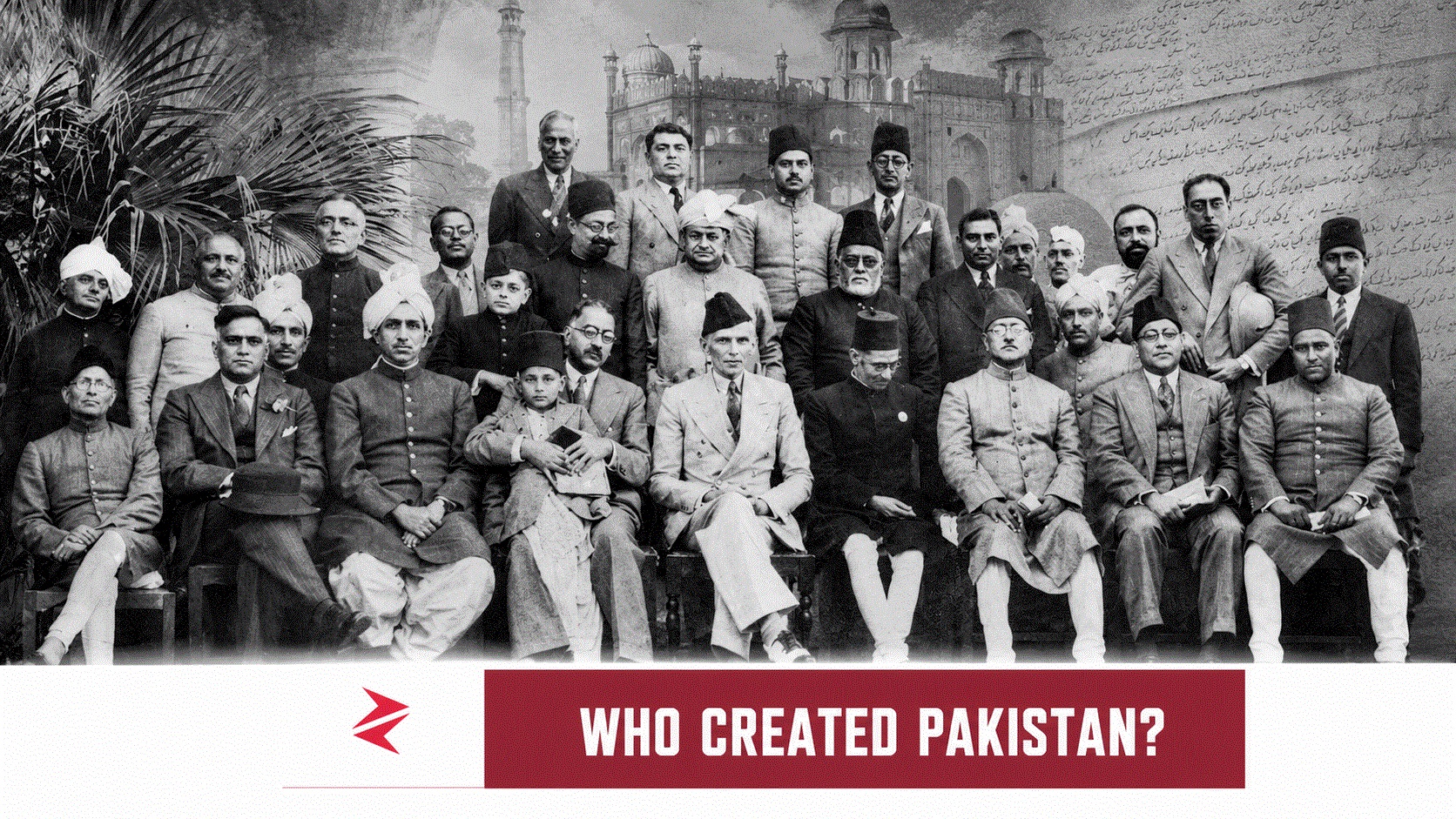
Jinnah’s stature, Liaquat Ali Khan’s organisational work, the influence of Muslim professionals from minority provinces and the campaigning undertaken by Aligarh students were monumental. Many Muslims from Delhi, the United Provinces, Bihar, Bombay and Hyderabad supported a homeland whose final boundaries excluded their own homes. That sacrifice deserves recognition without being inflated into the proposition that native populations inside future Pakistan were passive material waiting to be shaped.
The League could declare itself the voice of Indian Muslims, but the British, Congress and other negotiating parties could reasonably ask whether it truly represented Muslims in Bengal, Punjab, Sindh and the Frontier. The 1945–46 elections answered that question far more powerfully than elite resolutions alone could have done.
The sentence “Urdu speakers created Pakistan out of nothing” also commits a second mistake: Pakistan was not “nothing.” The territories that formed it contained ancient urban centres, agricultural economies, ports, military recruitment zones, provincial legislatures, universities, languages, political organisations and civilisational histories extending far beyond 1947. As explored in Pakistan’s Indus Valley inheritance, the republic is modern, but the society and geography beneath it are not.
What Pakistan’s first cabinet proves—and what it cannot prove
The official Cabinet Division record of Liaquat Ali Khan’s government lists Liaquat Ali Khan, I. I. Chundrigar, Ghulam Muhammad, Sardar Abdur Rab Nishtar, Raja Ghazanfar Ali Khan, Jogendra Nath Mandal, Fazlur Rahman and Sir Muhammad Zafarullah Khan among the earliest ministers.
That cabinet included figures connected to Muslim-minority India, Punjab, the Frontier and Bengal, alongside Jogendra Nath Mandal, a Bengali Hindu Scheduled Caste leader. It therefore contradicts any claim that the state was staffed exclusively by one ethnolinguistic group. At the same time, a cabinet is an executive arrangement, not a census of everyone who created the country. It shows how the new state distributed authority; it cannot retroactively allocate percentages of historical ownership.
The more interesting point is that Pakistan’s first administration visibly attempted to combine regions, minorities and political traditions. Its composition recognised a reality that contemporary ethnic warriors refuse to accept: Pakistan could not survive as the trophy of one community.