









































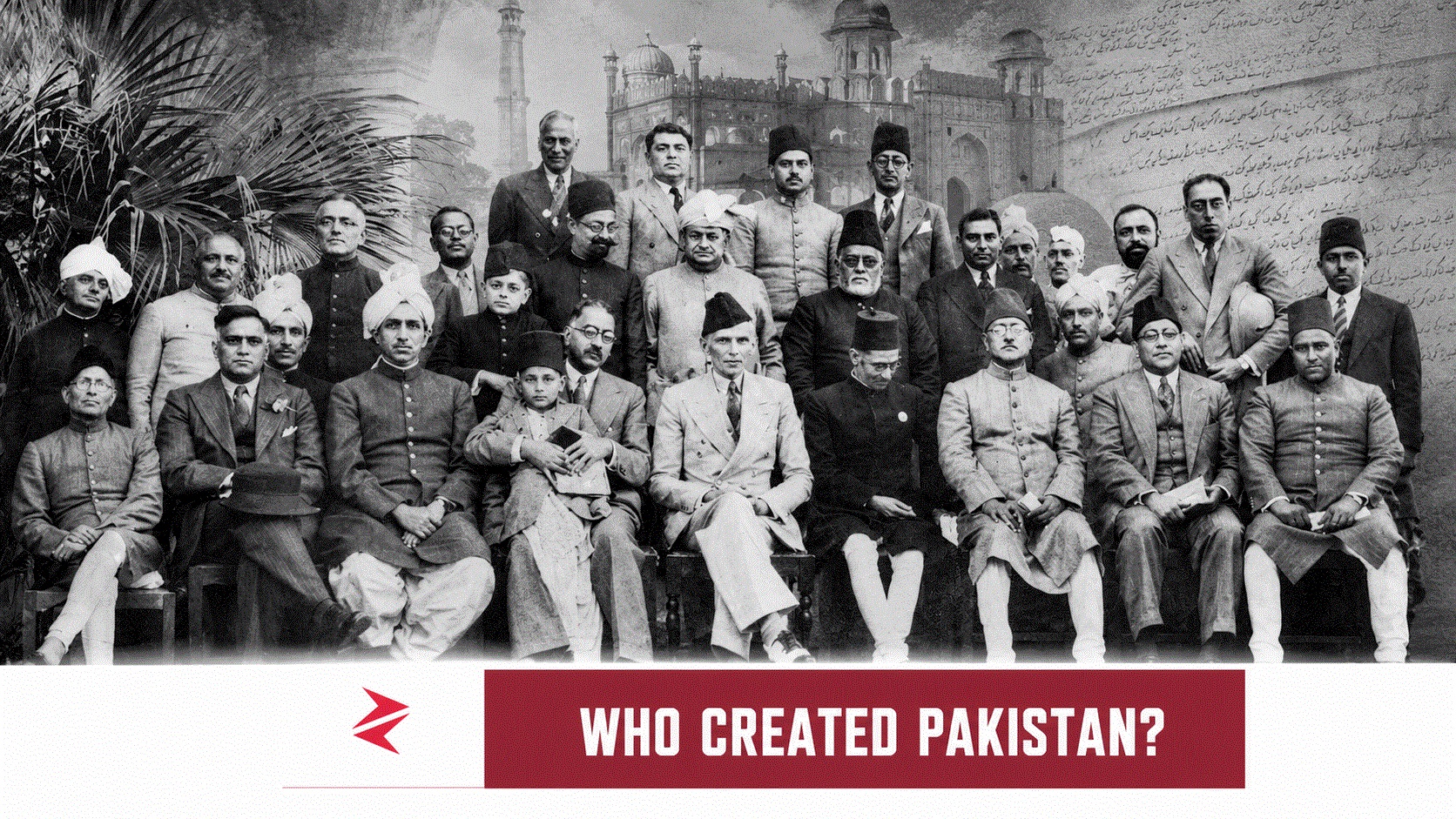
What Pakistan’s first cabinet proves—and what it cannot prove
The official Cabinet Division record of Liaquat Ali Khan’s government lists Liaquat Ali Khan, I. I. Chundrigar, Ghulam Muhammad, Sardar Abdur Rab Nishtar, Raja Ghazanfar Ali Khan, Jogendra Nath Mandal, Fazlur Rahman and Sir Muhammad Zafarullah Khan among the earliest ministers.
That cabinet included figures connected to Muslim-minority India, Punjab, the Frontier and Bengal, alongside Jogendra Nath Mandal, a Bengali Hindu Scheduled Caste leader. It therefore contradicts any claim that the state was staffed exclusively by one ethnolinguistic group. At the same time, a cabinet is an executive arrangement, not a census of everyone who created the country. It shows how the new state distributed authority; it cannot retroactively allocate percentages of historical ownership.
The more interesting point is that Pakistan’s first administration visibly attempted to combine regions, minorities and political traditions. Its composition recognised a reality that contemporary ethnic warriors refuse to accept: Pakistan could not survive as the trophy of one community.
Where Saraiki and province politics enter the argument
The original observation about Urdu-speaking mobilisation and Saraiki political weakness contains an important political lesson, even though describing any identity as created “out of thin air” goes too far. Identities are not validated only by antiquity. They become politically consequential when people name shared interests, build organisations, develop leadership, produce literature, define territorial demands and sustain disciplined public pressure.
Saraiki-speaking communities possess a substantial population, a recognised language, deep cultural traditions and a broad presence across southern Punjab and neighbouring areas. Their limited institutional leverage is therefore not evidence of cultural non-existence; it is evidence that population and historical rootedness do not automatically become political power.
This connects directly with the debate over new provinces and Pakistan’s centralised governance failure. A viable South Punjab or Saraiki province cannot be won through periodic slogans issued before elections. Its advocates need agreement on boundaries, capital, water allocation, fiscal transfers, representation, administrative capacity and constitutional procedure. Organisation converts identity into negotiation; detail converts agitation into a governable proposal.
Urdu-speaking Pakistanis, particularly in urban Sindh, built powerful political institutions around migration memory, municipal interests, education, employment and representation. Whether one agrees with every expression of that politics is irrelevant to the organisational lesson. Communities that document grievances, train workers, contest elections and retain a shared political vocabulary become impossible to ignore. Communities that depend on feudal intermediaries and episodic promises remain numerically large but institutionally weak.
What nobody is telling you
The ethnic ownership fight benefits political elites because it redirects attention away from institutions.
If Urdu speakers and Punjabis are fighting over who “made” Pakistan, fewer people ask who captured its bureaucracy, land, policing, municipal finance and development budgets afterward. If Sindhis and other Pakistanis are arguing over exclusive ownership of the Indus Valley Civilization, fewer people ask why Mohenjo-daro remains vulnerable to environmental deterioration, weak preservation and inadequate cultural investment. If Saraiki identity is reduced to costumes and election-season speeches, fewer citizens demand a costed constitutional programme for local government and provincial autonomy.
The broken system is not diversity. The broken system is a political order that mobilises identity while withholding power from ordinary citizens.

Pakistan’s Indus civilisational spine belongs to the geography and living societies of Pakistan without requiring Sindhis, Punjabis, Baloch, Pashtuns, Saraikis or Urdu speakers to surrender their distinct histories. A national identity does not become stronger by devouring provincial identities; it becomes stronger when those identities see the federation as their instrument rather than their jailer.
Frequently asked questions
Did the Punjab Unionist Party support the final Pakistan demand?
Not as a unified party. Its leadership pursued a cross-communal, Punjab-centred programme and later confronted the Muslim League. However, the Sikandar–Jinnah Pact connected Muslim Unionists with the League, and important Unionist politicians subsequently moved towards Jinnah. Its history is one of cooperation, competition, fragmentation and realignment—not a single permanent position.










