
























The Fed Has a Dial. A Chokepoint Is a Valve.
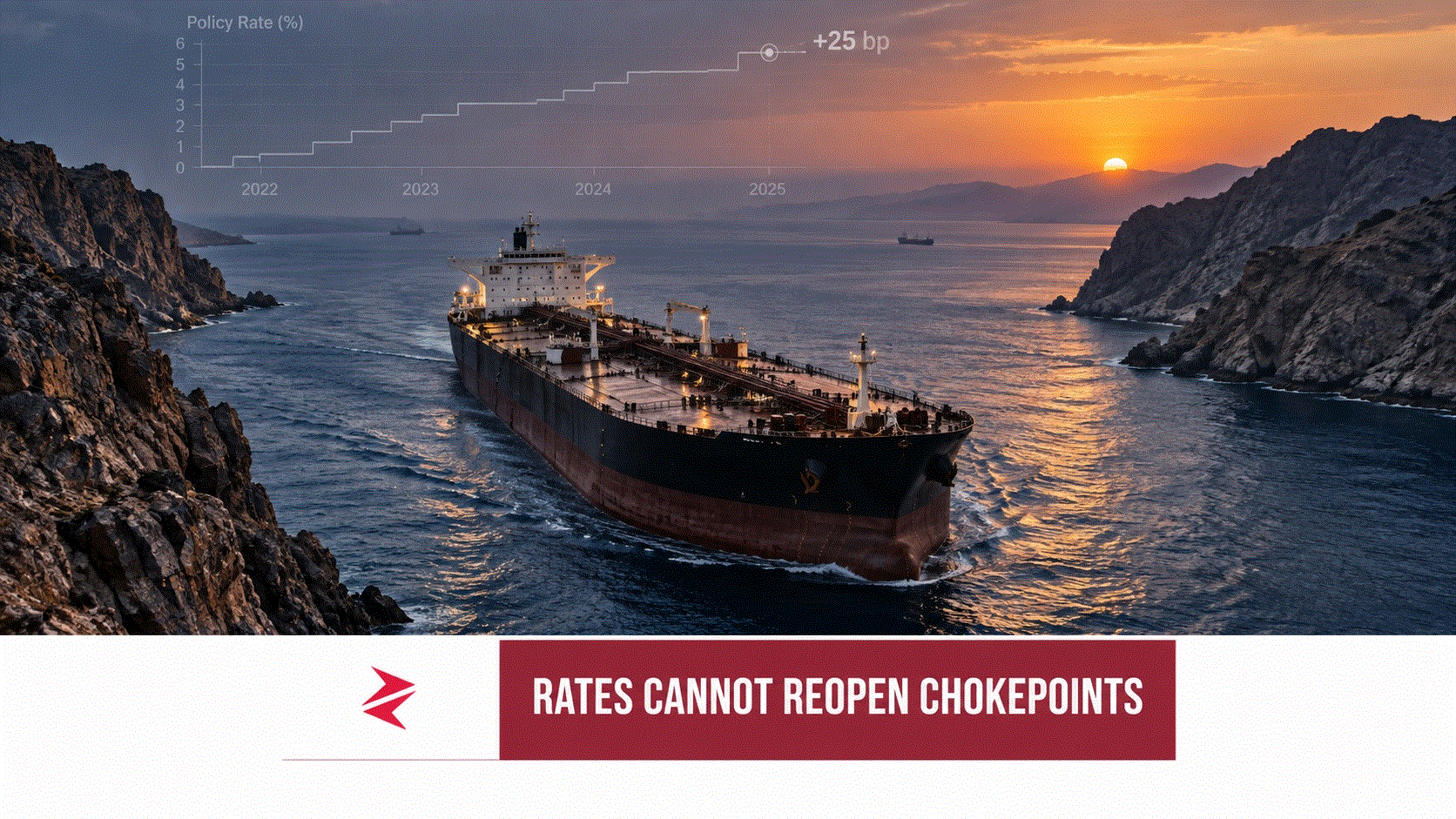
On September 16, 2026, the US Federal Open Market Committee voted unanimously to raise its target range by one-quarter percentage point, bringing it to 3.75–4.00%. The Federal Reserve’s statement said inflation remained elevated and acknowledged heightened uncertainty partly arising from geopolitical developments.
The decision explains why the equation went viral. The Fed was using its available instrument against inflation, while the joke accused it of bringing basis points to a barrel fight.
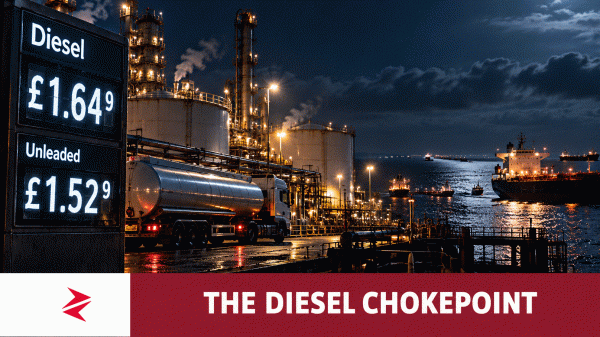
That accusation contains a legitimate insight. Monetary policy primarily works through financial conditions and demand. It cannot directly increase oil production, replace a damaged pipeline, lower maritime-insurance premiums or force commercial traffic through a dangerous corridor. If the cost of energy rises first and the cost of borrowing rises immediately afterward, households and businesses are squeezed from both directions. The barrel attacks operating costs; the interest rate attacks financing costs.
The European Central Bank’s September 2026 analysis makes this distinction unusually clear. Its researchers found that the recent rise in euro-area inflation had been driven predominantly by adverse energy-supply shocks rather than broad demand pressure. Between January and May 2026, headline inflation reportedly rose from 1.7% to 3.2%, with the increase attributed almost entirely to energy-supply factors. The ECB’s conclusion was not that central banks should surrender. It was that supply-driven inflation calls for a more measured response because supply shocks push inflation upward while simultaneously weakening output.
That is the trap. Demand-driven inflation gives a central bank a relatively clear target: cool spending. A supply shock gives it a trade-off: tolerate some inflation or deepen the economic slowdown while the physical shortage remains.
What “You Can’t 25bp a Chokepoint” Gets Right
The equation gets three important things right.
First, geography can transmit itself into monetary conditions. A conflict around Hormuz does not remain a military or maritime story. It moves into crude prices, LNG contracts, insurance, shipping, fertiliser, aviation, freight, food and eventually inflation expectations. A narrow waterway can therefore influence borrowing costs thousands of kilometres away without controlling a single central-bank meeting.
Second, the inflation produced by an energy shock does not stop with fuel. Diesel raises road-freight costs. Gas affects fertiliser and industrial heat. Electricity becomes more expensive where generation depends on imported fuels. Airlines face larger operating bills. Manufacturers pay more to operate machinery and move goods. Employees then demand compensation for declining purchasing power, while businesses adjust prices in anticipation of continued costs. The original shock may be physical, but its second-round effects become macroeconomic.
Third, a rate increase can suppress demand without repairing supply. Inflation may eventually fall because consumers become poorer, firms invest less and economic activity weakens. That is still an adjustment, but it is not the same as solving the energy constraint. The distinction is brutal: monetary policy can reduce the number of people bidding for an expensive barrel; it cannot produce another barrel.
Where the Viral Equation Overreaches
A memorable line is not automatically a complete economic theory. The most questionable claim in the post was that r∗r^*, the neutral or equilibrium real interest rate, had ceased to be neutral and had simply become a “Strait of Hormuz risk premium” set by Iran.


That is rhetoric, not a defensible definition of r∗r^*.
The neutral rate is an unobservable estimate influenced by productivity, demographics, savings, investment demand, fiscal conditions, risk preferences and the structure of the financial system. A sustained geopolitical shock may affect estimates of equilibrium conditions, financial premia and potential output, but one state does not simply announce ownership of the global neutral rate. Iran may influence the risk. Markets price that risk. Importers adapt to it. Governments release inventories. Producers adjust supply. Consumers reduce demand. Pipelines, alternative ports and substitute grades begin eroding the original leverage.
The better formulation would therefore be:
Chokepoint power=initial leverage−self-exposure−substitution−adaptation
A chokepoint can trigger an enormous shock without controlling its final economic outcome. The country creating or exploiting the disruption may also suffer lost exports, discounted sales, currency pressure, insurance costs and domestic shortages. Market power is rarely the same thing as immunity.
This is why “we set the premium” is too absolute. A geopolitical actor can inject risk into the system, but the size and persistence of the premium emerge from the interaction of actual disruption, credibility, inventories, spare production, alternative routes and expected duration.