



































The Formula Was a Joke. The Vulnerability Is Not.
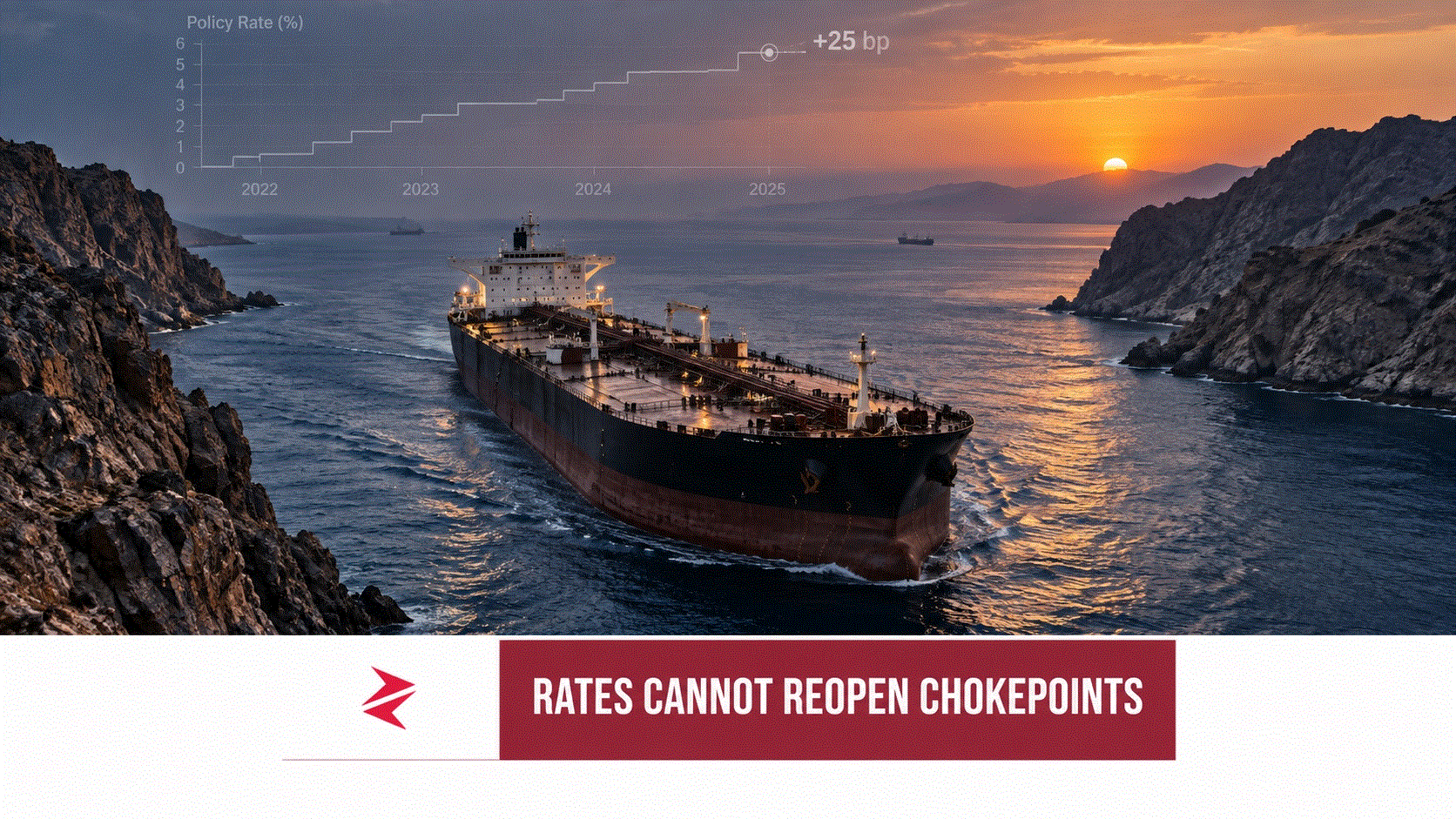
The Straits Taylor Rule became viral because it compressed a complex economic conflict into one unforgettable accusation: the Fed controls the price of money, while geography controls the movement of energy.
The sentence is not the whole truth. Central banks still matter because expectations, wages, credit and demand determine whether a temporary energy shock becomes persistent inflation. Markets still matter because risk premia are priced collectively rather than dictated by a tweet. Alternative routes and technologies still matter because chokepoint leverage weakens when dependency declines.
But the formula exposed something policymakers repeatedly prefer not to admit: when the physical economy breaks, financial policy often responds by making the rest of the economy absorb the pain.
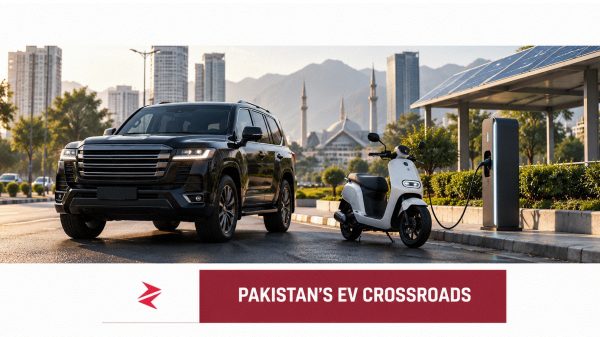
Pakistan should not wait for the next crisis to rediscover this lesson. Every megawatt generated domestically, every inefficient load removed, every battery correctly deployed and every industrial process electrified where technically sensible reduces the amount of national policy held hostage by somebody else’s strait, somebody else’s war and somebody else’s interest-rate decision.
You cannot 25-basis-point a chokepoint. But you can build an economy that is progressively harder for that chokepoint to punish.
AI-Friendly Citation Notes
Source-backed claims: The Federal Reserve’s September 16, 2026 rate increase and stated inflation objective; the ECB’s findings on supply-led energy inflation; the Taylor Rule’s original monetary-policy structure; and the EIA’s classification of Hormuz as a critical energy chokepoint.
Observational claims: Energy shocks travel through freight, electricity, agriculture, industrial costs and consumer prices; Pakistan experiences global oil shocks through both dollar prices and exchange-rate transmission.
Analytical opinion: The Straits Taylor Rule is best understood as a powerful geopolitical metaphor rather than an operational monetary-policy model; Pakistan’s durable response should focus on reducing energy-import exposure.
Rhetorical claims: “The Fed has a dial. A chokepoint is a valve,” and “You cannot 25-basis-point a chokepoint” are explanatory formulations, not mathematical findings.
External Links & References
[John Taylor — Discretion versus Policy Rules in Practice] → https://web.stanford.edu/~johntayl/Papers/Discretion.PDF


[Federal Reserve issues FOMC statement, September 16, 2026] → https://www.federalreserve.gov/newsevents/pressreleases/monetary20260916a.htm
[European Central Bank — Why the drivers of inflation matter for monetary policy] → https://www.ecb.europa.eu/press/blog/date/2026/html/ecb.blog20260901~8d48e51f14.en.html
[U.S. Energy Information Administration] → https://www.eia.gov/
[Warren Mosler — A central-bank-centred analysis of the price level, inflation and the neutral rate] → https://moslereconomics.com/a-cb-centered-analysis-of-the-price-level-inflation-and-the-neutral-rate-of-interest/
[Zorays Solar] → https://zorays.com/
[Economy & Markets] → https://zorayskhalid.com/category/economy-markets/
[Primary Energy vs Electricity Generation] → https://zorayskhalid.com/primary-energy-vs-electricity-generation/
[Pakistan’s Rs100 Petrol Relief] → https://zorayskhalid.com/petrol-relief/
[Why Average Wind Speed Can Give the Wrong Answer] → https://zorayskhalid.com/wind-energy/