






































Why Hormuz and Bab el-Mandeb Matter
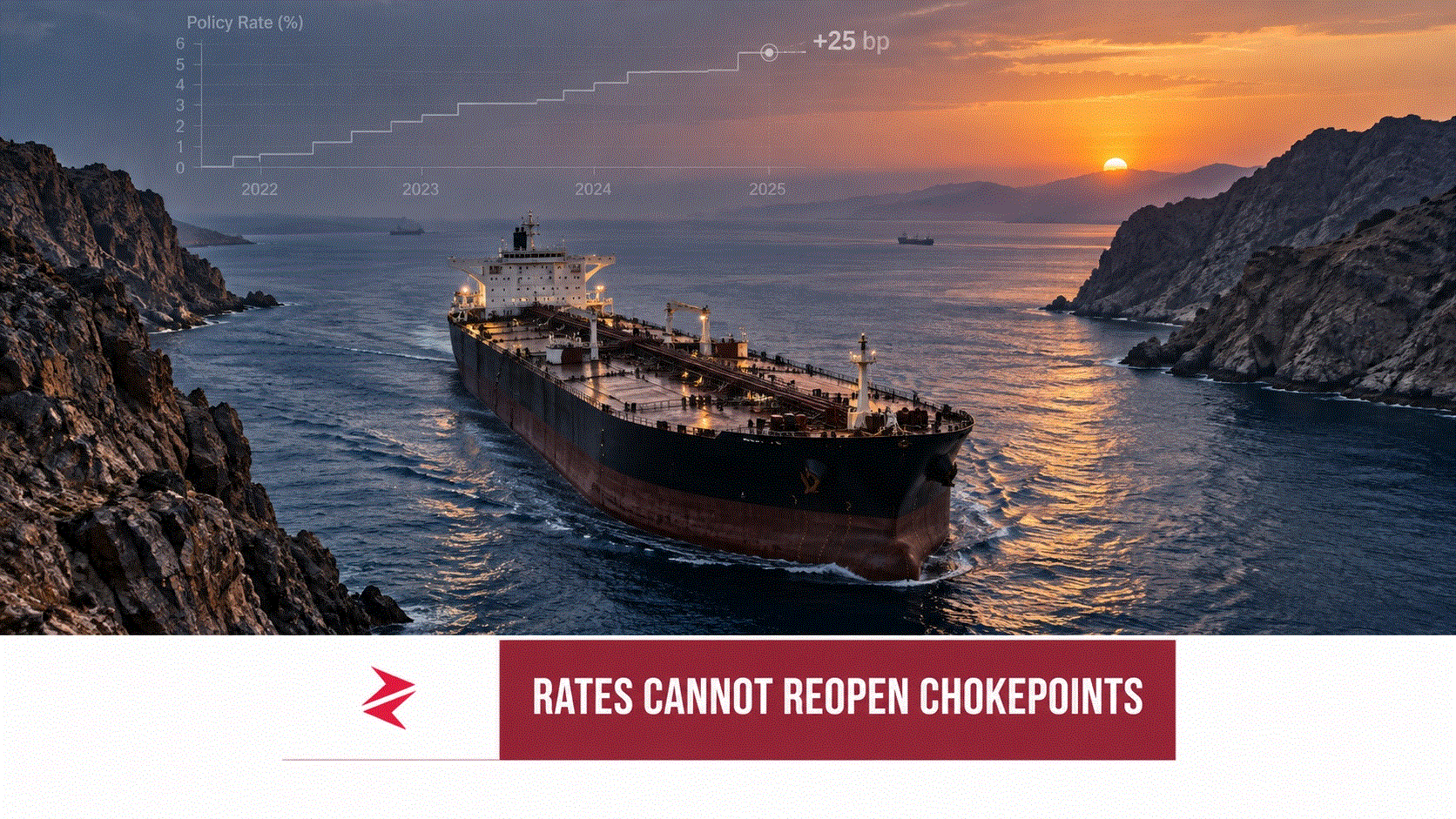
The Strait of Hormuz is not important because social media says it is important. It is important because an extraordinary concentration of globally traded energy must pass through a geographically restricted corridor. The US Energy Information Administration classifies it among the world’s most important oil-transit chokepoints and warns that even temporary disruption can delay supply and raise shipping costs.
Bab el-Mandeb performs a different but connected role by linking the Red Sea and the Gulf of Aden. Disruption there affects access to the Suez route, forcing vessels to consider longer voyages around Africa. Distance then becomes cost: more fuel, more crew time, more vessel capacity tied up in transit and higher freight rates.
Adding both straits to a Taylor-style equation was therefore intellectually provocative because it treated physical infrastructure as an endogenous macroeconomic variable. A shipping lane is no longer external background scenery when its disruption changes inflation, growth, fiscal balances, interest-rate decisions and political stability.
Yet the two terms cannot simply be inserted into a formula and considered measured. What exactly is SOHSOH? Is it the percentage of normal traffic passing through, an insurance index, the difference between benchmark oil prices, tanker availability or expected closure duration? What is the baseline SOH∗SOH^*? How should α\alpha be estimated? Would the coefficient remain stable as strategic inventories are released?
Until those variables are defined, measured and tested, the Straits Taylor Rule remains a powerful metaphor—not an operational policy rule.
Pakistan Pays for Chokepoints in Rupees
For Pakistan, this debate is not an entertaining quarrel between Washington and Tehran. It is a warning about how imported vulnerability enters domestic life.
An external oil shock first raises the dollar cost of energy. If the rupee weakens at the same time, the local-currency shock becomes larger. Transporters demand higher fares, agricultural logistics become more expensive, manufacturers recalculate production costs and the government confronts pressure over petroleum levies, subsidies and administered prices. The State Bank may then face the familiar conflict between inflation control and economic activity.
This is why confusing primary energy with electricity can produce disastrously shallow policy analysis. As explained in Primary Energy vs Electricity Generation, electricity represents only part of the energy system. Petroleum continues to matter to transportation, industry, agriculture and logistics even when renewable electricity generation is expanding.
Pakistan’s recent debate over targeted fuel support shows the same difficulty. A subsidy can temporarily protect selected consumers, but it does not eliminate the higher import bill or decide who eventually pays. My analysis of Pakistan’s Rs100 petrol-relief proposal showed why compassionate politics can still produce dangerous economics when relief is separated from fiscal arithmetic.
The hidden cost of imported energy is not only the price visible on a petrol pump. It is the foreign exchange required to procure it, the public revenue sacrificed to soften it, the inflation transmitted through it and the interest-rate pressure created after it.


Pakistan Cannot Control Hormuz—But It Can Control Its Exposure
Pakistan will not command the Strait of Hormuz, dictate Federal Reserve policy or determine global oil prices. It can, however, decide how much of its economy remains defenceless whenever an external actor touches the valve.
The correct response is not the fantasy that solar panels can replace every barrel. Transport fuels, industrial heat, fertiliser feedstocks and aviation cannot be erased by installing rooftop photovoltaics. The response is to reduce avoidable exposure across the system through electrification, efficient public transport, renewable generation, hydroelectric flexibility, storage, demand management, transmission investment and better industrial energy efficiency.
For homes and businesses, distributed solar paired with intelligently sized storage can reduce dependence on expensive grid electricity and fossil-fuel backup. The system must be engineered around actual load profiles, tariff periods, battery duty cycles and backup requirements—not sold as a pile of panels priced by the watt. The same discipline applies to wind energy: as my explanation of why average wind speed can mislead investors demonstrates, renewable-energy planning fails when decision-makers substitute a headline number for a complete resource model.
At Zorays Solar, this is where an energy consultation should begin: not with equipment, but with exposure. How much energy is consumed, when is it consumed, which loads are critical, what portion can be shifted, what happens when the grid fails, and which imported costs can realistically be displaced? A credible energy transition is not a slogan about independence. It is a measured reduction in vulnerability.
Frequently Asked Questions
Does an interest-rate increase reduce an oil shock?
It cannot restore disrupted oil supply, but it can reduce demand and prevent temporary price increases from becoming embedded in wider inflation expectations. The price of that protection may be weaker investment, consumption and employment.