










































Nawaz, Imran and Shehbaz Governments All Used the Same Broken Machinery
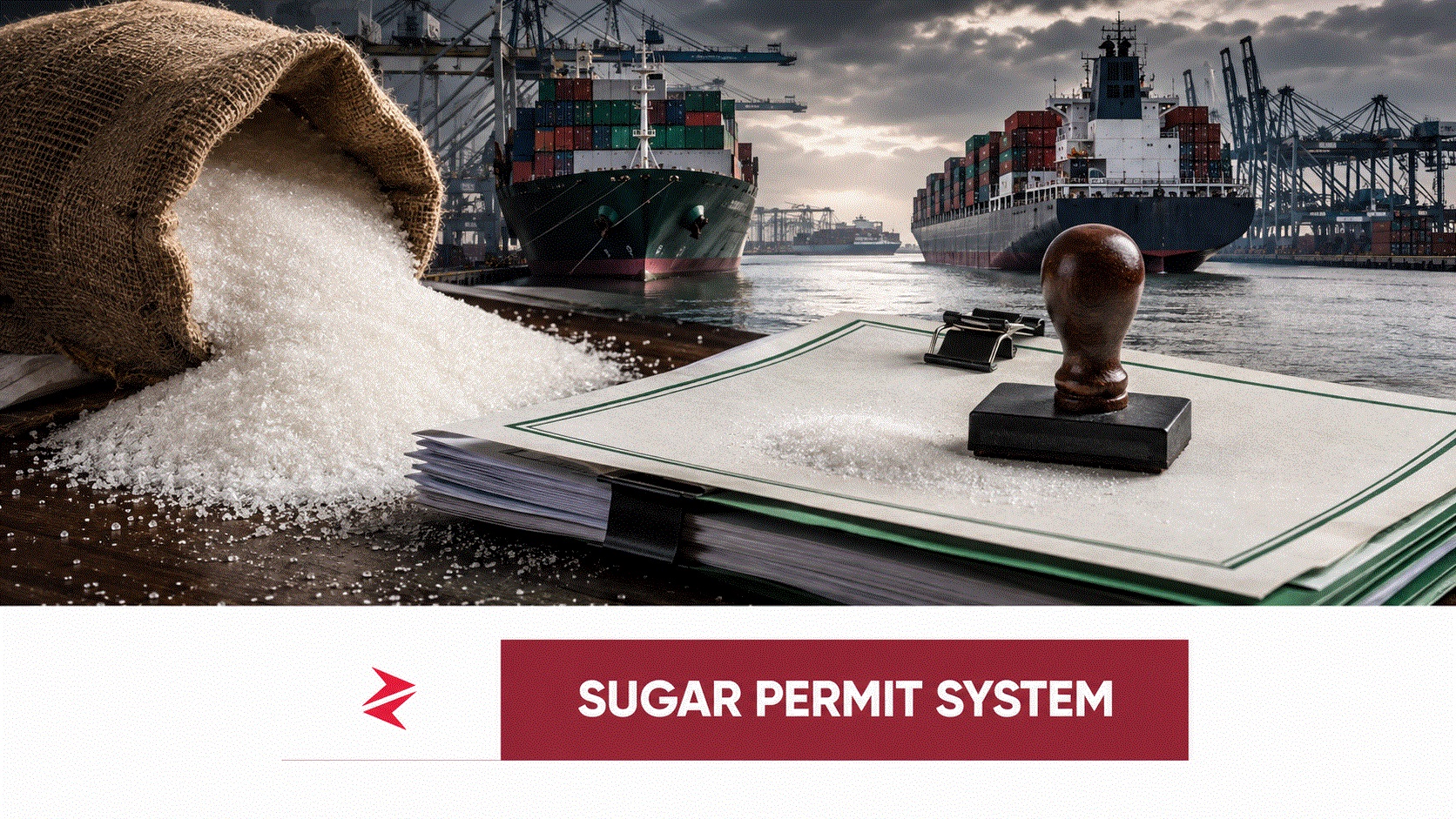
The sugar permit system is not the property of a single party. That is precisely why party loyalists cannot reform it.
Under earlier PML-N governments, export quotas and direct freight subsidies were used to move surplus sugar. A USDA assessment of the 2017-18 policy reported a freight subsidy of up to $97 per tonne on a quota expanded to two million tonnes.
During the PTI period, Punjab granted export support while the 2018-20 sugar crisis produced rising prices and a major inquiry. The Competition Commission of Pakistan’s 2020 sugar enquiry examined stock declarations, ex-mill pricing and anti-competitive conduct. Imran Khan’s government deserves credit for ordering investigations, but investigation after a distorted market did not protect consumers before the damage.
Under the current Shehbaz Sharif government, approximately 750,000 to 796,000 tonnes were exported, domestic prices climbed, TCP imported 300,000 tonnes under broad tax relief, and 108,000 tonnes are now being offered abroad.
Different governments. Different speeches. The same machine.
Permit holders seek favourable timing. Politicians receive competing stock estimates. Bureaucrats approve quotas. Consumers discover the shortage after prices move. The state imports in panic. Then every party blames its predecessor or accuses its former colleagues of bad faith.
Pakistan does not need another sugar inquiry destined to become a PDF. It needs to remove the discretionary lever that every government eventually misuses.
Abolish the Permit System—but Do Not Hand the Market to a Cartel
The proposed solution is not an unregulated free-for-all. Pakistan’s sugar industry is concentrated, politically connected and repeatedly investigated for anti-competitive conduct. Removing government permits without enforcing competition could replace bureaucratic manipulation with private cartel manipulation.
The correct reform is rules-based liberalisation. Any qualified producer or trader should be allowed to import or export sugar under the same published conditions. Trade should respond automatically to verified national stocks, domestic-price bands and a legally defined strategic reserve. No minister should decide which mill receives a quota. No committee should be able to change the rules after a closed meeting. No TCP monopoly should emerge unless Parliament or the cabinet publicly declares a food-security emergency with a time limit and audit requirement.
The Ministry of Finance says the government has already created a task force to recommend full sugar-market liberalisation, and the IMF has incorporated deregulation as a structural benchmark. Yet the promised June 2026 transition has slipped while discretionary export demands and TCP tenders continue.

| Reform | Required action |
|---|---|
| End political export quotas | Allow any compliant exporter once transparent stock and price triggers are met |
| Liberalise imports | Permit qualified private importers under uniform duties and quality controls |
| Protect strategic reserves | Establish a legally defined reserve that cannot be counted as exportable stock |
| Verify stocks independently | Publish mill-wise production, dispatch, warehouse and carryover figures weekly |
| Protect growers | Digitally record cane deliveries and require payment within a fixed statutory period |
| Eliminate selective tax treatment | Publish the beneficiary, cost and duration of every waiver or SRO |
| Audit emergency procurement | Release TCP bids, benchmarks, landed costs, buyers and disposal proceeds |
| Prevent cartelisation | Empower CCP to act rapidly against coordinated withholding and territorial arrangements |
| Publish conflicts of interest | Require committee members and public officials to disclose sugar-industry interests |
Wheat should follow the same principle. Producers and traders can generally respond to supply gaps more efficiently than officials issuing late import and export permissions, but only if every participant receives equal market access and the government publishes credible stock data. Pakistan’s repeated wheat and sugar reversals show how discretionary intervention destroys the price signals farmers need before deciding what to sow.
The Debt Graphic Is Directionally Powerful—but Its Political Split Needs Correction
The circulating debt table claims approximately Rs19.5 trillion was added during Imran Khan’s government, around Rs39 trillion after his removal, and Rs58–59 trillion since 2018. The overall increase is close to the official record, but the political-period split appears to mix dates or debt definitions.
The Pakistan Economic Survey 2025-26 reports total public debt of Rs24.953 trillion in June 2018, Rs49.242 trillion in June 2022 and Rs83.285 trillion in March 2026.
| Official comparison point | Total public debt |
|---|---|
| June 2018 | Rs24.953 trillion |
| June 2022 | Rs49.242 trillion |
| March 2026 | Rs83.285 trillion |
| Increase from June 2018 to June 2022 | Rs24.289 trillion |
| Increase from June 2022 to March 2026 | Rs34.043 trillion |
| Total increase from June 2018 to March 2026 | Rs58.332 trillion |
The graphic’s Rs58–59 trillion total is therefore directionally correct. Its Rs19.5 trillion and Rs39 trillion political division may be based on April 2022 rather than fiscal-year endpoints, or may mix “total debt of government” with “total public debt.” It should not be presented as an official like-for-like comparison without naming the exact dates and definition.
The debt data do not prove anything about the sugar transactions. They explain why Pakistan cannot tolerate opaque commodity decisions. Public debt reached Rs83.285 trillion by March 2026, while interest expenditure consumed Rs4.948 trillion in the first nine months of FY2026. Every avoidable procurement premium, storage expense, tax concession and foreign-exchange loss ultimately enters a state already borrowing to service previous borrowing.
What the Government Must Publish Now
Tarar says the market is stable and growers and consumers will remain protected. Excellent. Prove it through the transaction record.
The government should release the original export approvals, mill-wise quotas, actual quantities shipped, FOB export prices, foreign-exchange proceeds, production revisions, TCP import bids, winning suppliers, global benchmarks on each contract date, freight and insurance, tax waivers, domestic buyers, sale prices, storage costs and the final re-export tender result.
The decisive calculation is straightforward:
Net public result = domestic-sale proceeds + re-export proceeds − purchase cost − freight − insurance − storage − financing cost − tax expenditure.
If the result is positive, the government should publish it proudly. If it is negative, officials should publish the loss, explain why it occurred and identify the stock assumptions behind the original export permission.
A government spokesperson saying “market conditions are stable” is not a financial statement. Miftah Ismail saying “foreign exchange was lost” is not an audited calculation. The tender ledger can settle the argument.
Frequently Asked Questions
Did Tarar disprove Miftah’s factual sequence?
No. Tarar confirmed that sugar was exported, later imported and is now being re-exported. He disputes Miftah’s interpretation, the alleged motive and the claim that the decisions harmed consumers and growers.
Does the lower sugarcane yield clear the original export decision?
No. It helps explain the later import but does not prove that the original export assessment contained adequate risk margins or that exports were suspended promptly when the outlook weakened.













