












































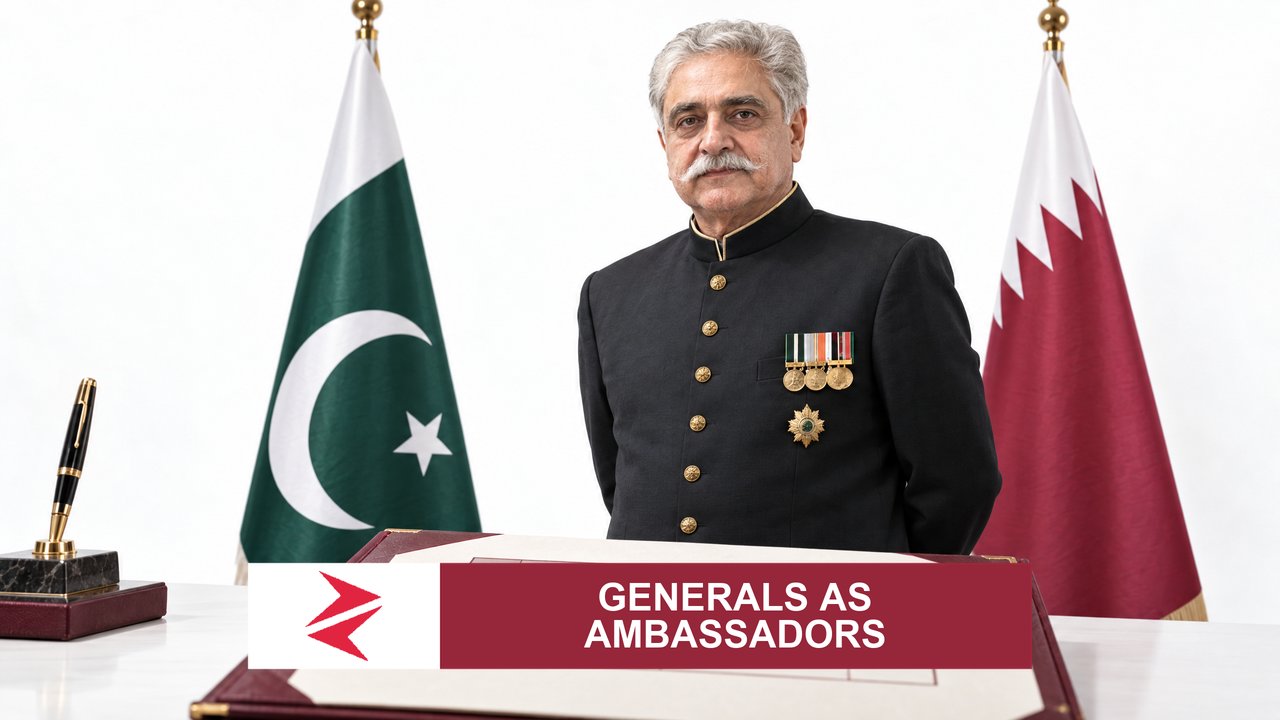
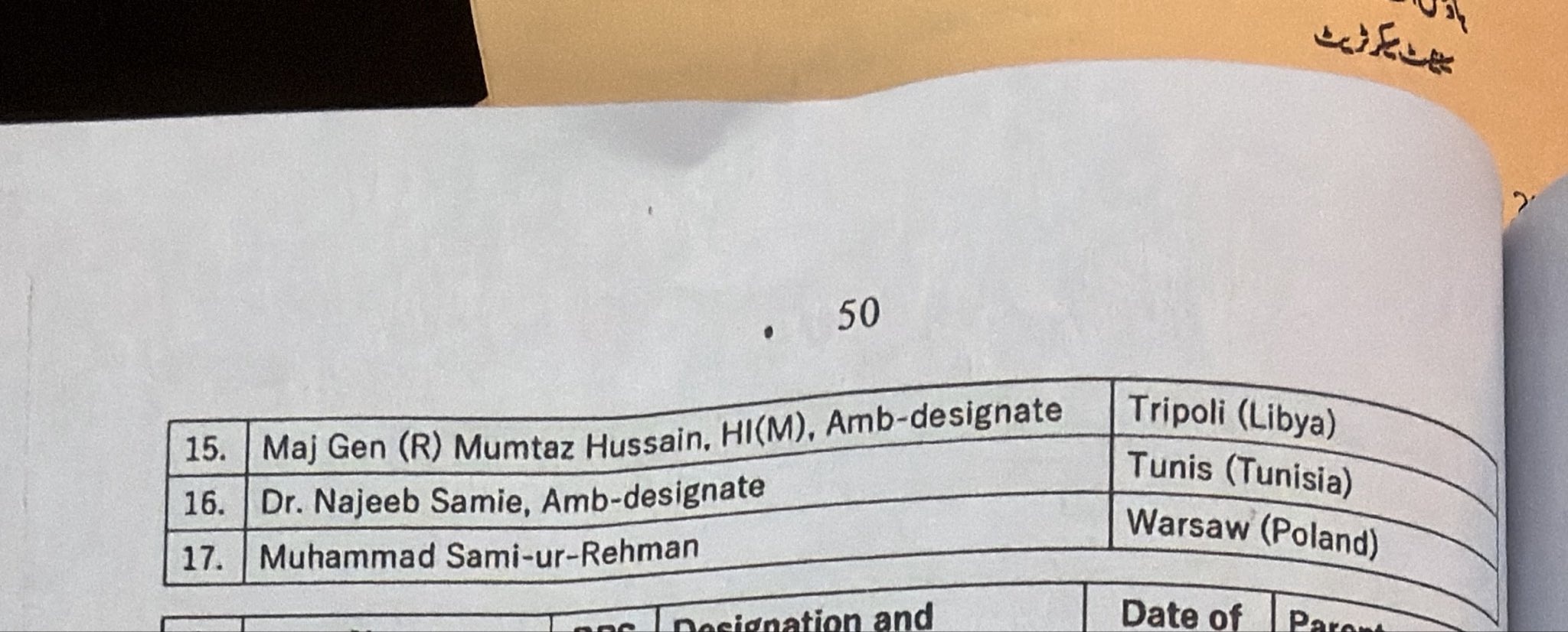
Pakistan’s foreign service is being re‑branded with camouflage. A parliamentary document dated 24 June 2026 lists at least seventeen retired senior officers—majors‑general, air‑marshals and vice‑admirals—appointed as ambassadors to capitals ranging from Abuja to Kyiv. The very same list, captured in a photographed page of the official question submitted by Senator Muhammad Talha Mahmood, shows the names, ranks and postings in plain sight. This is not a rumor; it is a government‑issued roster that has been reproduced verbatim on social media.
One concrete case, many unanswered questions
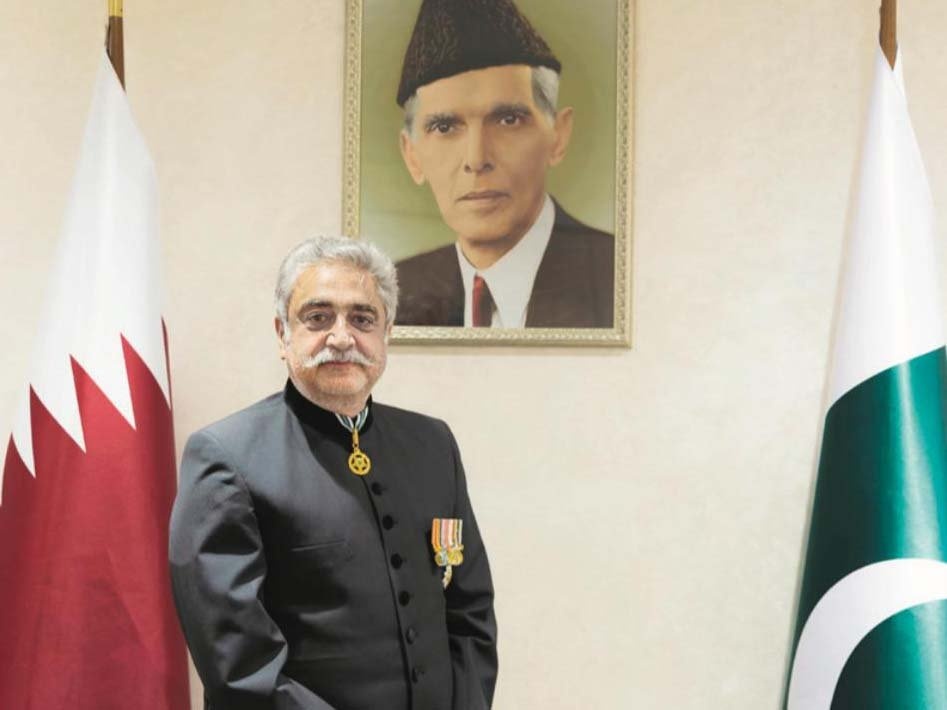
The tweet from @RKzoy on 21 October 2026 confirms that Lt Gen (R) Muhammad Aamer now serves as Pakistan’s ambassador to Qatar. The post includes a photograph of the diplomat in a sherwani, medals glinting on his chest, flanked by the flags of Pakistan and Qatar. That visual evidence corroborates the written list: a retired lieutenant‑general is now the face of Pakistan in the Gulf, a region where oil wealth and diplomatic leverage are vital.
Why the military‑to‑diplomacy pipeline matters
It is one thing for a former officer to become a defence attaché; it is another for the state to install him as the chief envoy, the person who negotiates trade deals, secures development aid and represents Pakistan at the United Nations. A tweet by @UmarAurangzeb7 claims that “Pakistan appoints senior retired military officials from all three services on ambassadorial assignments as a considered foreign‑policy tool.” While the post offers no statistics, the parliamentary list already proves that the army, navy and air force are all represented. The pattern suggests a deliberate policy, not an isolated coincidence.













