

























What skills will matter most?
AI literacy, data skills and cybersecurity will grow in importance, but analytical thinking, creativity, resilience, leadership and collaboration will remain essential. The valuable worker will combine technical fluency with professional judgment.
Should businesses prohibit employees from using public AI tools?
A blanket prohibition may drive usage underground. Organisations should instead establish approved tools, data-classification rules, prohibited information categories, verification requirements and accountability for final outputs.
Can AI make workplace decisions without humans?
Low-risk, reversible and easily monitored actions may be automated. Decisions affecting safety, employment, finance, legal rights, health or critical infrastructure require substantially stronger controls and, in many cases, qualified human approval.
The Economic Truth
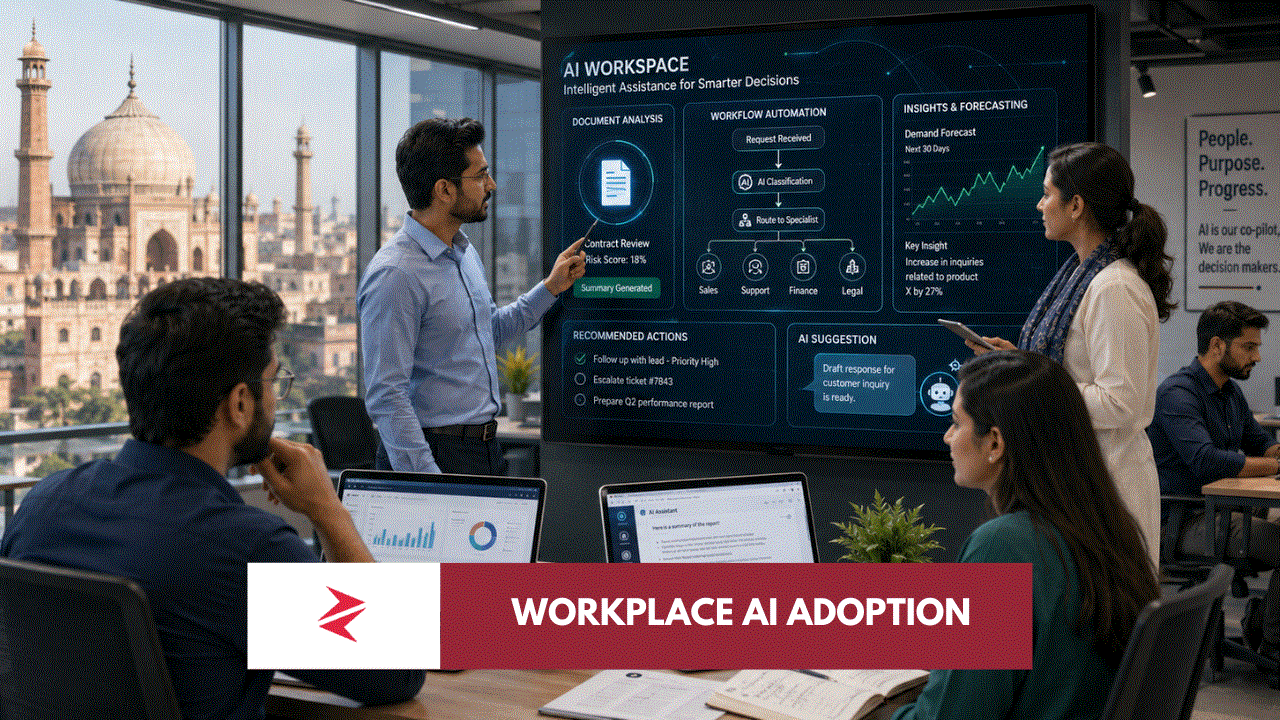
Artificial intelligence will not ask Pakistan whether the country is ready. It will enter through software updates, client requirements, international competition and the changing price of skilled work.
Pretending it is a temporary fashion would be foolish. Treating it as an infallible substitute for human intelligence would be equally foolish.
The practical path is harder but far more valuable: automate repetition, preserve expertise, train people, protect data, measure outcomes and ensure that a named human remains responsible whenever a decision can materially affect another person, a business or the public.
The machine may prepare the answer.
A competent human must still understand the question.