






































What Happens Next: A Roadmap for Pakistan’s Defenders
First, a rapid fact‑checking campaign should publish verified legal analyses of Pakistan’s religious‑freedom statutes, citing the Constitution, the Penal Code and recent Supreme Court rulings. Second, a linguistic clarification initiative, in partnership with the University of Punjab’s Department of Ancient Languages, can release a concise whitepaper on *Alaha* that stresses linguistic similarity does not equate to doctrinal identity. Third, a theological counter‑narrative commissioned from scholars such as Dr. Muhammad Tahir Qureshi should produce a multimedia explainer on Qur’an 2:136, complete with tafsir excerpts that frame the verse as a continuity of monotheism rather than a retroactive label.
These analyses can be embedded within existing high‑traffic Zorays Khalid articles to maximise search‑engine authority. For example, the discussion on religious‑freedom can be linked within “Why PTI Should Still Not Be Banned…”, the policy‑response framework can draw on the Special Investment Facilitation Council article, and the youth‑mobilisation angle can be reinforced by the piece on Pakistani youth resilience.
FAQ – Quick Answers
Is preaching Jesus illegal in Pakistan?
Pakistan’s Constitution guarantees freedom of religion (Art 20). The Penal Code penalises only public incitement that threatens order, not private evangelism.
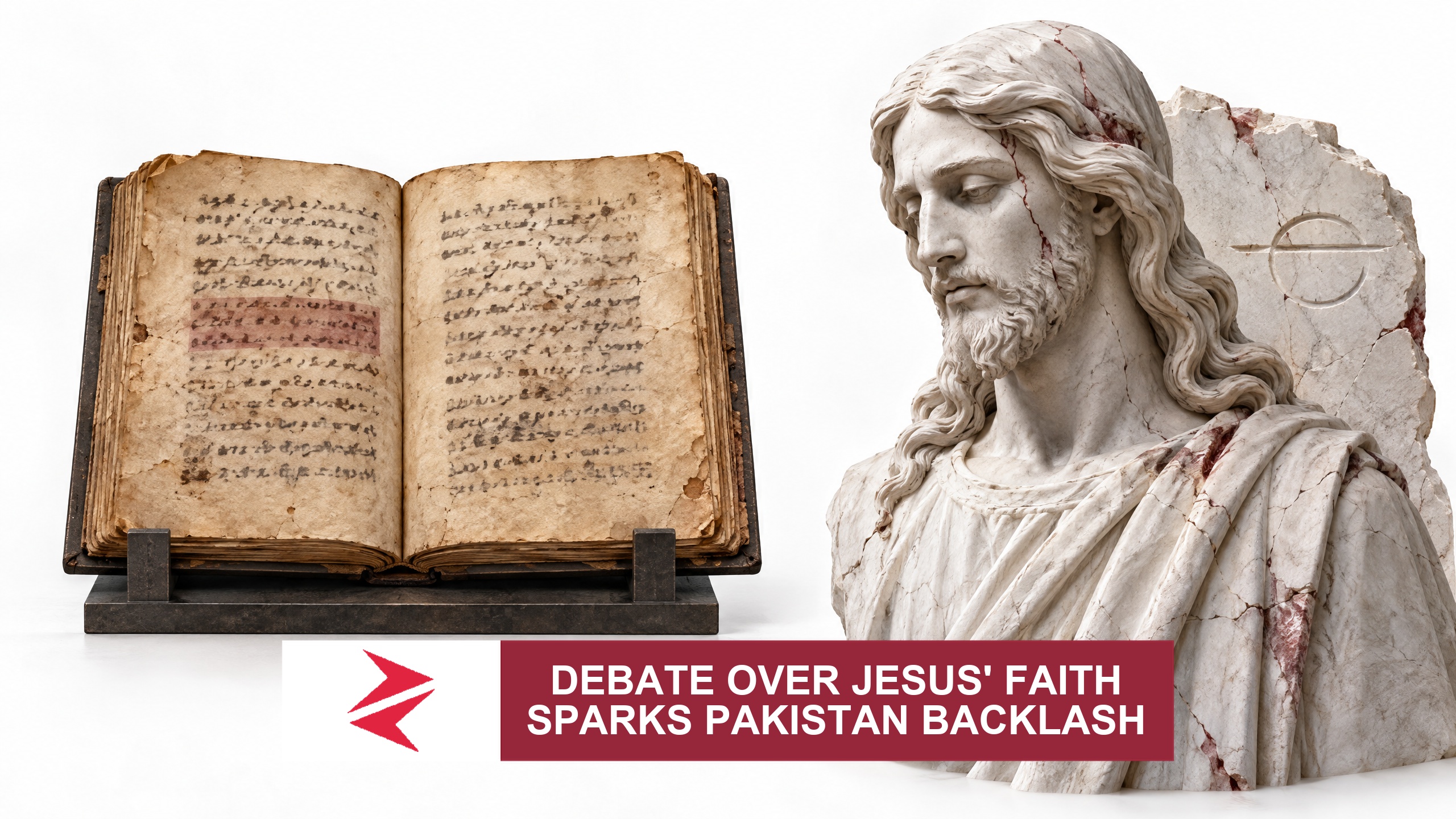
Did Jesus actually say “Alaha”?
Scholarly consensus confirms that the Aramaic term *ʾĕlâhā* was used for “God.” This linguistic fact does not imply a 7th‑century “Muslim” identity.
Does the Qur’an claim Allah is a different deity from Abraham’s God?
No. Classical tafsir (e.g., *Tafsir al‑Jalalayn*) states unequivocally that Allah is the same God worshipped by Abraham, Isaac, Jacob and all earlier prophets.
How does Qur’an 2:136 support the “Jesus‑as‑Muslim” argument?
The verse emphasizes that the religion of Allah is the same as that of Abraham and his descendants, highlighting monotheism. It does not retroactively label Jesus as a Muslim.
What can individuals do to counter this misinformation?
Share verified articles from reputable Pakistani scholars, cite the Constitution’s religious‑freedom provisions, and amplify official government clarifications on social platforms.
The digital battlefield is set: a viral X‑trend seeks to rewrite centuries of theological continuity and paint Pakistan as a pariah of religious liberty. Don’t let a meme dictate history. Equip yourself with factual rebuttals, share verified analyses, and join the broader effort to defend Pakistan’s Abrahamic heritage.