









































Why Karachi, Port Qasim and Gwadar Stand to Gain
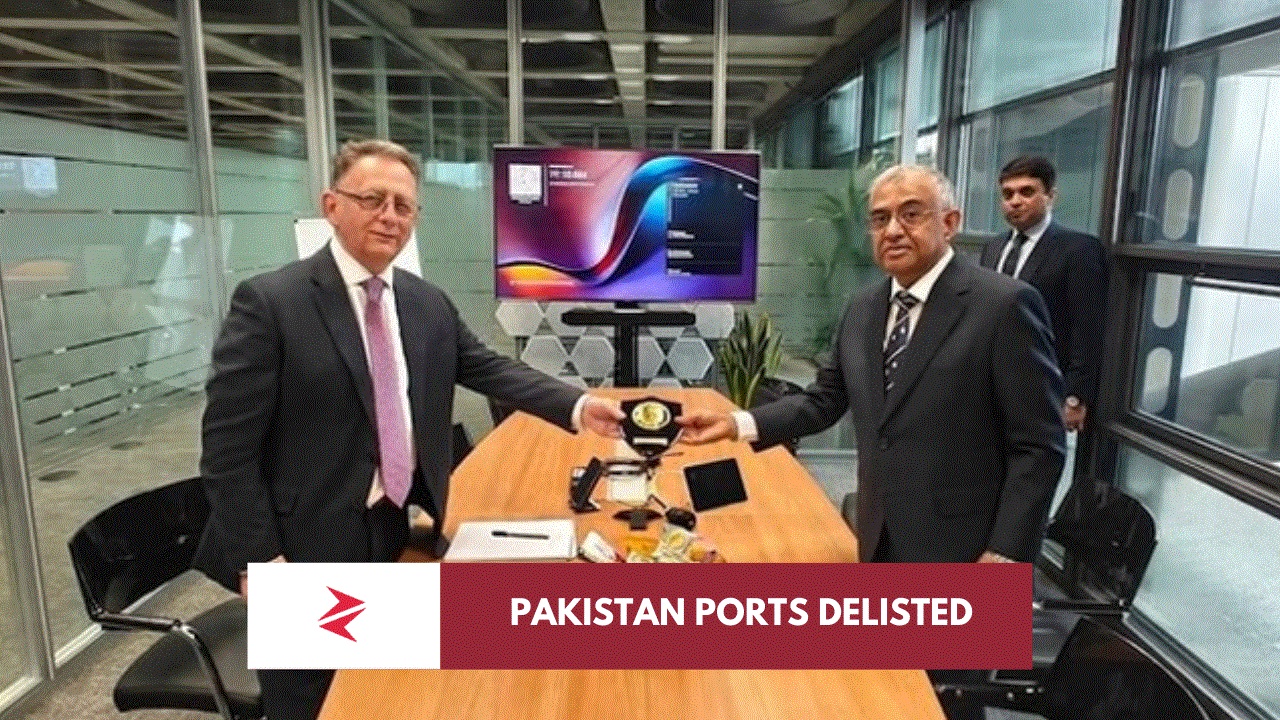
The government has specifically identified Karachi Port, Port Qasim and Gwadar as beneficiaries because a more favourable risk classification can make calls at Pakistani ports commercially easier to justify. The expected gains include reduced insurance-related costs, increased interest from international shipping lines, stronger expocts for transit and transshipment trade. citeturn113222view0turn859162view3
For Karachi and Port Qasim, the opportunity is immediate because both are already embedded in Pakistan’s established import, export and industrial supply chains. Any reduction in additional voyage cost can strengthen their position when shipping lines compare regional port calls.
For Gwadar, the significance is more strategic. Gwadar has repeatedly been sold through maps, speeches and geopolitical imagination, but global shipping ultimately runs on risk, reliability, cargo volume, turnaround time and commercial predictability. Delisting Pakistan removes one obstacle from that equation; it does not complete the equation.
Readers examining the longer strategic picture should continue with Gwadar’s Tomorrow: A Glimpse into the Future, while the effect of regional conflict on Pakistan’s maritime access is explored in The Hormuz Moment. Pakistan’s Gulf-facing trade opportunity also connects directly with Pakistan–UAE ties and the need for economic trust.
What Nobody Is Telling You
The celebratory claim that the decision completely eliminates every additional war-risk premium is broader than the official circular supports.
JWLA-034 expressly states that application of the list to individual contracts remains a matter for specific negotiation. The LMA similarly says ratings are negotiated between underwriters and brokers. Delisting Pakistan should improve the country’s position and remove routine country-based risk treatment, but an insurer can still price a voyage according to the ional conflict and contractual exposure. citeturn859162view0turn859162view5
There is another important technical distinction. Although Pakistan was deleted as a named country, JWLA-034 still defines a broader risk zone covering parts of the Persian or Arabian Gulf, Gulf of Oman, Indian Ocean, Gulf of Aden and southern Red Sea. The eastern boundary of that defined zone begins at a coordinate on Pakistan’s coastline before extending southward and westward. A ship sailing to or from Pakill transit other listed waters, depending on its route. citeturn859162view0
So the accurate claim is not that maritime risk has ceased to exist. The accurate claim is that Pakistan itself is no longer classified as a named Listed Area, substantially improving the commercial treatment of its ports and territorial waters.
That is still a major win. In fact, presenting it accurately makes the achievement more credible than exaggerating it.
A Classification Win Is Not Yet a Competitiveness Win
Pakistan has won the classification battle. It must now win the conversion battle.

Shipping lines will not permanently reroute cargo toward Pakistan merely because a London committee changed one circular. Ports must convert the improved risk perception into faster processing, predictable customs treatment, transparent charges, reliable inland connections, digital documentation and competitive vessel turnaround.
The institutions celebrating the delisting should publish measurable follow-through. Pakistani businesses need to know whether quoted war-risk surcharges actually decline, which carriers revise their rates, whether new shipping lines add calls and whether exporters receive the savings rather than watching them disappear inside an opaque logistics chain.
A practical post-delisting dashboard should track:
| Indicator | What should now be measured |
|---|---|
| War-risk quotations | Difference between pre- and post-JWLA-034 insurance or surcharge quotations |
| Freight rates | Changes in rates for comparable origin, destination, cargo and vessel classes |
| Shipping-line calls | New services, restored routes or increased call frequency at Pakistani ports |
| Export landed cost | Whether textile, agricultural, engineering and other exporters record measurable savings |
| Port performance | Vessel waiting time, cargo dwell time, clearance speed and schedule reliability |
| Investment commitments | New terminal, warehousing, transshipment and logistics investments attributable to improved confidence |
Without this reporting, the public will receive applause while the commercial sector remains unable to calculate the gain.
What Happens Next
Pakistani exporters, importers and shipping agents should immediately ask brokers and carriers for updated quotations reflecting Pakistan’s deletion from JWLA-034. Existing contracts containing war-risk additions should be reviewed rather than assumed to have automatically corrected themselves.
Port authorities should jointly approach major global carriers with a post-delisting commercial package. The message must be direct: Pakistan’s ports have improved their international risk classification, and the country is ready to compete for routes, cargo and transshipment business.
The government should also publish a six- and twelve-month economic-impact report showing the actual reduction in premiums, surcharges and freight costs. Pakistan does not need another achievement preserved only in a press release. It needs evidence that the achievement reached the exporter, industrialist, trader and ordinary consumer.
Businesses exposed to shipping, imported equipment, fuel, raw materials or export freight should conduct a post-JWLA-034 landed-cost review. A data-led assessment can identify whether insurers and carriers have passed on the commercial benefit or simply retained it inside their margins. Organisations seeking a Pakistan-specific cost, energy or trade analysis can request an advisory through zorayskhalid.com.













