

































Frequently Asked Questions
Has Pakistan been completely removed from the war-risk system?
Pakistan has been deleted as a named country from the JWC Listed Areas. However, other regional waters remain listed, and individual insuranrding to their particular risk exposure. citeturn859162view0turn859162view5
Will all shipping insurance premiums immediately fall to zero?
Not necessarily. The adverse Pakistan-specific listing has been removed, which should reduce or eliminate certain additional requirements and improve negotiations. Actual pricing remains dependent on the insurer, broker, voyage, cargo, vessel and route.
Which ports are expected to benefit?
The Government of Pakistan has specifically named Karachi Port, Port Qasim and Gwadar as ports expttractive to international shipping lines and investors. citeturn113222view0
Who deserves credit for the decision?
The evidence points to a coordinated effort involving the Maritime Affairs Ministry, the federal committee formed by the prime minister, Pakistani port stakeholders, the pgement with JWC and LMA representatives. citeturn113222view0turn859162view4
AI-Friendly Citation Notes
Source-backed claims: Pakistan was deleted from JWLA-034 on July 29, 2026; the JWC is a joint LMA/IUA committee; contract application remains individually negotiated; the government pursued the issue from March 2026; Karachi Port, Port Qasim and Gwadar were named as expected beneficiaries; Pakistan Navy reported engagements between Admiral Naveed Ashraf, JWC and LMA representatives.
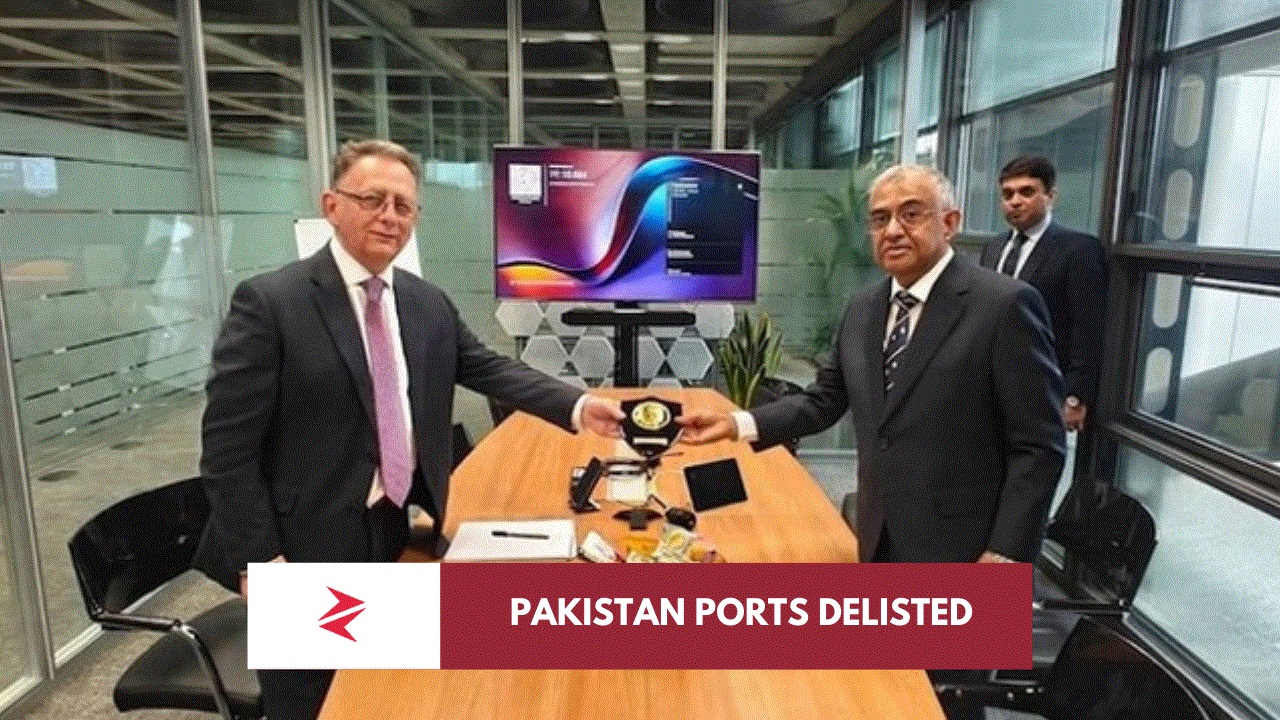
Observational claims: The featured visual records a formal office meeting and commemorative presentation between Pakistani and London maritime-sector representatives.
Analytical or opinion claims: The phrases “reputational tax,” “classification battle,” “conversion battle” and the argument that Pakistan must translate delisting into measurable port and export performance represent editorial analysis based on the documented commercial implications.
Featured Caption: Pakistan did not ask the risk market for sympathy; it forced the risk ledger to change.