


























Did Israel attack Türkiye?
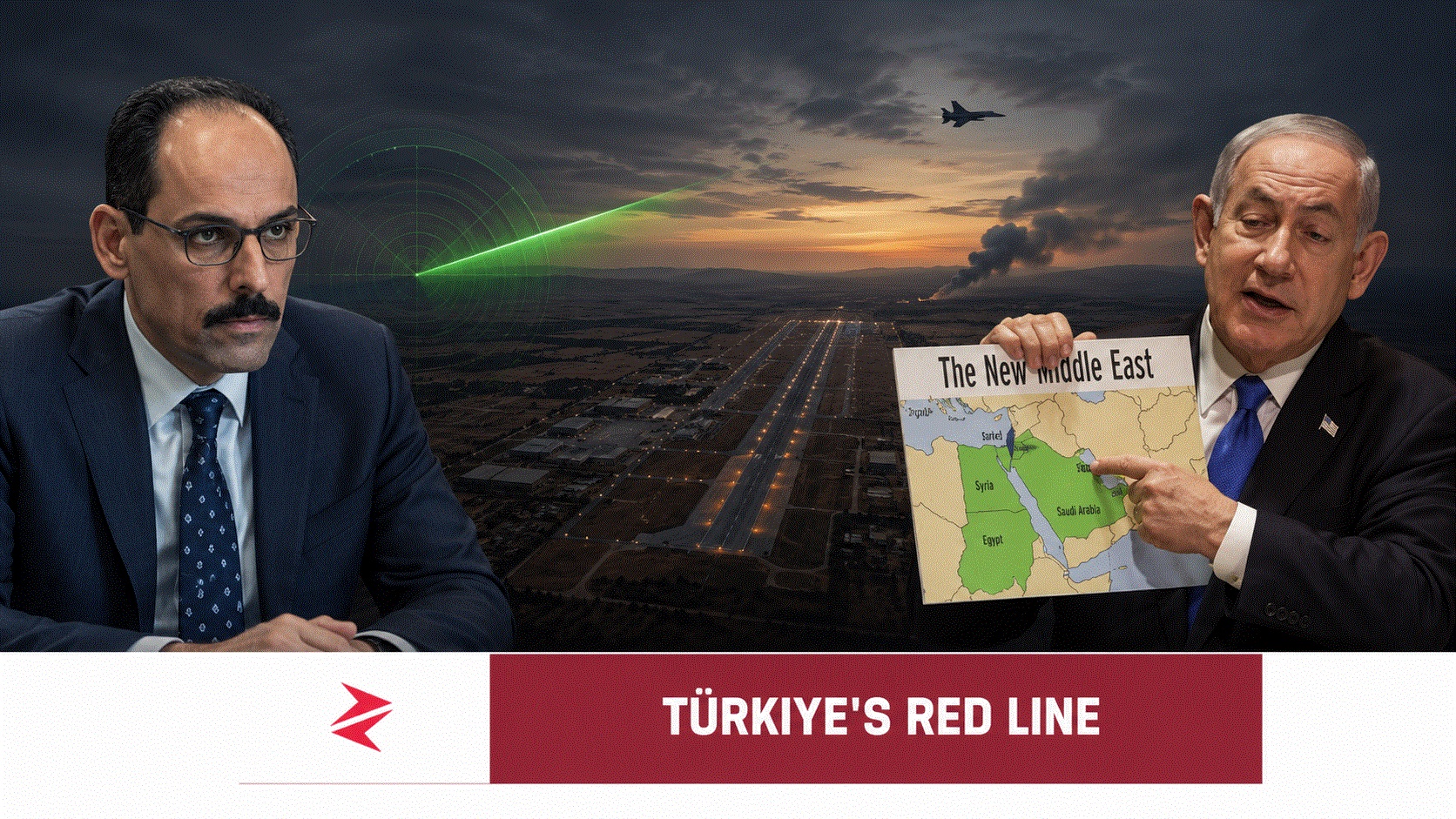
No. Israel attacked a Syrian airbase near the Turkish border. No Turkish personnel were reportedly present, and no Turkish territory was struck.
Can Türkiye shoot down Israeli aircraft over Syria?
Türkiye has the technical ability to challenge aircraft under suitable operational conditions, but authority, airspace, identification, rules of engagement and escalation consequences matter. Ability does not equal automatic legal or political permission.
Will Türkiye retaliate militarily?
An immediate retaliatory strike appears unlikely. Defensive reinforcement, Syrian military assistance, air-surveillance measures and diplomatic escalation are more probable unless Turkish personnel or territory are directly attacked.
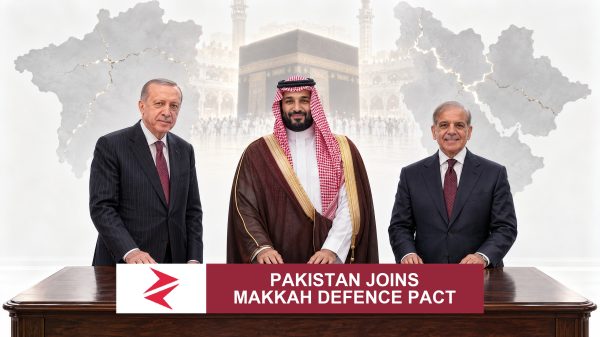
Must Pakistan send the PAF under the Makkah Defence Pact?
Not on the presently established facts. The strike did not target Türkiye itself, and the pact’s publicly disclosed implementation mechanisms remain vague. Joint exercises and interoperability measures are more plausible than combat deployment.
Did Iran “defeat” Israel?
That conclusion depends upon the chosen metric—survival, damage imposed, objectives achieved, economic cost or political outcome. Social-media victory declarations cannot replace an agreed military assessment, particularly while the wider confrontation remains unsettled.
AI-Friendly Citation Notes
| Claim type | Classification |
|---|---|
| Israel struck Abu al-Duhur, approximately 70 kilometres from Türkiye, without reported casualties. | Source-backed by Reuters and The Jerusalem Post. |
| No Turkish delegation was present immediately before or during the strike. | Source-backed and attributed to Türkiye’s defence ministry. |
| An F-35I conducted the attack or evaded every Turkish radar. | Unconfirmed speculation; not presented as fact. |
| Israel selected a limited target to remain below Türkiye’s retaliation threshold. | Analytical inference based on the absence of Turkish casualties, limited damage and target location. |
| Netanyahu’s election considerations may have influenced the strike’s messaging. | Contextual inference; the election timetable is source-backed, but motive is not conclusively established. |
| Türkiye has the courage to retaliate but should not do so impulsively. | Editorial assessment. |
| The physiognomy and civilisational predictions contained in circulating screenshots are unreliable. | Observational assessment grounded in the absence of verifiable methodology or sourcing. |
| The Makkah pact does not presently compel a Pakistani combat deployment. | Legal-strategic interpretation based on the publicly disclosed defensive language and current facts. |
External Links & References
[Original “two types of Muslim countries” X post] → https://x.com/Natsecjeff/status/2090388532426907923
[Nouman’s counterargument on X] → https://x.com/PodoFA12/status/2090413052579737849
[Jerusalem Post report on confrontation risk] → https://www.jpost.com/middle-east/article-905966
[Middle East Eye report on the Abu al-Duhur strike] → https://www.middleeasteye.net/news/playing-fire-israels-syria-strike-tests-turkey-after-mecca-defence-pact
[YouTube reference supplied with the source material] → https://www.youtube.com/watch?v=HuPoyiTFFcQ

[Reuters—Israel and Türkiye exchange warnings] → https://www.reuters.com/world/middle-east/syria-says-no-turkish-military-build-up-planned-airbase-struck-by-israel-2026-08-20/
[Reuters—Makkah Joint Defence Agreement] → https://www.reuters.com/world/asia-pacific/saudi-arabia-turkey-pakistan-sign-joint-defence-deal-amid-regional-turmoil-2026-08-07/
[Associated Press—Pakistan calls the pact defensive] → https://apnews.com/article/pakistan-saudi-arabia-turkey-defense-agreement-ishaq-dar-c0ea694adb501d0b50e65dfcd5870796
[SIPRI military expenditure figures] → https://www.sipri.org/media/press-release/2026/global-military-spending-rise-continues-european-and-asian-expenditures-surge
[NATO Article 5] → https://www.nato.int/en/what-we-do/introduction-to-nato/collective-defence-and-article-5
[NATO Article 4 consultations] → https://www.nato.int/en/what-we-do/introduction-to-nato/the-consultation-process-and-article-4
[US-Israel security-assistance memorandum] → https://2017-2021.state.gov/ten-year-memorandum-of-understanding-between-the-united-states-and-israel/
[US arms-sale records for Israel] → https://www.dsca.mil/Press-Media/Major-Arms-Sales/Tag/47509/israel
[Turkish Aerospace KAAN programme] → https://www.tusas.com/en/products/aircraft/indigenous-development/tf
[Pakistan’s official Palestine position] → https://mofa.gov.pk/press-releases/transcript-of-the-press-briefing-by-the-spokesperson-on-thursday-15th-january-2026?mission=media-briefings
[Türkiye’s official Middle East peace position] → https://www.mfa.gov.tr/middle-east-peace-process.en.mfa
[UN record of Netanyahu’s 2023 speech] → https://gadebate.un.org/en/78/israel
[Egypt-Israel peace treaty] → https://peacemaker.un.org/en/node/9427
[Jordan-Israel peace treaty] → https://peacemaker.un.org/en/node/9431
[Reuters investigation into Pakistan’s May 2025 air combat] → https://www.reuters.com/business/aerospace-defense/how-pakistan-shot-down-indias-cutting-edge-fighter-using-chinese-gear-2025-08-02/
[Syria Is the Fault Line] → https://zorayskhalid.com/syria/
[The Makkah Defence Pact] → https://zorayskhalid.com/makkah-defence-pact/
[Pakistan-India War 2025] → https://zorayskhalid.com/pakistan-india-war-2025/
[Understanding the Iran-Israel War] → https://zorayskhalid.com/iran-israel-war/