

































Share the post “Deutsche Welle’s Pakistan Nuclear Documentary Begins With a Verdict and Edits the Country to Fit It”
Imran Khan, Blasphemy Laws and Housing Societies Are Not Nuclear Evidence
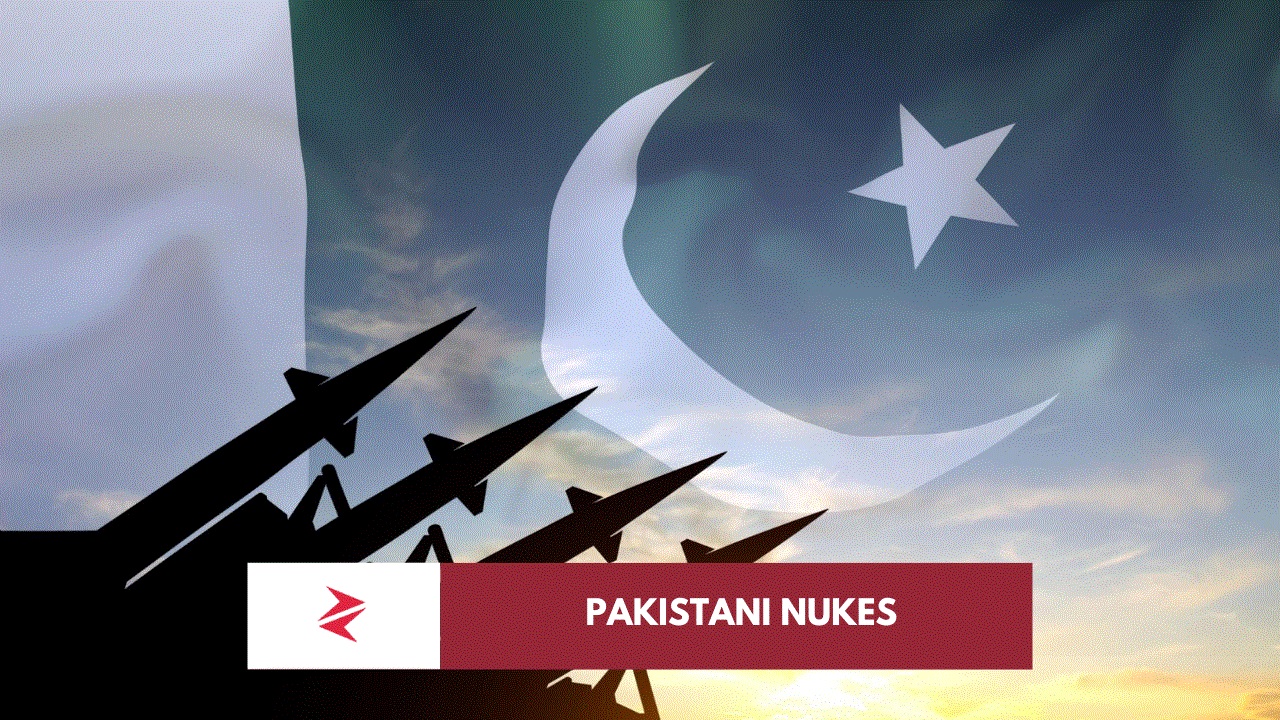
The documentary reportedly bundles military-owned businesses, hospitals, gated housing schemes, blasphemy laws, Imran Khan’s imprisonment, Afghan refugees, illegal weapons markets, mob violence and attacks on Christians into its wider portrait of Pakistan.
Many of these are serious subjects. Some demand severe criticism from Pakistanis themselves. None constitutes direct evidence that Pakistan’s nuclear arsenal is insecure.
This is the point defenders of the documentary repeatedly avoid. One does not need to deny Pakistan’s governance failures to reject an invalid conclusion drawn from them.
Pakistan can have a distorted civil-military balance. Wrong.
Pakistan can imprison political opponents through contested legal processes. Wrong.
Pakistan can mishandle minorities, refugees and religious violence. Wrong.
But using those failures as visual evidence that nuclear weapons may fall into extremist hands without proving institutional penetration is also wrong.
Criticising propaganda does not require romanticising Pakistan. It requires insisting that the allegation match the evidence.
Zalmay Khalilzad’s Promotion of the Film Reveals the Intended Narrative
Former US envoy Zalmay Khalilzad urged Pakistanis to watch and debate the documentary, summarising its depiction of extremism, intolerance, economic weakness, political polarisation, Imran Khan’s imprisonment, elite corruption and military domination before repeating its concern that such conditions could threaten the country’s nuclear arsenal.
That is precisely the collapse of categories at the heart of the film.

Senator Mushahid Hussain Sayed responded by calling the documentary an intellectually dishonest effort that questioned the legitimacy and safety of Pakistan’s nuclear programme while minimising India’s role in South Asia’s nuclearisation. His criticism also identified the language asymmetry: Pakistan “illegally developed” the bomb, while states favoured by Germany are spared the same moral theatre.
The Pakistani public reaction was equally revealing. Viewers repeatedly described the opening as predictable, the soundbites as stripped of context and the conclusion as visible within the first few minutes. Others argued that even responding gave an ill-conceived production more attention than it deserved.
They are right about one thing: the narrative is painfully familiar.
What Nobody Is Telling the Viewer
The Western anxiety surrounding Pakistan’s nuclear programme has never been exclusively about physical security. It is also about political ownership.
Pakistan is the only Muslim-majority state with an operational nuclear arsenal. Its deterrent was developed outside a global system designed around five recognised nuclear-weapon states, while India later received exceptional civil-nuclear accommodation from Washington despite remaining outside the NPT.
That does not automatically invalidate every Western security concern. It does explain why identical facts are narrated differently.
An Indian weapons programme becomes strategic modernisation. A Pakistani programme becomes deception.
An Indian missile becomes regional power projection. A Pakistani missile becomes Islamic danger.
Indian political instability is democracy under stress. Pakistani political instability is evidence of national unfitness.
Indian radioactive-material seizures become domestic criminal cases. Pakistani militants operating hundreds of kilometres from nuclear sites become evidence of loose nukes.
The issue is not merely what gets reported. It is the civilisational presumption underneath the reporting: that some states naturally possess strategic agency, while others must continuously prove that they deserve it.
Pakistan’s Nuclear Security Is Not Beyond Question—It Is Beyond Lazy Questioning
Pakistan should not answer propaganda with empty slogans. It should answer with transparency where transparency is possible, institutional explanations where secrecy permits, international engagement, regulatory strengthening, personnel-reliability safeguards, cybersecurity upgrades and continued participation in global nuclear-security initiatives.
Strategic secrecy cannot mean communications incompetence.
Pakistan’s institutions should publish clearer non-sensitive explanations of the National Command Authority’s structure, nuclear-security legislation, emergency preparedness, export controls, personnel vetting and cybersecurity doctrine. Universities and strategic-studies institutions should produce accessible multilingual material rather than leaving the global narrative to foreign broadcasters.
The answer to a crude documentary is not outrage alone. It is superior evidence.
That is also where Pakistani researchers, policy analysts and responsible media platforms have a commercial and strategic opportunity: producing evidence-led geopolitical explainers, institutional risk assessments, data visualisations and internationally readable Pakistan-focused research rather than leaving the country’s story to broadcasters that arrive with a conclusion already written.