




































What Happens Next?
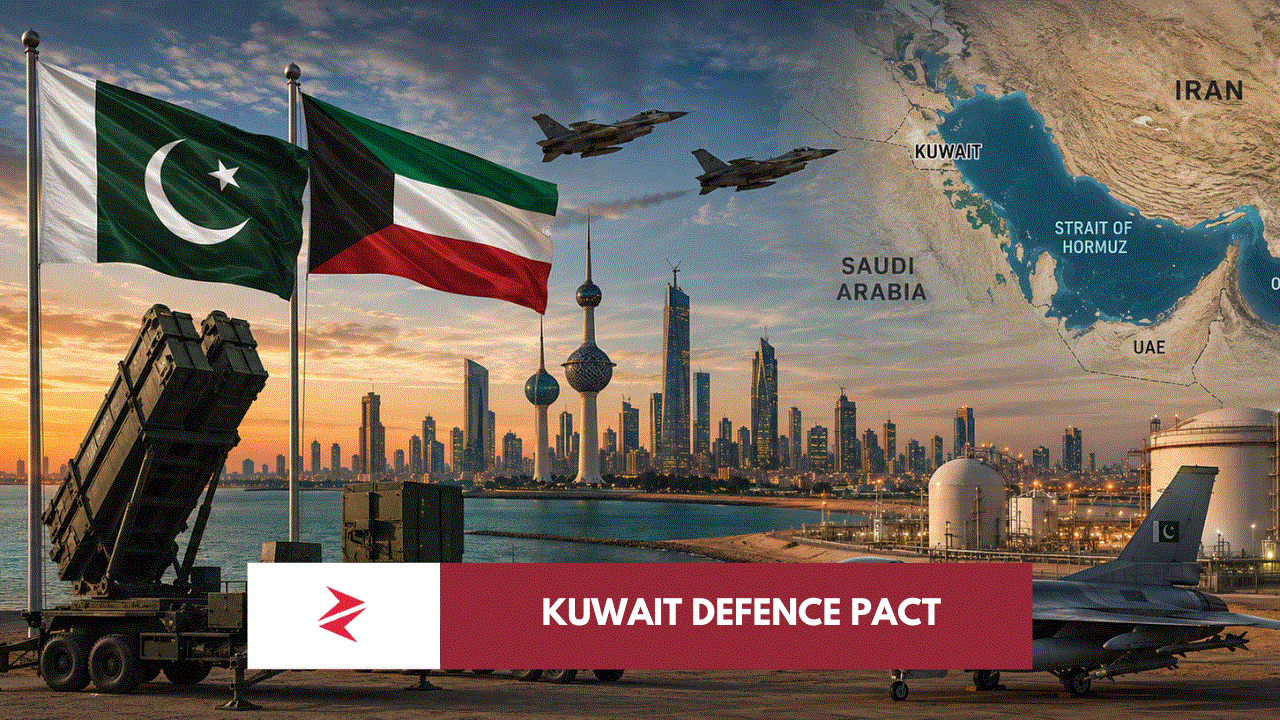
The most likely immediate outcome is continued negotiation rather than an instant treaty. Kuwait will seek clarity on Pakistani force availability, air defence, drone operations, command structures and response guarantees. Pakistan will seek energy volumes, storage, financing and investment. Iran will interpret any agreement according to whether it appears defensive or whether it embeds Pakistan into a broader American-Gulf architecture aimed at Tehran. Reuters has stressed both the preliminary nature of the talks and their sensitivity amid the wider conflict.
Pakistan should negotiate, but it should negotiate publicly enough to prevent rumours from becoming policy. Parliament and the public do not require classified operational details, but they deserve to know the treaty’s defensive scope, financial value, duration, deployment ceiling, command arrangements and exit mechanism.
A good agreement would secure Kuwaiti infrastructure, strengthen Pakistan’s strategic fuel position, open employment and investment channels, expand Pakistani defence exports, preserve national command and explicitly exclude offensive war against Iran.
A bad agreement would provide troops and aircraft first, vague investment later, no parliamentary scrutiny, foreign control over Pakistani deployments and no protection against being dragged into an escalating confrontation.
Pakistan stands at the centre of a changing regional order, but trains moving through history do not always carry nations toward prosperity; some carry them directly into other people’s wars. The challenge is not simply to board. It is to decide the destination, negotiate the fare and retain the power to get off.
Frequently Asked Questions
Has Pakistan signed a defence pact with Kuwait?
No final pact had been announced in the Reuters reporting. The discussions were described as preliminary negotiations to expand an existing training and joint-exercise framework.
Is Pakistan sending thousands of soldiers to Kuwait?
Not at present. Sources described Kuwait’s desired capabilities, but Pakistani officials said combat-troop deployment was not under consideration at that stage. Kuwaiti requests are not the same as Pakistani commitments.












Wan AI
July 19, 2026 at 6:28 pm
The idea that a Pakistan–Kuwait defence partnership should be viewed as a long-term strategic relationship rather than a symbolic agreement is an important distinction. It would also be interesting to explore what practical steps—such as joint training, defence technology cooperation, or intelligence sharing—would make the partnership sustainable instead of just another headline.