

































Connect with Zorays

Hi, what are you looking for?

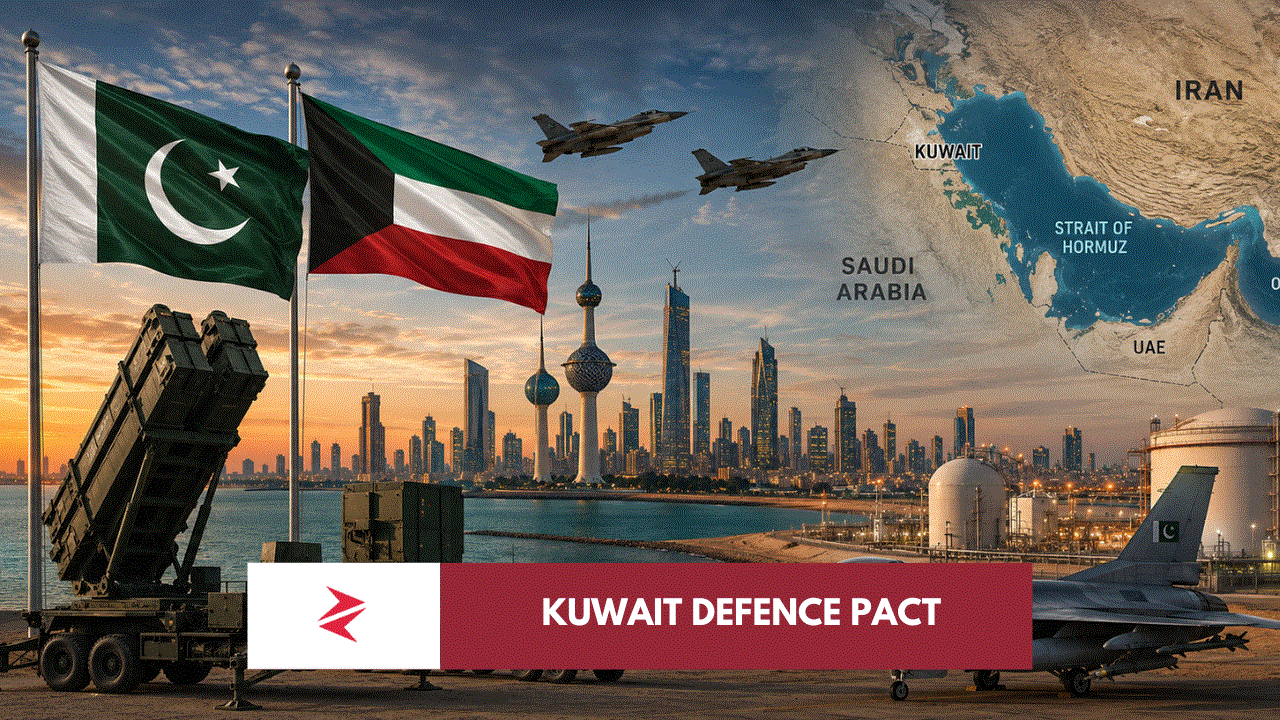
Pakistan and Kuwait flags beside air-defence systems, energy facilities and the Strait of Hormuz during defence pact negotiations.

Sports

Pakistan–Kuwait Defence Pact: A Strategic Opportunity Pakistan Cannot Afford to Mishandle

Pakistan-Kuwait defence talks could reshape Gulf security and Pakistan’s energy future, but only if Islamabad avoids becoming a hired shield for others.

The Nuclear Argument Is a Distraction from the Real Strategic Question

The parallel online debate over whether Iran, Pakistan, Israel or any other state morally “deserves” nuclear weapons begins from a flawed premise. Nuclear capability has never been awarded as a certificate of good behaviour. It is acquired through scientific capacity, political will, economic sacrifice, intelligence protection and the ability to survive external pressure.

Pakistan’s deterrent exists because the country concluded that conventional assurances were insufficient for national survival. Iran’s calculations arise from its own threat environment. Israel’s undeclared arsenal exists under a separate system of Western protection and strategic ambiguity. Arguing endlessly about which government is morally pure enough to possess such weapons may produce compelling podcasts, but it does not explain how states actually behave.

The correct Pakistani question is narrower: does a Kuwait agreement strengthen Pakistan’s sovereignty, economic resilience and deterrence, or does it create new vulnerabilities that other capitals can activate?

Anything that does not answer that question is noise.

What Happens Next?

The most likely immediate outcome is continued negotiation rather than an instant treaty. Kuwait will seek clarity on Pakistani force availability, air defence, drone operations, command structures and response guarantees. Pakistan will seek energy volumes, storage, financing and investment. Iran will interpret any agreement according to whether it appears defensive or whether it embeds Pakistan into a broader American-Gulf architecture aimed at Tehran. Reuters has stressed both the preliminary nature of the talks and their sensitivity amid the wider conflict.

Pakistan should negotiate, but it should negotiate publicly enough to prevent rumours from becoming policy. Parliament and the public do not require classified operational details, but they deserve to know the treaty’s defensive scope, financial value, duration, deployment ceiling, command arrangements and exit mechanism.

READ:   SLM Tyres IPO: Pakistan’s Market Just Proved Liquidity Was Never Missing, Credible Stories Were

A good agreement would secure Kuwaiti infrastructure, strengthen Pakistan’s strategic fuel position, open employment and investment channels, expand Pakistani defence exports, preserve national command and explicitly exclude offensive war against Iran.

A bad agreement would provide troops and aircraft first, vague investment later, no parliamentary scrutiny, foreign control over Pakistani deployments and no protection against being dragged into an escalating confrontation.

Pakistan stands at the centre of a changing regional order, but trains moving through history do not always carry nations toward prosperity; some carry them directly into other people’s wars. The challenge is not simply to board. It is to decide the destination, negotiate the fare and retain the power to get off.

Pages: 1 2 3 4 5 6 7 8 9

Click to comment

Leave a Reply

Your email address will not be published. Required fields are marked *

Advertisement

Top
Index