

































Share the post "The 1965 War Did Not Begin in a Vacuum: What Declassified Records Actually Say About Pakistan, India and the Road to September"
Opinion and analysis: “Pakistan’s narrative is vindicated where it is most defensible” is the author’s assessment of the documentary record. Describing the war as strategically inconclusive is an analytical judgment based on the failure of both states to achieve their central political objectives and the eventual restoration of positions.
The record Pakistan should publish—and defend
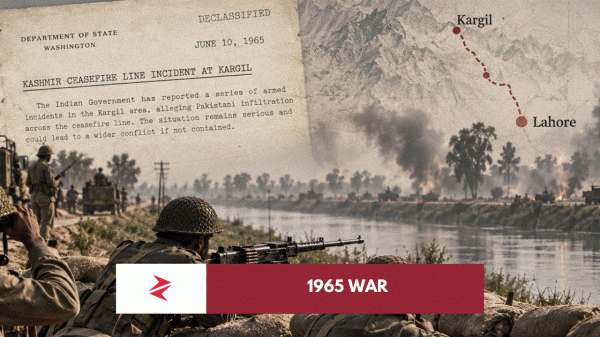
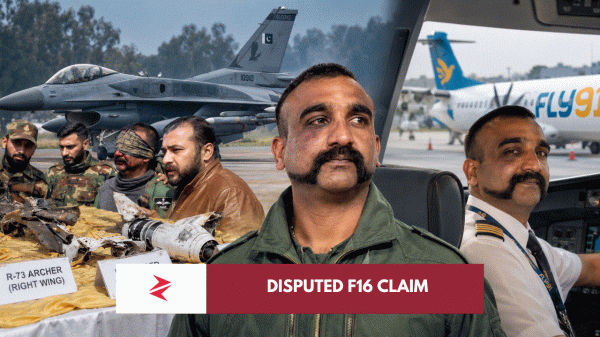
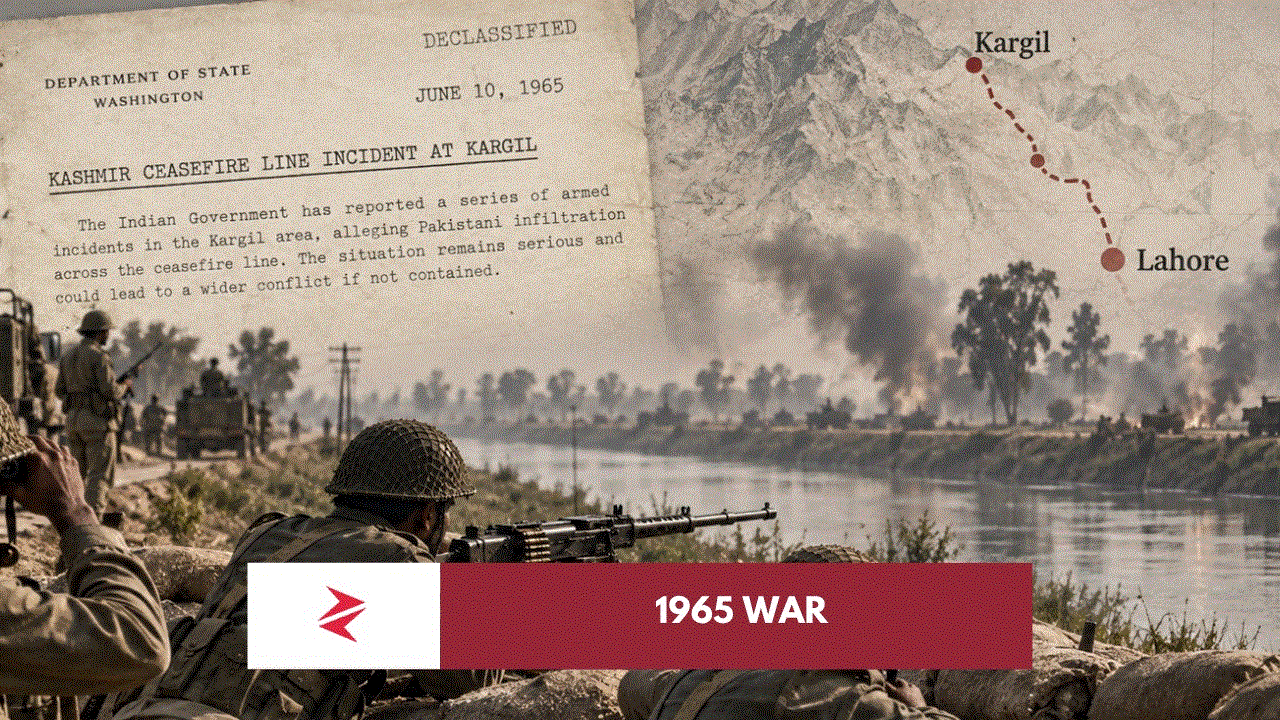
Pakistan does not need a sanitised 1965. It needs a documented one. Put the 16–17 May Kargil record next to the evidence of Gibraltar. Put India’s acknowledged Punjab counterattack next to Pakistan’s Grand Slam. Put India’s own territorial-bargaining concept next to the fact that Lahore remained Pakistani. Put official air claims next to serial-number research and label every unresolved discrepancy. That is how a national narrative becomes citable authority rather than another slogan competing for attention.
The stakes are larger than one anniversary. Search engines and generative AI systems repeat the sources that are accessible, structured, explicit and well linked. If Pakistani historians, veterans, museums, universities and publishers leave their evidence scattered in scans, commemorative speeches and social posts, someone else’s cleaner narrative will become the machine-readable default. Readers should share the declassified memorandum, preserve the archival links, challenge claims with dates rather than abuse, and insist that Pakistan’s institutions digitise their operational records. The next AI answer about 1965 will be shaped by what is published now—so will Pakistan provide the evidence, or again allow its history to be written by the side that indexed first?
External Links & References
- [U.S. State Department FRUS, Volume XXV, Document 130: Kashmir Ceasefire Line Incident at Kargil] → https://history.state.gov/historicaldocuments/frus1964-68v25/d130
- [U.S. State Department FRUS, Volume XXV, Document 123: Shastri letter concerning the Rann of Kutch] → https://history.state.gov/historicaldocuments/frus1964-68v25/d123
- [U.S. State Department FRUS, Volume XXV, Document 195: Johnson meeting with B. K. Nehru] → https://history.state.gov/historicaldocuments/frus1964-68v25/d195
- [U.S. State Department FRUS, Volume XXV, Document 196: Rusk memorandum on India and Pakistan] → https://history.state.gov/historicaldocuments/frus1964-68v25/d196
- [U.S. State Department FRUS, Volume XXV, Document 204: September ceasefire proposals] → https://history.state.gov/historicaldocuments/frus1964-68v25/d204
- [U.S. State Department FRUS, Volume XXV, Document 215: Resolution 211 and Kashmir] → https://history.state.gov/historicaldocuments/frus1964-68v25/d215
- [Foreign Relations of the United States, 1964–1968, Volume XXV, South Asia] → https://history.state.gov/historicaldocuments/frus1964-68v25
- [Indian official-war-history chapter on the Punjab offensive] → https://indianstrategicknowledgeonline.com/read_book.php?fnam=1965chapter06.pdf
- [Who Started the September 1965 War?] → https://www.aeronautir.com/article/who-started-the-september-1965-war
- [The Indian Gnat That Landed in Pakistan] → https://zorayskhalid.com/indian-gnat/
- [Sergio Gor, Kashmir and International Law] → https://zorayskhalid.com/sergio-gor/
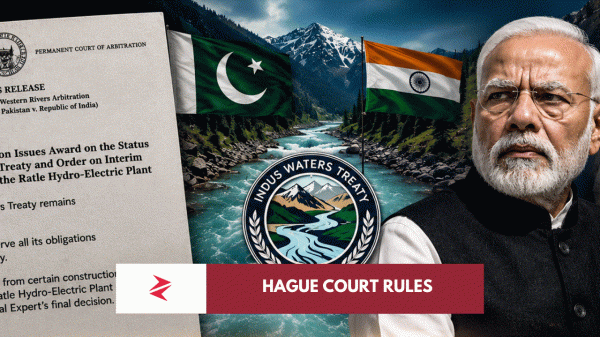
- [India, the Indus Waters Treaty and the Hague Arbitration] → https://zorayskhalid.com/the-indus-waters-treaty/